Zambia Cyclohexane Market Growth Rate Analysis (2025 - 2031)
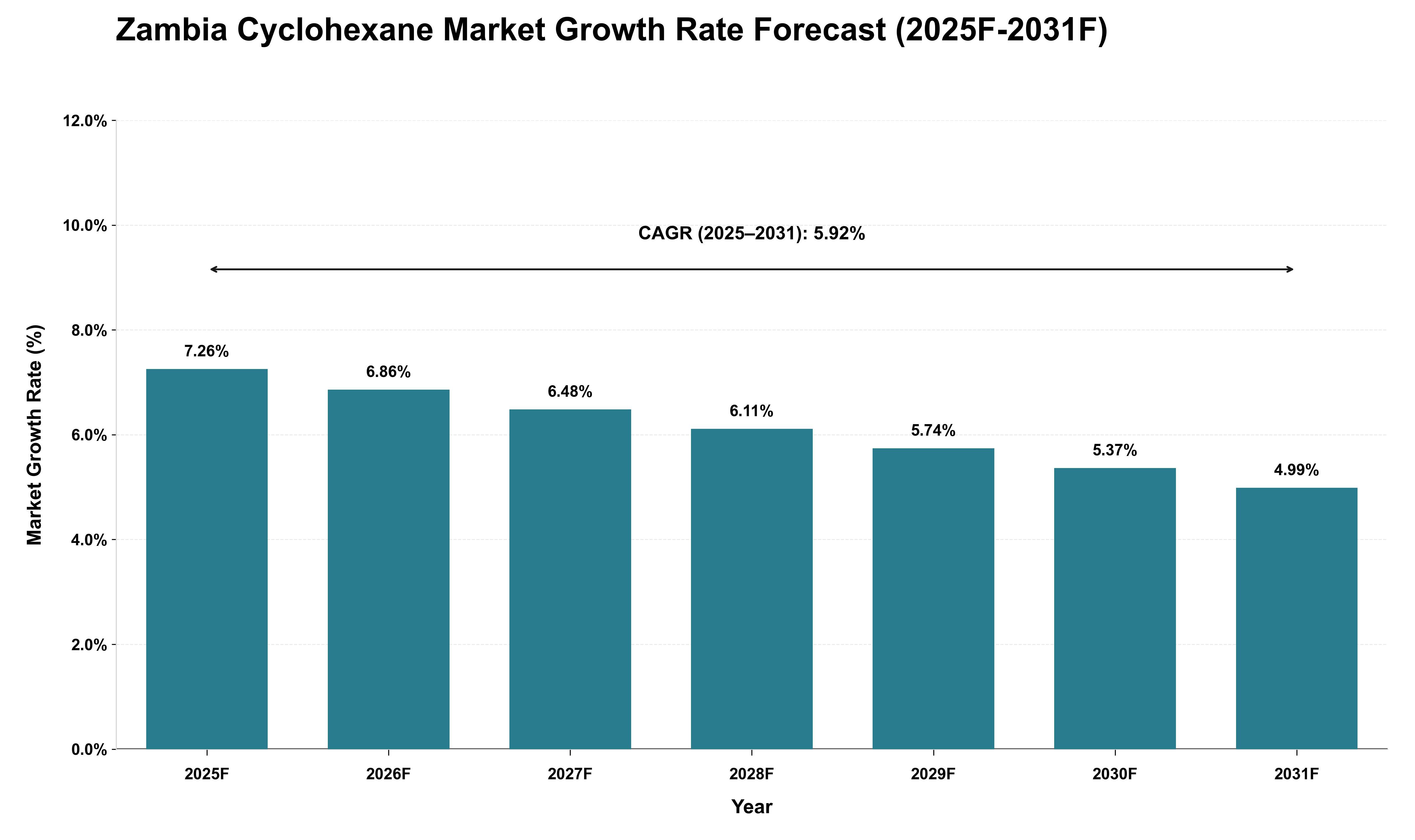
The Zambian cyclohexane market will experience a robust growth trajectory driven by increasing industrial demand and evolving supply chain dynamics. As global manufacturing activities expand, particularly in sectors such as chemicals and plastics, Zambia's reliance on imported cyclohexane will necessitate strategic adjustments in logistics and procurement practices. The forecasted CAGR of 5.92% reflects anticipated fluctuations in input costs, influenced by global crude oil prices and transportation expenses, which are expected to stabilize after initial volatility. In the early years of this forecast period, growth rates will peak at 7.26% in 2025 before gradually tapering off to 4.99% by 2031, indicating a potential normalization as supply chains adapt to new economic realities. This trend underscores the importance of efficient sourcing strategies to mitigate cost pressures while meeting rising domestic consumption demands.
Key Highlights of the Report:
- Zambia Cyclohexane Market Outlook
- Market Size of Zambia Cyclohexane Market, 2024
- Forecast of Zambia Cyclohexane Market, 2031
- Historical Data and Forecast of Zambia Cyclohexane Revenues & Volume for the Period 2021-2031
- Zambia Cyclohexane Market Trend Evolution
- Zambia Cyclohexane Market Drivers and Challenges
- Zambia Cyclohexane Price Trends
- Zambia Cyclohexane Porter`s Five Forces
- Zambia Cyclohexane Industry Life Cycle
- Historical Data and Forecast of Zambia Cyclohexane Market Revenues & Volume By Application for the Period 2021-2031
- Historical Data and Forecast of Zambia Cyclohexane Market Revenues & Volume By Adipic acid for the Period 2021-2031
- Historical Data and Forecast of Zambia Cyclohexane Market Revenues & Volume By Caprolactam for the Period 2021-2031
- Historical Data and Forecast of Zambia Cyclohexane Market Revenues & Volume By Others for the Period 2021-2031
- Historical Data and Forecast of Zambia Cyclohexane Market Revenues & Volume By End-use for the Period 2021-2031
- Historical Data and Forecast of Zambia Cyclohexane Market Revenues & Volume By Nylon 6 for the Period 2021-2031
- Historical Data and Forecast of Zambia Cyclohexane Market Revenues & Volume By Nylon 66 for the Period 2021-2031
- Historical Data and Forecast of Zambia Cyclohexane Market Revenues & Volume By Others for the Period 2021-2031
- Zambia Cyclohexane Import Export Trade Statistics
- Market Opportunity Assessment By Application
- Market Opportunity Assessment By End-use
- Zambia Cyclohexane Top Companies Market Share
- Zambia Cyclohexane Competitive Benchmarking By Technical and Operational Parameters
- Zambia Cyclohexane Company Profiles
- Zambia Cyclohexane Key Strategic Recommendations






































