Zambia Mortar Market Growth Rate Analysis (2025 - 2031)
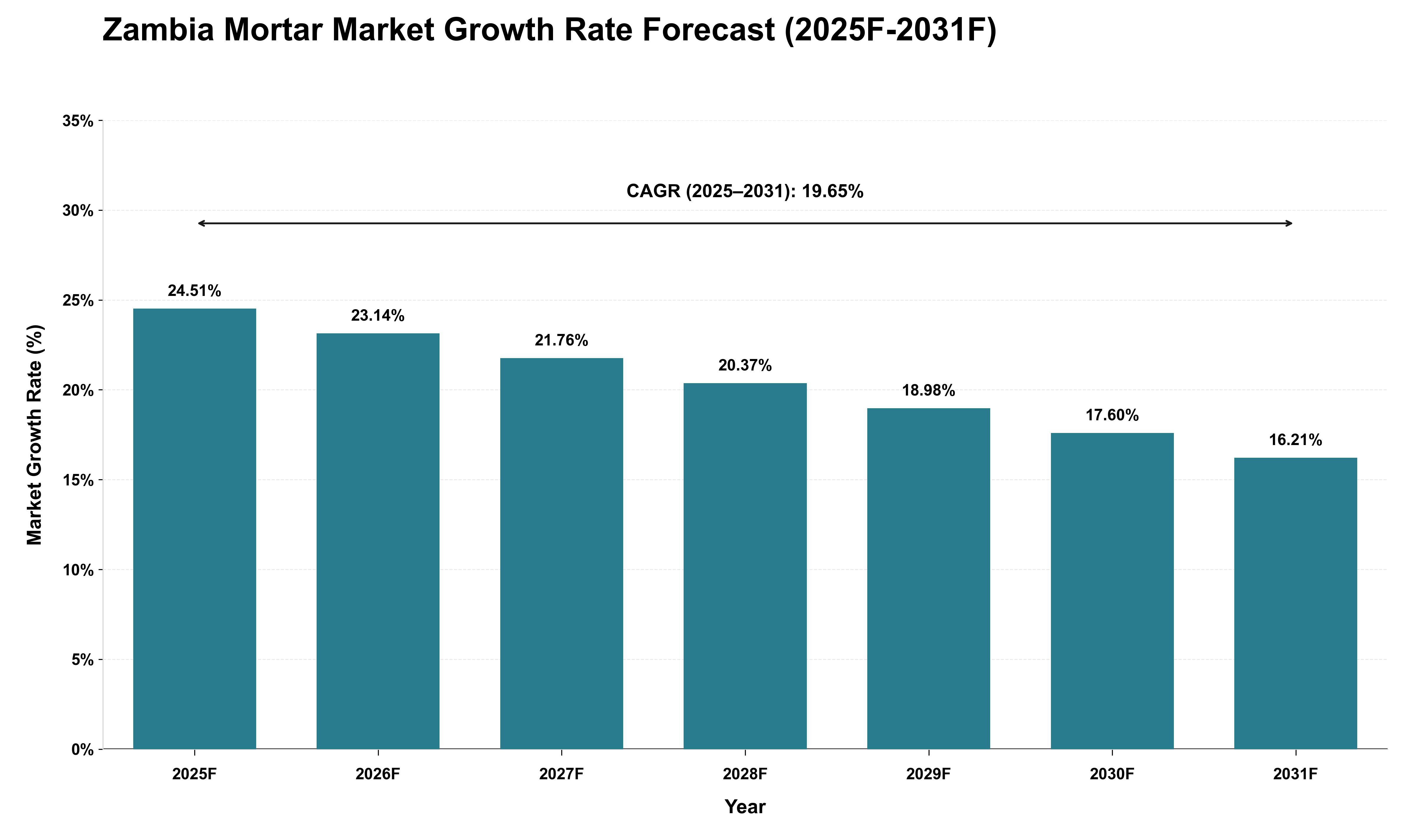
The Zambian mortar market will experience significant growth driven by increasing construction activities and infrastructure development, with a projected CAGR of 19.65% from 2025 to 2031. This robust expansion will be underpinned by rising demand for both residential and commercial projects, necessitating higher import volumes of raw materials and finished products to meet local consumption needs. As the construction sector evolves, Zambia's reliance on imported mortar products will likely intensify, reflecting broader regional trends in trade flows where domestic production may not keep pace with burgeoning demand. The annual growth rates will gradually decline from 24.51% in 2025 to 16.21% by 2031, indicating a transition towards stabilization as supply chains adapt and local manufacturing capabilities potentially expand. This dynamic interplay between import dependencies and cyclical construction trends will shape the market landscape throughout the forecast period.
Key Highlights of the Report:
- Zambia Mortar Market Outlook
- Market Size of Zambia Mortar Market, 2024
- Forecast of Zambia Mortar Market, 2031
- Historical Data and Forecast of Zambia Mortar Revenues & Volume for the Period 2021-2031
- Zambia Mortar Market Trend Evolution
- Zambia Mortar Market Drivers and Challenges
- Zambia Mortar Price Trends
- Zambia Mortar Porter`s Five Forces
- Zambia Mortar Industry Life Cycle
- Historical Data and Forecast of Zambia Mortar Market Revenues & Volume By Type for the Period 2021-2031
- Historical Data and Forecast of Zambia Mortar Market Revenues & Volume By Wet Mixed Mortar for the Period 2021-2031
- Historical Data and Forecast of Zambia Mortar Market Revenues & Volume By Dry Mortar for the Period 2021-2031
- Historical Data and Forecast of Zambia Mortar Market Revenues & Volume By Application for the Period 2021-2031
- Historical Data and Forecast of Zambia Mortar Market Revenues & Volume By Construction Industry for the Period 2021-2031
- Historical Data and Forecast of Zambia Mortar Market Revenues & Volume By Home Decoration Industry for the Period 2021-2031
- Historical Data and Forecast of Zambia Mortar Market Revenues & Volume By Others for the Period 2021-2031
- Zambia Mortar Import Export Trade Statistics
- Market Opportunity Assessment By Type
- Market Opportunity Assessment By Application
- Zambia Mortar Top Companies Market Share
- Zambia Mortar Competitive Benchmarking By Technical and Operational Parameters
- Zambia Mortar Company Profiles
- Zambia Mortar Key Strategic Recommendations






































