Zambia Natural Flavors Market: Top 5 Importing Countries and Market Competition (HHI) Analysis
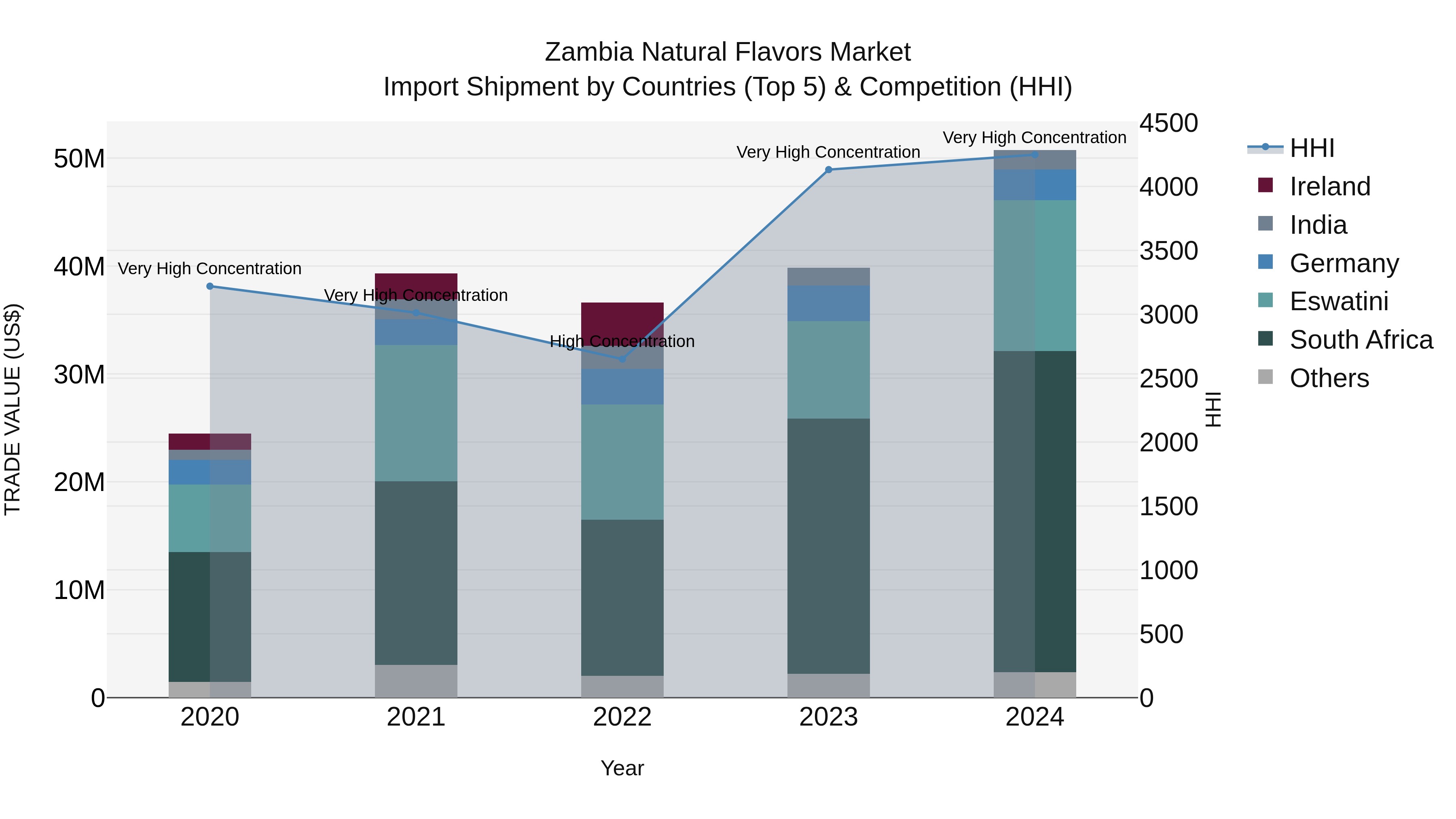
Zambia`s natural flavors import market continues to thrive in 2024, with notable growth driven by imports from top exporting countries such as South Africa, Eswatini, Germany, India, and France. The market shows high concentration levels, indicating a competitive landscape dominated by key players. With a strong compound annual growth rate (CAGR) of 20.0% from 2020 to 2024 and a significant growth rate of 27.37% from 2023 to 2024, the market displays promising opportunities for both local and international suppliers looking to capitalize on Zambia`s growing demand for natural flavors.
Zambia Natural Flavors Market Synopsis
The Zambia natural flavors market is experiencing steady growth driven by increasing consumer demand for healthier and more natural food and beverage products. The market is characterized by a wide range of natural flavors derived from fruits, vegetables, herbs, and spices, which are used in various applications such as beverages, dairy products, confectionery, and snacks. Key players in the market are focusing on product innovation and development to cater to changing consumer preferences for clean label and organic products. Additionally, rising disposable incomes and awareness about the benefits of natural flavors are further fueling market growth. As the market continues to evolve, there is a growing emphasis on sustainability and ethical sourcing practices among both consumers and manufacturers, leading to a shift towards more environmentally friendly and socially responsible production methods.
Zambia Natural Flavors Market Trends
The Zambia Natural Flavors Market is experiencing a surge in demand due to increasing consumer awareness about health and wellness. Consumers are seeking natural and clean label products, driving the growth of natural flavors in the market. There is a rising trend towards using locally sourced ingredients and traditional flavors in Zambia, presenting opportunities for companies to innovate and differentiate their products. Additionally, the food and beverage industry in Zambia is growing, providing a favorable environment for the natural flavors market to expand. Manufacturers can capitalize on this trend by developing unique flavor profiles that cater to the local preferences and align with the global clean label movement. Overall, the Zambia Natural Flavors Market is poised for growth with opportunities for companies to meet the evolving consumer demands in the region.
Zambia Natural Flavors Market Challenges
In the Zambia Natural Flavors Market, challenges such as limited availability of raw materials, inconsistent quality of natural ingredients, and high production costs pose significant obstacles for companies operating in this sector. The country`s reliance on imported raw materials for natural flavors can lead to supply chain disruptions and increased prices. Additionally, ensuring the consistent quality of natural ingredients sourced from local suppliers can be a challenge due to variations in climate and agricultural practices. High production costs, including expenses related to processing, packaging, and transportation, further strain profit margins for businesses in the Zambia Natural Flavors Market. Addressing these challenges through strategic partnerships, investment in local sourcing networks, and efficiency improvements in production processes will be crucial for companies to succeed in this competitive market.
Zambia Natural Flavors Market Investment Opportunities
The Zambia Natural Flavors Market is primarily being driven by the increasing consumer demand for healthier and more natural food and beverage products. Consumers are becoming more conscious of the ingredients in the products they consume and are seeking out natural flavors as a healthier alternative to artificial additives. Additionally, the growing awareness of the health benefits associated with natural flavors, such as their antioxidant properties and absence of synthetic chemicals, is further fueling market growth. Furthermore, the rise in disposable income levels and changing consumer preferences towards clean label products are also contributing to the increasing demand for natural flavors in Zambia. Overall, these factors are driving manufacturers to incorporate natural flavors into their product offerings to meet the evolving needs of the consumers in the market.
Zambia Natural Flavors Market Government Polices
The government policies related to the Zambia Natural Flavors Market primarily focus on promoting sustainable agriculture practices, ensuring food safety and quality standards, and supporting the growth of the natural flavors industry. This includes regulations on the use of pesticides and chemical additives in farming, as well as guidelines for the processing and packaging of natural flavor products. Additionally, the government may provide incentives or subsidies to farmers and businesses in the natural flavors sector to encourage innovation, investment, and market competitiveness. Overall, the government aims to create a conducive regulatory environment that enables the sustainable development of the Zambia Natural Flavors Market while safeguarding consumer health and environmental sustainability.
Zambia Natural Flavors Market Future Outlook
The Zambia Natural Flavors Market is poised for steady growth in the foreseeable future, driven by increasing consumer demand for clean label and healthier food and beverage products. The rising awareness about the health benefits of natural flavors, coupled with a shift towards organic and sustainable ingredients, will further boost market expansion. Additionally, the growing food and beverage industry in Zambia, along with the government`s initiatives to promote the use of natural ingredients, will create opportunities for market players to innovate and introduce a diverse range of natural flavor products. With an emphasis on quality and authenticity, the Zambia Natural Flavors Market is expected to witness sustained growth and attract investments in research and development to meet the evolving consumer preferences.
Key Highlights of the Report:
- Zambia Natural Flavors Market Outlook
- Market Size of Zambia Natural Flavors Market, 2024
- Forecast of Zambia Natural Flavors Market, 2031
- Historical Data and Forecast of Zambia Natural Flavors Revenues & Volume for the Period 2021- 2031
- Zambia Natural Flavors Market Trend Evolution
- Zambia Natural Flavors Market Drivers and Challenges
- Zambia Natural Flavors Price Trends
- Zambia Natural Flavors Porter's Five Forces
- Zambia Natural Flavors Industry Life Cycle
- Historical Data and Forecast of Zambia Natural Flavors Market Revenues & Volume By Product for the Period 2021- 2031
- Historical Data and Forecast of Zambia Natural Flavors Market Revenues & Volume By Animal Flavors for the Period 2021- 2031
- Historical Data and Forecast of Zambia Natural Flavors Market Revenues & Volume By Plant Flavors for the Period 2021- 2031
- Historical Data and Forecast of Zambia Natural Flavors Market Revenues & Volume By Type for the Period 2021- 2031
- Historical Data and Forecast of Zambia Natural Flavors Market Revenues & Volume By Natural Flavor Synthetic Flavor for the Period 2021- 2031
- Historical Data and Forecast of Zambia Natural Flavors Market Revenues & Volume By Natural Identical Flavoring for the Period 2021- 2031
- Historical Data and Forecast of Zambia Natural Flavors Market Revenues & Volume By Application for the Period 2021- 2031
- Historical Data and Forecast of Zambia Natural Flavors Market Revenues & Volume By Dairy for the Period 2021- 2031
- Historical Data and Forecast of Zambia Natural Flavors Market Revenues & Volume By Bakery for the Period 2021- 2031
- Historical Data and Forecast of Zambia Natural Flavors Market Revenues & Volume By Snack for the Period 2021- 2031
- Historical Data and Forecast of Zambia Natural Flavors Market Revenues & Volume By Confectionery for the Period 2021- 2031
- Historical Data and Forecast of Zambia Natural Flavors Market Revenues & Volume By Others for the Period 2021- 2031
- Zambia Natural Flavors Import Export Trade Statistics
- Market Opportunity Assessment By Product
- Market Opportunity Assessment By Type
- Market Opportunity Assessment By Application
- Zambia Natural Flavors Top Companies Market Share
- Zambia Natural Flavors Competitive Benchmarking By Technical and Operational Parameters
- Zambia Natural Flavors Company Profiles
- Zambia Natural Flavors Key Strategic Recommendations






































