zimbabwe carbon market
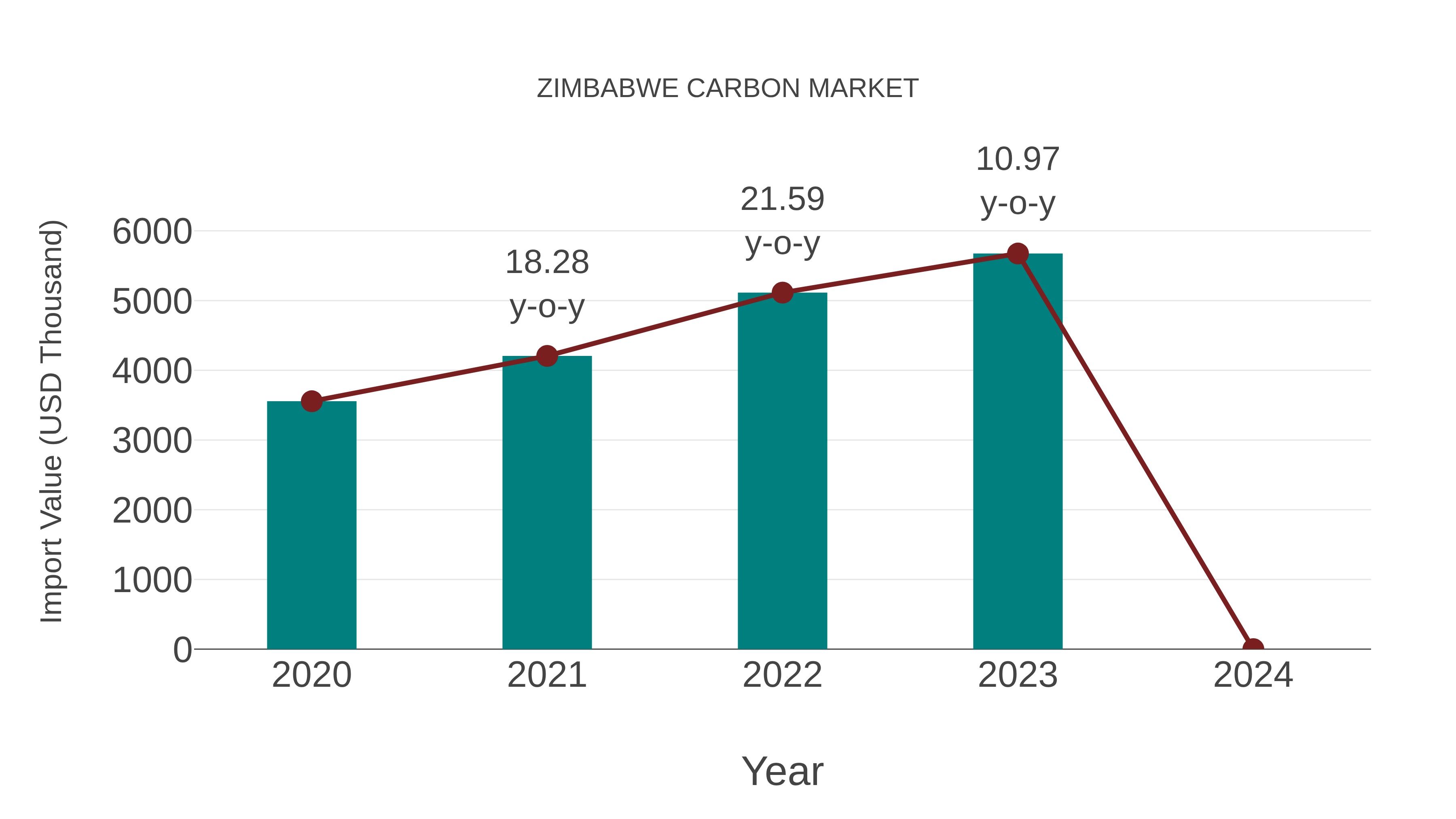
Zimbabwe Carbon Market Growth Rate
According to 6Wresearch internal database and industry insights, the Zimbabwe Carbon Market is projected to grow at a compound annual growth rate (CAGR) of 6% during the forecast period (2026–2032).
Five-Years Growth Trajectory of the Zimbabwe Carbon Market with Core Drivers
Below is the evaluation of the year-wise growth rate along with key drivers:
| Years | Estimated Annual Growth (%) | Growth Drivers |
| 2021 | 3.4% | Rising industrial carbon use and demand for high-performance materials. |
| 2022 | 3.9% | Surge in construction activities and automotive manufacturing growth. |
| 2023 | 4.3% | Rising incorporation of advanced carbon products in aerospace and engineering. |
| 2024 | 4.8% | Increased demand for carbon materials in eco-efficient manufacturing. |
| 2025 | 5.2% | Government measures encourage clean energy and carbon efficiency. |
Topics Covered in the Zimbabwe Carbon Market Report
The Zimbabwe Carbon Market report thoroughly covers the market by Product Types and Applications. The report provides a detailed analysis of ongoing market trends, opportunities/high-growth areas, and market drivers that will help stakeholders devise and align strategies according to current and future market dynamics.
Zimbabwe Carbon Market Highlights
| Report Name | Zimbabwe Carbon Market |
| Forecast Period | 2026–2032 |
| CAGR | 6% |
| Growing Sector | Automotive |
Zimbabwe Carbon Market Synopsis
The Zimbabwe Carbon Industry is witnessing rapid growth, due to the high requirement for carbon materials in sectors such as automotive, construction, and aerospace. The strength, durability, and lightweight properties of carbon products are main factors propelling their adoption. Moreover, government-backed initiatives actively promote the use of green technologies, adherence to carbon neutrality goals, and the expansion of high-performance carbon applications. These efforts are strengthening market growth, supporting long-term sustainability, and encouraging widespread use across various industries.
Evaluation of Growth Drivers in the Zimbabwe Carbon Market
Below are some prominent drivers and their influence on the Zimbabwe Carbon Market dynamics:
| Drivers | Primary Segments Affected | Why it Matters |
| Rising Demand for High-Performance Materials | By Product Types (Amorphous Carbon, Graphite, Diamond) | Rising requirement for durable and efficient carbon materials propels adoption in various industries. |
| Expansion of Automotive Production | By Applications (Automotive) | Automotive sector needs carbon materials for fuel efficiency, performance, and safety. |
| Growth in Construction and Engineering | By Applications (Construction, Engineering Industries) | Carbon products are used in construction materials for enhanced durability and strength. |
| Government Clean Energy Support | By Product Types (Graphite, Diamond) | Policies to support carbon-efficient production methods are fostering market growth. |
The Zimbabwe Carbon Market Size is projected to grow at a CAGR of 6%during the forecast period (2026–2032). The requirement for carbon products is driven by their growing use in automotive, construction, aerospace, and engineering industries. Additionally, government initiatives encouraging sustainable carbon products, clean energy, and advanced manufacturing are contributing to the Zimbabwe Carbon Market Growth. The high-performance, durability, and lightweight qualities of carbon expand opportunities across various sectors. Ongoing concentration on carbon-neutral regulations and sustainable production practices continues to drive market growth, while technological advancements in carbon production further boost expansion and innovation. The market is also supported by rising global demand for environmentally friendly and high-performance materials, further enhancing the appeal of carbon products.
Evaluation of Restraints in the Zimbabwe Carbon Market
Below are some prominent restraints and their influence on the Zimbabwe Carbon Market dynamics:
| Restraints | Primary Segments Affected | What this Means |
| High Production Costs | By Product Types (Amorphous Carbon, Graphite, Diamond) | Changing raw material prices affect production costs, leading to higher prices. |
| Technological Constraints | By Product Types (All Carbon Types) | Requirement high investments in advanced manufacturing technologies. |
| Environmental Impact | By Applications (Construction, Automotive, Aerospace) | Compliance with sustainability goals increases operational costs. |
| Competition from Low-Cost Imports | By Product Types (Graphite, Diamond) | Imported, low-cost carbon products increase competition in the market |
Zimbabwe Carbon Market Challenges
The Zimbabwe Carbon Market comes across numerous challenges such as high production costs, technological limitations, and high environmental compliance costs. With that, the competition from lower-cost imported carbon products pressures domestic manufacturers to maintain cost-efficiency while meeting the rising need for high-performance materials. Adhering with sustainability goals while aligning with clean energy target remains a crucial challenge for the industry. Market stability is influenced by fluctuating raw material prices making long-term production challenging.
Zimbabwe Carbon Market Trends
Several key trends are shaping the growth of the Zimbabwe Carbon Market:
- Growing Demand for High-Strength Carbon Products: To enhance performance and fuel efficiency increasing number of industries are incorporating high-strength, lightweight carbon materials.
- Shift Toward Sustainable Manufacturing: Carbon materials are hugely being used in green manufacturing processes, transforming industrial applications.
- Technological Advancements in Carbon Materials: Invention of new technologies and continuous innovations in carbon products, compel in the production of new applications.
- Development of Aerospace Carbon Applications: With the growth in aerospace sector, the requirement for high-performance carbon materials in engine and structural components is also surging.
Investment Opportunities in the Zimbabwe Carbon Market
Some notable investment opportunities include:
- Advanced Carbon Material Manufacturing: Financial support is increasing for the development of high-performance carbon materials in the automotive, aerospace, and industrial fields.
- Sustainable Carbon Production Technologies: The change toward sustainable manufacturing practices creates opportunities in clean carbon technology.
- Carbon Materials for Green Construction: The demand for eco-friendly construction materials presents investment opportunities in carbon-based materials.
- Automotive and Aerospace Carbon Solutions: Growing uses of carbon materials in high-performance automotive and aerospace products.
Top 5 Leading Players in the Zimbabwe Carbon Market
Some leading players operating in the Zimbabwe Carbon Market include:
1. Western Carbon & Chemicals
| Company Name | Western Carbon & Chemicals |
| Established Year | 2015 |
| Headquarters | Harare, Zimbabwe |
| Official Website | Click Here |
Leading activated carbon manufacturer in Zimbabwe supplying high-grade products for water treatment, air filtration, and industrial purification applications.
2. Suneeta Carbons Zimbabwe
| Company Name | Suneeta Carbons Zimbabwe |
| Established Year | 1978 |
| Headquarters | Harare, Zimbabwe |
| Official Website | Click Here |
Major supplier of activated charcoal and carbon products used in wastewater treatment, gold recovery, and purification sectors with extensive industry experience.
3. Morgan Carbon Zimbabwe
| Company Name | Morgan Carbon Zimbabwe |
| Established Year | 1998 |
| Headquarters | Harare, Zimbabwe |
| Official Website | - |
Manufacturer of carbon brushes, seals, and vanes for industrial machinery, supporting local engineering and manufacturing industries.
4. Dmaic Carbon Pvt Ltd
| Company Name | Dmaic Carbon Pvt Ltd |
| Established Year | 2012 |
| Headquarters | Harare, Zimbabwe |
| Official Website | Click Here |
Supplier of carbon blanks, blocks, and segmented carbon components used in high-temperature and electrical applications across key industrial sectors.
5. Haycarb PLC
| Company Name | Haycarb PLC |
| Established Year | 1973 |
| Headquarters | Colombo, Sri Lanka |
| Official Website | Click Here |
Global activated carbon manufacturer with regional supply presence, offering high-performance carbon materials for filtration, environmental, and industrial applications.
Government Regulations Introduced in the Zimbabwe Carbon Market
According to Zimbabwean government data, policies such as the National Clean Technology Framework and Environmental Quality Standards encourage manufacturers to adopt eco-friendly processes and reduce emissions. Regulations also help with carbon recycling initiatives and incentivize green innovation through tax benefits and grants. These measures ensures that the growth of the industry aligns with environmental goals and improves market stability and investor confidence. Additionally, ongoing regulatory updates foster a competitive and sustainable carbon market, attracting further investment.
Future Insights of the Zimbabwe Carbon Market
The Zimbabwe Carbon Market Share is anticipated to grow firmly due to rising demand in automotive, aerospace, construction, and industrial sectors. Government initiatives are also helping sustainable carbon solutions, clean manufacturing practices, and advanced product development will continue to propel market development. In addition to that, the growing concentration on carbon neutrality and eco-friendly construction practices will further extend market opportunities. The increasing adoption of energy-efficient technologies and green building practices is also expected to contribute to the market’s long-term expansion.
Market Segmentation Analysis
The report offers a comprehensive study of the following market segments and their leading categories:
By Product Types – Graphite to Lead the Market
According to Mansi, Senior Research Analyst at 6Wresearch, Graphite is expected to dominate the Zimbabwe Carbon Market due to its extensive use in automotive, aerospace, and industrial applications, thanks to its superior strength and conductivity.
By Applications – Automotive to Lead the Market
Automotive applications will lead the market, driven by the rising adoption of carbon materials for lightweight, high-performance vehicle manufacturing. The increasing concentration on fuel efficiency and safety is propelling this demand.
Key Attractiveness of the Report
- 10 Years of Market Numbers
- Historical Data Starting from 2022 to 2025
- Base Year: 2025
- Forecast Data until 2032
- Key Performance Indicators Impacting the Market
- Major Upcoming Developments and Projects
Key Highlights of the Report:
- Zimbabwe Carbon Market Outlook
- Market Size of Zimbabwe Carbon Market, 2025
- Forecast of Zimbabwe Carbon Market, 2032
- Historical Data and Forecast of Zimbabwe Carbon Revenues & Volume for the Period 2022-2032
- Zimbabwe Carbon Market Trend Evolution
- Zimbabwe Carbon Market Drivers and Challenges
- Zimbabwe Carbon Price Trends
- Zimbabwe Carbon Porter`s Five Forces
- Zimbabwe Carbon Industry Life Cycle
- Historical Data and Forecast of Zimbabwe Carbon Market Revenues & Volume By Product Types for the Period 2022-2032
- Historical Data and Forecast of Zimbabwe Carbon Market Revenues & Volume By Amorphous Carbon for the Period 2022-2032
- Historical Data and Forecast of Zimbabwe Carbon Market Revenues & Volume By Graphite for the Period 2022-2032
- Historical Data and Forecast of Zimbabwe Carbon Market Revenues & Volume By Diamond for the Period 2022-2032
- Historical Data and Forecast of Zimbabwe Carbon Market Revenues & Volume By Applications for the Period 2022-2032
- Historical Data and Forecast of Zimbabwe Carbon Market Revenues & Volume By Automotive for the Period 2022-2032
- Historical Data and Forecast of Zimbabwe Carbon Market Revenues & Volume By Construction for the Period 2022-2032
- Historical Data and Forecast of Zimbabwe Carbon Market Revenues & Volume By Engineering Industries for the Period 2022-2032
- Historical Data and Forecast of Zimbabwe Carbon Market Revenues & Volume By Aerospace for the Period 2022-2032
- Historical Data and Forecast of Zimbabwe Carbon Market Revenues & Volume By Others for the Period 2022-2032
- Zimbabwe Carbon Import Export Trade Statistics
- Market Opportunity Assessment By Product Types
- Market Opportunity Assessment By Applications
- Zimbabwe Carbon Top Companies Market Share
- Zimbabwe Carbon Competitive Benchmarking By Technical and Operational Parameters
- Zimbabwe Carbon Company Profiles
- Zimbabwe Carbon Key Strategic Recommendations
Market Covered
The report offers a comprehensive study of the following market segments:
By Product Types
- Amorphous Carbon
- Graphite
- Diamond
By Applications
- Automotive
- Construction
- Engineering Industries
- Aerospace
- Others






































