Zimbabwe Diatomite Market Growth Rate Analysis (2021-2031)
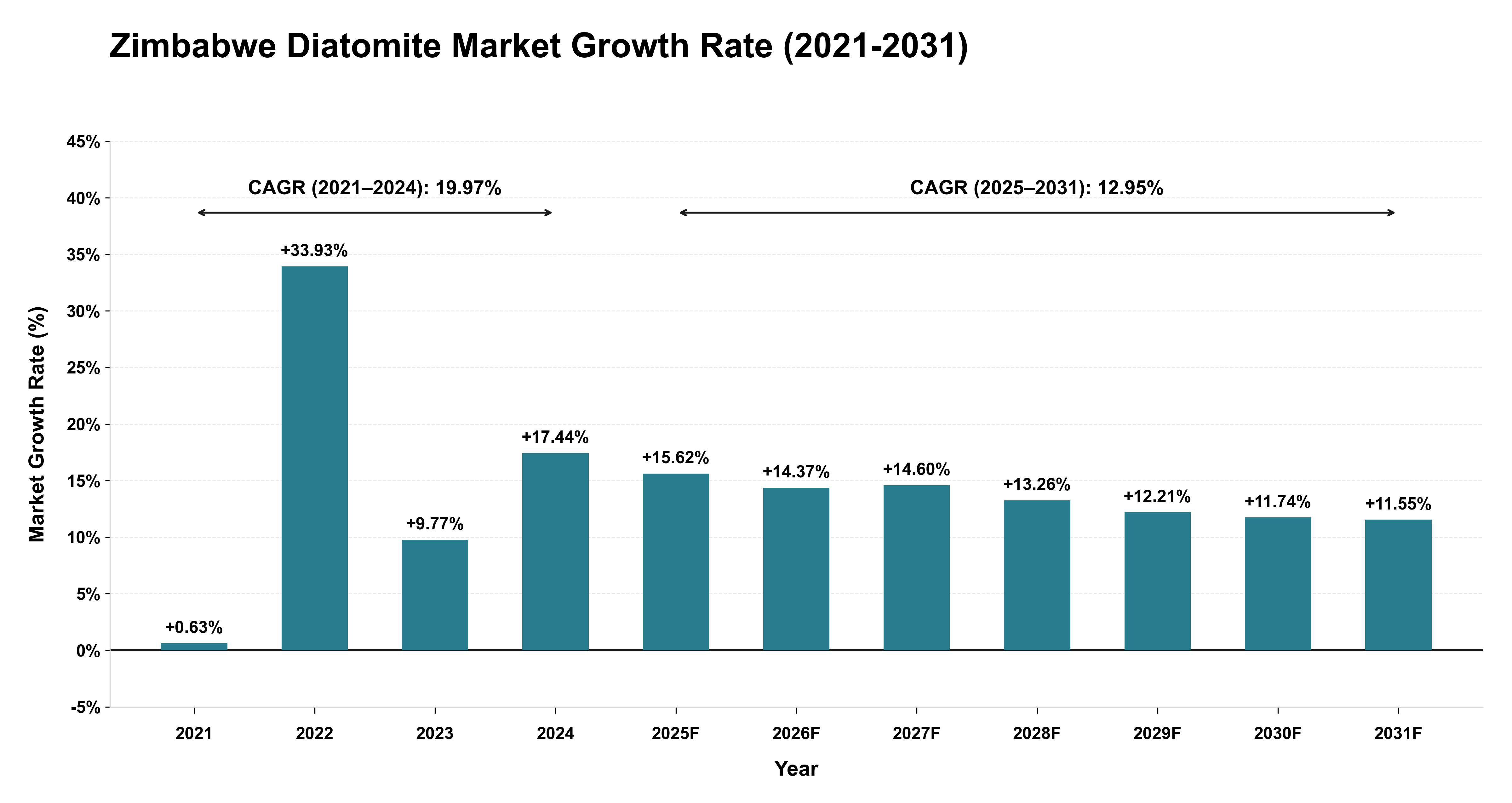
The Zimbabwe Diatomite Market witnessed robust growth from 2021 to 2024, with a remarkable CAGR of 19.97%. This period showcased rapid expansion and heightened demand for diatomite products. However, as the market matured, the growth rate started stabilizing, with a forecasted CAGR of 12.95% from 2025 to 2031. The years 2021 and 2022 marked significant volatility, with growth rates of 0.63% and 33.93%, respectively. Subsequently, the market experienced a more moderate but consistent growth pattern from 2023 to 2031, ranging between 9.77% to 15.62%. This trend reflects a phase of stabilization following the initial surge, indicating a more sustainable and balanced growth trajectory in the forecasted period.
Key Highlights of the Report:
- Zimbabwe Diatomite Market Outlook
- Market Size of Zimbabwe Diatomite Market, 2024
- Forecast of Zimbabwe Diatomite Market, 2031
- Historical Data and Forecast of Zimbabwe Diatomite Revenues & Volume for the Period 2021-2031
- Zimbabwe Diatomite Market Trend Evolution
- Zimbabwe Diatomite Market Drivers and Challenges
- Zimbabwe Diatomite Price Trends
- Zimbabwe Diatomite Porter`s Five Forces
- Zimbabwe Diatomite Industry Life Cycle
- Historical Data and Forecast of Zimbabwe Diatomite Market Revenues & Volume By Type for the Period 2021-2031
- Historical Data and Forecast of Zimbabwe Diatomite Market Revenues & Volume By Natural for the Period 2021-2031
- Historical Data and Forecast of Zimbabwe Diatomite Market Revenues & Volume By Calcined for the Period 2021-2031
- Historical Data and Forecast of Zimbabwe Diatomite Market Revenues & Volume By Flux Calcined for the Period 2021-2031
- Historical Data and Forecast of Zimbabwe Diatomite Market Revenues & Volume By Application for the Period 2021-2031
- Historical Data and Forecast of Zimbabwe Diatomite Market Revenues & Volume By Filter Aids for the Period 2021-2031
- Historical Data and Forecast of Zimbabwe Diatomite Market Revenues & Volume By Filler for the Period 2021-2031
- Historical Data and Forecast of Zimbabwe Diatomite Market Revenues & Volume By Absorbents for the Period 2021-2031
- Historical Data and Forecast of Zimbabwe Diatomite Market Revenues & Volume By Construction Materials for the Period 2021-2031
- Historical Data and Forecast of Zimbabwe Diatomite Market Revenues & Volume By Others for the Period 2021-2031
- Zimbabwe Diatomite Import Export Trade Statistics
- Market Opportunity Assessment By Type
- Market Opportunity Assessment By Application
- Zimbabwe Diatomite Top Companies Market Share
- Zimbabwe Diatomite Competitive Benchmarking By Technical and Operational Parameters
- Zimbabwe Diatomite Company Profiles
- Zimbabwe Diatomite Key Strategic Recommendations






































