Zimbabwe Electric Mobility Market: Import Trend Analysis
In the past year, the import trend for electric mobility products in the Zimbabwean market has shown a steady increase. This growth can be attributed to a rising awareness of environmental concerns and a shift towards sustainable transportation options.
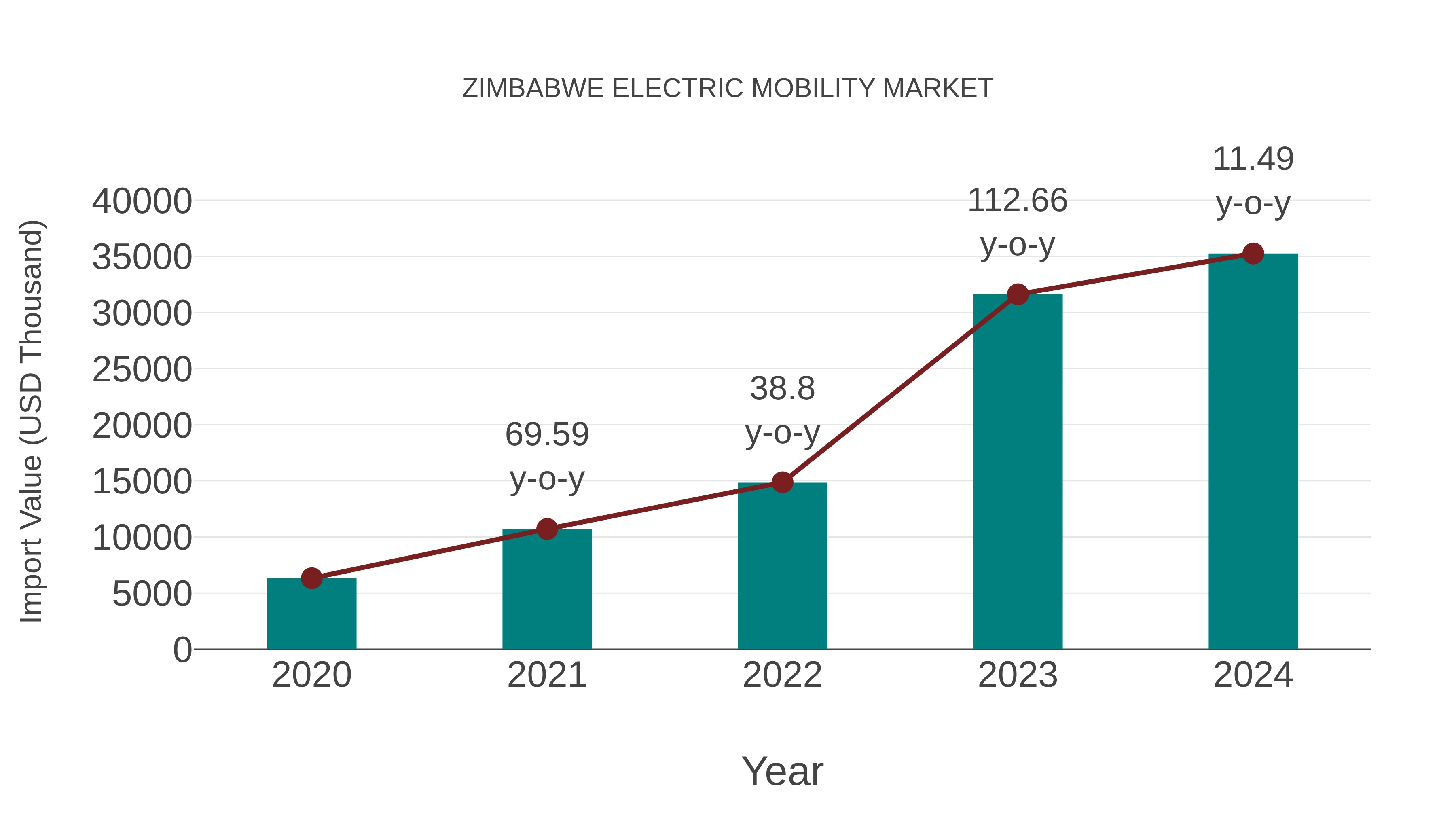
Zimbabwe Electric Mobility Market Overview
The Zimbabwe Electric Mobility Market is in its nascent stage but showing promising growth potential due to the country`s focus on sustainable transportation solutions and reducing carbon emissions. The government has implemented policies to promote the adoption of electric vehicles (EVs) through tax incentives and import duty waivers. Major cities like Harare are witnessing an increase in EV charging infrastructure, supported by private and public investments. However, challenges such as high initial costs of EVs, limited availability of charging stations, and insufficient consumer awareness remain barriers to widespread adoption. With growing environmental concerns and a shift towards cleaner transportation options, the Zimbabwe Electric Mobility Market is expected to expand further, attracting more investments and driving technological advancements in the sector.
Zimbabwe Electric Mobility Market Trends and Opportunities
The Zimbabwe Electric Mobility Market is experiencing a growing trend towards sustainable transportation solutions, driven by increasing concerns about environmental pollution and rising fuel costs. There is a growing interest in electric vehicles (EVs) among consumers, businesses, and the government, leading to a rise in investments in EV infrastructure such as charging stations and incentives for EV adoption. Opportunities in the market include partnerships between EV manufacturers and local stakeholders, development of local EV manufacturing capabilities, and the introduction of innovative financing solutions to make EVs more accessible to a wider range of consumers. With the government`s focus on promoting green technologies and reducing carbon emissions, the electric mobility market in Zimbabwe is poised for significant growth in the coming years.
Zimbabwe Electric Mobility Market Challenges
In the Zimbabwe Electric Mobility Market, there are several challenges that hinder its growth and adoption. These include limited infrastructure for electric vehicle charging stations, high initial costs of electric vehicles compared to traditional combustion engine vehicles, lack of government incentives and policies to promote electric mobility, and inadequate consumer awareness and education on the benefits of electric vehicles. Additionally, the country`s economic instability and unreliable power supply pose significant barriers to the widespread adoption of electric vehicles. Overcoming these challenges will require coordinated efforts from the government, private sector, and international partners to invest in charging infrastructure, provide incentives for electric vehicle purchases, and implement supportive policies to create a conducive environment for the growth of the electric mobility market in Zimbabwe.
Zimbabwe Electric Mobility Market Drivers
The Zimbabwe Electric Mobility Market is primarily driven by increasing environmental concerns, government initiatives promoting the adoption of electric vehicles (EVs), rising fuel costs, and the need for energy independence. With a growing awareness of the detrimental impact of traditional combustion engine vehicles on the environment, consumers and policymakers are increasingly turning towards EVs as a cleaner and more sustainable mode of transportation. The Zimbabwean government`s efforts to incentivize the adoption of EVs through tax breaks, subsidies, and infrastructure development have further propelled the market forward. Additionally, the volatility of global oil prices and the desire for reduced dependence on imported fossil fuels are pushing consumers and businesses towards electric mobility solutions in Zimbabwe.
Zimbabwe Electric Mobility Market Government Policy
The Zimbabwean government has shown a commitment to promoting electric mobility through various policies and initiatives. In 2018, the government introduced the Electric Mobility Roadmap, aimed at increasing the adoption of electric vehicles (EVs) in the country by providing incentives such as tax breaks and import duty waivers on EVs and related components. Additionally, the government has been working on developing charging infrastructure and establishing partnerships with international organizations to support the growth of the electric mobility market. These policies are part of the country`s broader efforts to reduce carbon emissions, improve air quality, and enhance energy security through the promotion of sustainable transportation options like EVs.
Zimbabwe Electric Mobility Market Future Outlook
The future outlook for the Zimbabwe Electric Mobility Market appears promising as the country aims to reduce its carbon footprint and promote sustainable transportation solutions. With increasing awareness about environmental issues and a growing emphasis on clean energy, there is a rising interest in electric vehicles (EVs) among consumers and policymakers in Zimbabwe. The government has also shown commitment to supporting the adoption of EVs through incentives and infrastructure development. As technology advances and EVs become more affordable and accessible, the market is expected to experience significant growth in the coming years. Key challenges such as limited charging infrastructure and high initial costs may still pose barriers, but overall, the Zimbabwe Electric Mobility Market is poised for expansion in line with global trends towards greener transportation options.
Key Highlights of the Report:
- Zimbabwe Electric Mobility Market Outlook
- Market Size of Zimbabwe Electric Mobility Market, 2025
- Forecast of Zimbabwe Electric Mobility Market, 2032
- Historical Data and Forecast of Zimbabwe Electric Mobility Revenues & Volume for the Period 2022 - 2032F
- Zimbabwe Electric Mobility Market Trend Evolution
- Zimbabwe Electric Mobility Market Drivers and Challenges
- Zimbabwe Electric Mobility Price Trends
- Zimbabwe Electric Mobility Porter's Five Forces
- Zimbabwe Electric Mobility Industry Life Cycle
- Historical Data and Forecast of Zimbabwe Electric Mobility Market Revenues & Volume By Product for the Period 2022 - 2032F
- Historical Data and Forecast of Zimbabwe Electric Mobility Market Revenues & Volume By Electric Bikes for the Period 2022 - 2032F
- Historical Data and Forecast of Zimbabwe Electric Mobility Market Revenues & Volume By Electric Scooters for the Period 2022 - 2032F
- Historical Data and Forecast of Zimbabwe Electric Mobility Market Revenues & Volume By Electric Motorized Scooters for the Period 2022 - 2032F
- Historical Data and Forecast of Zimbabwe Electric Mobility Market Revenues & Volume By Electric Motorcycles for the Period 2022 - 2032F
- Historical Data and Forecast of Zimbabwe Electric Mobility Market Revenues & Volume By Drive for the Period 2022 - 2032F
- Historical Data and Forecast of Zimbabwe Electric Mobility Market Revenues & Volume By Belt Drive for the Period 2022 - 2032F
- Historical Data and Forecast of Zimbabwe Electric Mobility Market Revenues & Volume By Chain Drive for the Period 2022 - 2032F
- Historical Data and Forecast of Zimbabwe Electric Mobility Market Revenues & Volume By Hub Drive for the Period 2022 - 2032F
- Historical Data and Forecast of Zimbabwe Electric Mobility Market Revenues & Volume By Battery for the Period 2022 - 2032F
- Historical Data and Forecast of Zimbabwe Electric Mobility Market Revenues & Volume By Lead Acid Battery for the Period 2022 - 2032F
- Historical Data and Forecast of Zimbabwe Electric Mobility Market Revenues & Volume By Li-Ion Battery for the Period 2022 - 2032F
- Historical Data and Forecast of Zimbabwe Electric Mobility Market Revenues & Volume By End-use for the Period 2022 - 2032F
- Historical Data and Forecast of Zimbabwe Electric Mobility Market Revenues & Volume By Personal for the Period 2022 - 2032F
- Historical Data and Forecast of Zimbabwe Electric Mobility Market Revenues & Volume By Commercial for the Period 2022 - 2032F
- Zimbabwe Electric Mobility Import Export Trade Statistics
- Market Opportunity Assessment By Product
- Market Opportunity Assessment By Drive
- Market Opportunity Assessment By Battery
- Market Opportunity Assessment By End-use
- Zimbabwe Electric Mobility Top Companies Market Share
- Zimbabwe Electric Mobility Competitive Benchmarking By Technical and Operational Parameters
- Zimbabwe Electric Mobility Company Profiles
- Zimbabwe Electric Mobility Key Strategic Recommendations






































