Zimbabwe Flower and Ornamental Plants Market Growth Rate Analysis (2025 - 2031)
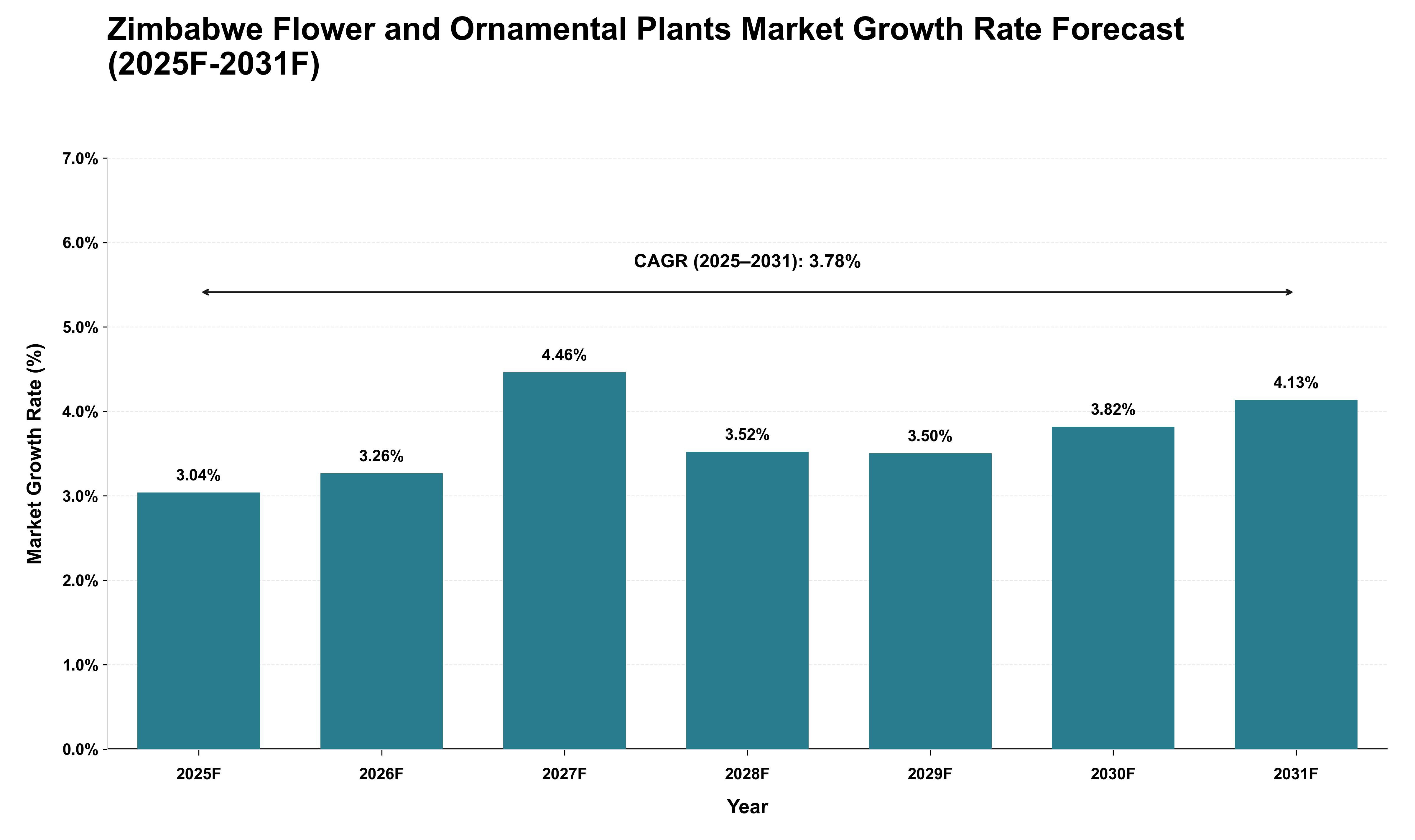
The Zimbabwe flower and ornamental plants market is poised for a steady growth trajectory, with an anticipated compound annual growth rate (CAGR) of 3.78% from 2025 to 2031. This growth will be underpinned by evolving regulatory frameworks that favor sustainable agricultural practices and the increasing demand for ornamental plants in both domestic and export markets. As trade policies become more favorable, particularly regarding import tariffs on horticultural products, the market will likely experience enhanced access to international markets, driving up demand. The projected annual growth rates indicate a cyclical pattern influenced by seasonal planting trends and consumer preferences shifting towards eco-friendly products. By 2031, the market is expected to benefit from a combination of improved supply chain efficiencies and increased investment in local production capabilities, further solidifying its position within the regional horticultural landscape.
Key Highlights of the Report:
- Zimbabwe Flower and Ornamental Plants Market Outlook
- Market Size of Zimbabwe Flower and Ornamental Plants Market, 2025
- Forecast of Zimbabwe Flower and Ornamental Plants Market, 2032
- Historical Data and Forecast of Zimbabwe Flower and Ornamental Plants Revenues & Volume for the Period 2022-2032F
- Zimbabwe Flower and Ornamental Plants Market Trend Evolution
- Zimbabwe Flower and Ornamental Plants Market Drivers and Challenges
- Zimbabwe Flower and Ornamental Plants Price Trends
- Zimbabwe Flower and Ornamental Plants Porter`s Five Forces
- Zimbabwe Flower and Ornamental Plants Industry Life Cycle
- Historical Data and Forecast of Zimbabwe Flower and Ornamental Plants Market Revenues & Volume By Product Type for the Period 2022-2032F
- Historical Data and Forecast of Zimbabwe Flower and Ornamental Plants Market Revenues & Volume By Potted Plants for the Period 2022-2032F
- Historical Data and Forecast of Zimbabwe Flower and Ornamental Plants Market Revenues & Volume By Cut Flowers for the Period 2022-2032F
- Historical Data and Forecast of Zimbabwe Flower and Ornamental Plants Market Revenues & Volume By Application for the Period 2022-2032F
- Historical Data and Forecast of Zimbabwe Flower and Ornamental Plants Market Revenues & Volume By Home for the Period 2022-2032F
- Historical Data and Forecast of Zimbabwe Flower and Ornamental Plants Market Revenues & Volume By Commercial for the Period 2022-2032F
- Zimbabwe Flower and Ornamental Plants Import Export Trade Statistics
- Market Opportunity Assessment By Product Type
- Market Opportunity Assessment By Application
- Zimbabwe Flower and Ornamental Plants Top Companies Market Share
- Zimbabwe Flower and Ornamental Plants Competitive Benchmarking By Technical and Operational Parameters
- Zimbabwe Flower and Ornamental Plants Company Profiles
- Zimbabwe Flower and Ornamental Plants Key Strategic Recommendations






































