Zimbabwe Gas Generator Market: Import Trend Analysis
The Zimbabwe gas generator market witnessed a significant increase in imports from 2020 to 2024, with a Compound Annual Growth Rate (CAGR) of 66.53%. However, there was a slight decrease in the year-on-year growth rate from 2023 to 2024, with a rate of -55.23%. Despite this decline, the overall trend showed a substantial rise in imports during the specified period.
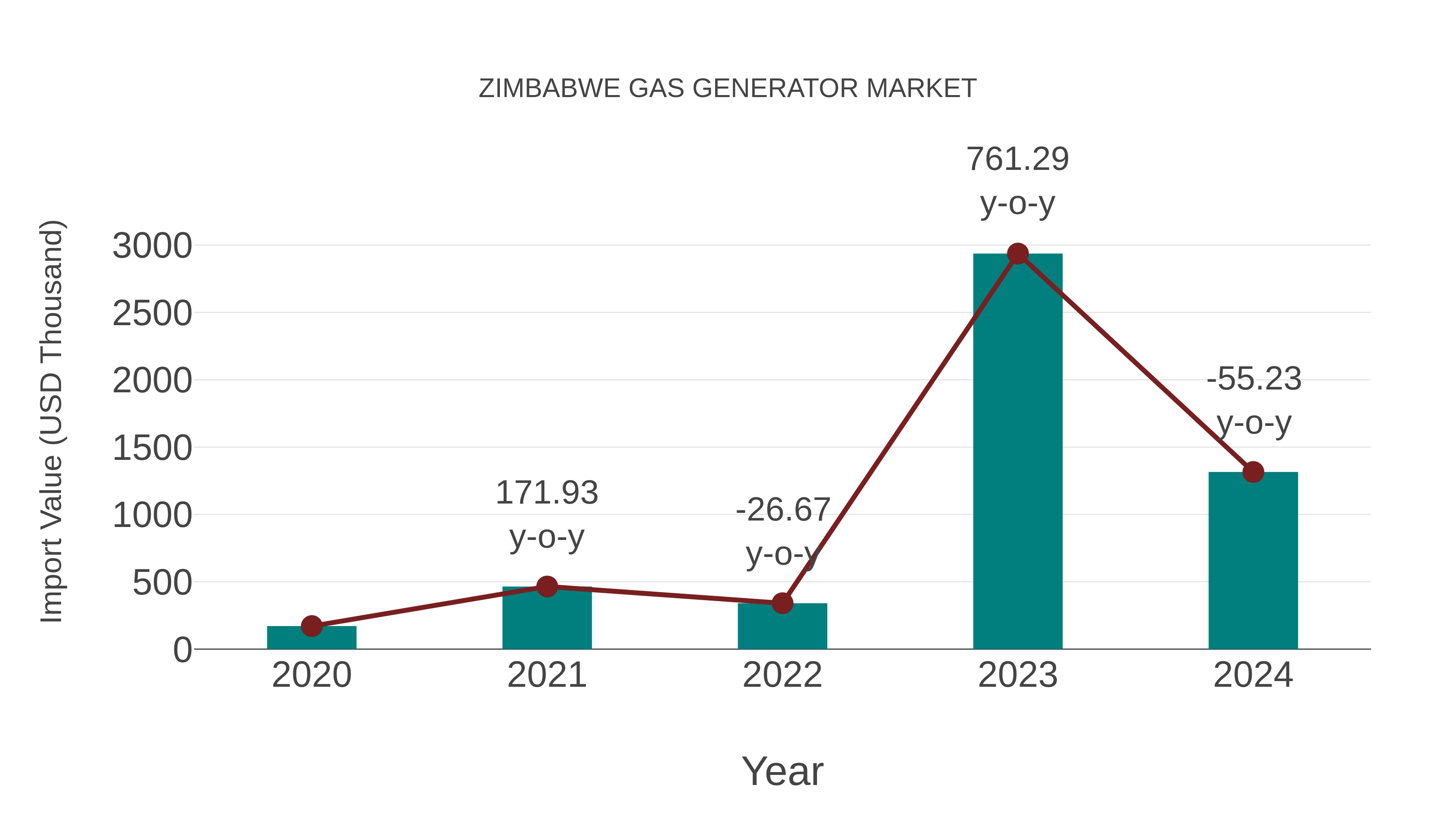
Zimbabwe Gas Generator Market Synopsis
The Zimbabwe gas generator market is experiencing growth driven by factors such as increasing demand for reliable power sources in both urban and rural areas, frequent power outages, and the growing need for backup power solutions for businesses and households. The market is characterized by a wide range of gas generator products offered by both local and international manufacturers, catering to various power capacities and applications. Key players in the market are focusing on product innovation, such as the development of more efficient and environmentally friendly gas generators. Additionally, government initiatives to improve access to electricity in rural areas through off-grid solutions are expected to further drive the growth of the gas generator market in Zimbabwe.
Zimbabwe Gas Generator Market Trends
The gas generator market in Zimbabwe is witnessing a growing demand due to the unreliable electricity supply in the country. Businesses and households are increasingly turning to gas generators as a reliable backup power source. The market is also seeing a shift towards more environmentally friendly options, such as natural gas and biogas generators, in line with global sustainability trends. Additionally, the government`s efforts to promote investment in the energy sector present opportunities for companies to expand their presence in the Zimbabwean market. As the demand for reliable and sustainable power solutions continues to rise, there is potential for further growth and innovation in the gas generator market in Zimbabwe.
Zimbabwe Gas Generator Market Challenges
In the Zimbabwe Gas Generator Market, several challenges are faced primarily due to the country`s economic instability and unreliable power supply. The fluctuating currency value, high inflation rates, and political uncertainties contribute to difficulties in importing gas generators and spare parts, leading to increased costs for businesses and consumers. Additionally, the lack of infrastructure and maintenance services further hinder the market`s growth potential. Moreover, the competition from alternative energy sources such as solar power adds pressure on gas generator manufacturers and distributors to offer competitive pricing and efficient products. Overall, navigating the economic and operational challenges while meeting the demand for reliable power solutions remains a key hurdle for players in the Zimbabwe Gas Generator Market.
Zimbabwe Gas Generator Market Investment Opportunities
The Zimbabwe Gas Generator Market is primarily driven by the growing demand for reliable and uninterrupted power supply in the country. With frequent power outages being a common issue in Zimbabwe, businesses and households are increasingly turning to gas generators as a backup power solution. Additionally, the government`s efforts to promote investments in the energy sector and the expansion of industries such as mining, agriculture, and construction are boosting the demand for gas generators. The availability of natural gas resources in the country also plays a significant role in driving the market growth, as it provides a cost-effective and environmentally friendly fuel option for generators. Overall, the need for continuous power supply, coupled with supportive government policies and abundant natural gas reserves, are key drivers shaping the Zimbabwe Gas Generator Market.
Zimbabwe Gas Generator Market Government Polices
The Zimbabwean government has implemented various policies to support the growth of the gas generator market in the country. One key policy is the promotion of renewable energy sources, including gas generators, to address the country`s energy challenges. The government offers incentives such as tax breaks and subsidies for businesses and individuals investing in gas generators to improve energy efficiency and reduce reliance on traditional fossil fuels. Additionally, there are regulations in place to ensure the safe and sustainable use of gas generators, including licensing requirements and environmental standards. Overall, the government`s policies aim to create a conducive environment for the expansion of the gas generator market in Zimbabwe while promoting energy security and sustainability.
Zimbabwe Gas Generator Market Future Outlook
The future outlook for the Zimbabwe gas generator market appears promising, driven by factors such as increasing demand for reliable and continuous power supply, especially in remote areas with limited access to the national grid. The government`s initiatives to promote renewable energy sources and improve energy infrastructure are expected to further boost the adoption of gas generators in the country. Additionally, the growing industrial and commercial sectors in Zimbabwe are likely to fuel the demand for gas generators as a backup power solution. With advancements in technology leading to more efficient and environmentally friendly gas generator models, the market is projected to witness steady growth in the coming years, presenting opportunities for both domestic and international manufacturers and suppliers to capitalize on this evolving market landscape.
Key Highlights of the Report:
- Zimbabwe Gas Generator Market Outlook
- Market Size of Zimbabwe Gas Generator Market, 2025
- Forecast of Zimbabwe Gas Generator Market, 2032
- Historical Data and Forecast of Zimbabwe Gas Generator Revenues & Volume for the Period 2022 - 2032F
- Zimbabwe Gas Generator Market Trend Evolution
- Zimbabwe Gas Generator Market Drivers and Challenges
- Zimbabwe Gas Generator Price Trends
- Zimbabwe Gas Generator Porter's Five Forces
- Zimbabwe Gas Generator Industry Life Cycle
- Historical Data and Forecast of Zimbabwe Gas Generator Market Revenues & Volume By Capacity for the Period 2022 - 2032F
- Historical Data and Forecast of Zimbabwe Gas Generator Market Revenues & Volume By Less than 75 kVA for the Period 2022 - 2032F
- Historical Data and Forecast of Zimbabwe Gas Generator Market Revenues & Volume By 75-375 kVA for the Period 2022 - 2032F
- Historical Data and Forecast of Zimbabwe Gas Generator Market Revenues & Volume By Above 375 kVA for the Period 2022 - 2032F
- Historical Data and Forecast of Zimbabwe Gas Generator Market Revenues & Volume By End-User for the Period 2022 - 2032F
- Historical Data and Forecast of Zimbabwe Gas Generator Market Revenues & Volume By Residential for the Period 2022 - 2032F
- Historical Data and Forecast of Zimbabwe Gas Generator Market Revenues & Volume By Commercial for the Period 2022 - 2032F
- Historical Data and Forecast of Zimbabwe Gas Generator Market Revenues & Volume By Industrial for the Period 2022 - 2032F
- Zimbabwe Gas Generator Import Export Trade Statistics
- Market Opportunity Assessment By Capacity
- Market Opportunity Assessment By End-User
- Zimbabwe Gas Generator Top Companies Market Share
- Zimbabwe Gas Generator Competitive Benchmarking By Technical and Operational Parameters
- Zimbabwe Gas Generator Company Profiles
- Zimbabwe Gas Generator Key Strategic Recommendations






































