Zimbabwe Lightweight Materials Market Growth Rate Analysis (2025 - 2031)
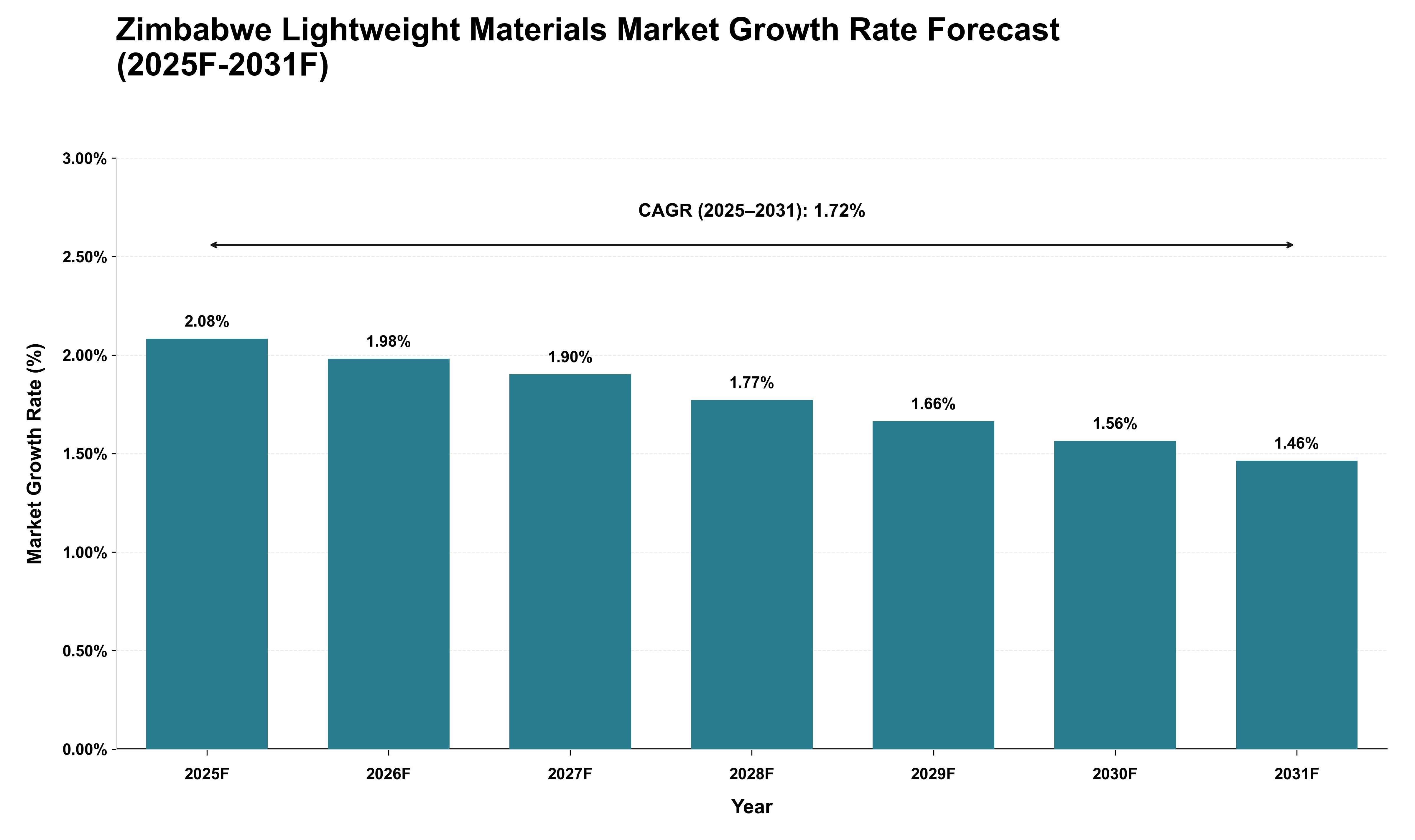
The outlook for Zimbabwe's lightweight materials market will be shaped by a combination of regulatory frameworks and trade policy dynamics that influence import dependencies and domestic production capabilities. As the forecasted CAGR of 1.72% suggests, growth will likely reflect a gradual adjustment to evolving trade agreements and tariffs that could either facilitate or hinder access to essential raw materials. The projected annual growth rates, starting at 2.08% in 2025 and declining to 1.46% by 2031, indicate a potential tightening of market conditions as global supply chains adapt to geopolitical shifts and local regulatory changes. Import policies may become more stringent, impacting the cost structure for manufacturers reliant on foreign inputs, while domestic initiatives aimed at promoting local production could emerge but may take time to materialize fully. Consequently, the interplay between these factors will dictate the pace of innovation and investment within the sector throughout this period.
Key Highlights of the Report:
- Zimbabwe Lightweight Materials Market Outlook
- Market Size of Zimbabwe Lightweight Materials Market, 2024
- Forecast of Zimbabwe Lightweight Materials Market, 2031
- Historical Data and Forecast of Zimbabwe Lightweight Materials Revenues & Volume for the Period 2021-2031
- Zimbabwe Lightweight Materials Market Trend Evolution
- Zimbabwe Lightweight Materials Market Drivers and Challenges
- Zimbabwe Lightweight Materials Price Trends
- Zimbabwe Lightweight Materials Porter`s Five Forces
- Zimbabwe Lightweight Materials Industry Life Cycle
- Historical Data and Forecast of Zimbabwe Lightweight Materials Market Revenues & Volume By Type for the Period 2021-2031
- Historical Data and Forecast of Zimbabwe Lightweight Materials Market Revenues & Volume By Composites for the Period 2021-2031
- Historical Data and Forecast of Zimbabwe Lightweight Materials Market Revenues & Volume By Metals for the Period 2021-2031
- Historical Data and Forecast of Zimbabwe Lightweight Materials Market Revenues & Volume By Plastics for the Period 2021-2031
- Historical Data and Forecast of Zimbabwe Lightweight Materials Market Revenues & Volume By Application for the Period 2021-2031
- Historical Data and Forecast of Zimbabwe Lightweight Materials Market Revenues & Volume By Automotive for the Period 2021-2031
- Historical Data and Forecast of Zimbabwe Lightweight Materials Market Revenues & Volume By Aviation for the Period 2021-2031
- Historical Data and Forecast of Zimbabwe Lightweight Materials Market Revenues & Volume By Marine for the Period 2021-2031
- Historical Data and Forecast of Zimbabwe Lightweight Materials Market Revenues & Volume By Wind Energy for the Period 2021-2031
- Zimbabwe Lightweight Materials Import Export Trade Statistics
- Market Opportunity Assessment By Type
- Market Opportunity Assessment By Application
- Zimbabwe Lightweight Materials Top Companies Market Share
- Zimbabwe Lightweight Materials Competitive Benchmarking By Technical and Operational Parameters
- Zimbabwe Lightweight Materials Company Profiles
- Zimbabwe Lightweight Materials Key Strategic Recommendations






































