Zimbabwe Lime Market Growth Rate Analysis (2025 - 2031)
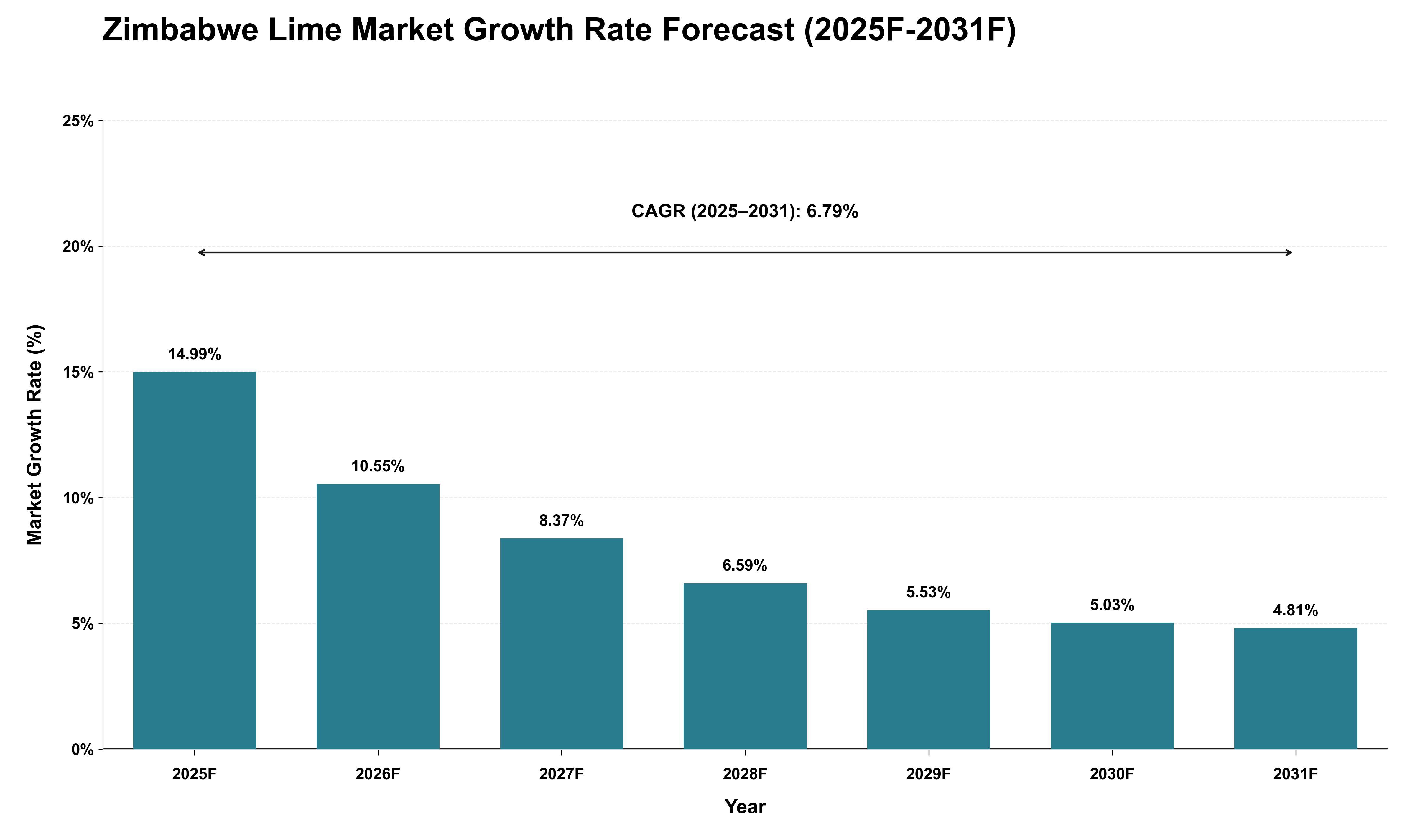
The Zimbabwe lime market will experience a robust growth trajectory driven by increasing end-use demand across various sectors, particularly in agriculture and construction. The projected CAGR of 6.79% from 2025 to 2031 reflects a strong underlying consumption trend, as agricultural practices increasingly adopt lime for soil enhancement and crop yield improvement. Additionally, the construction sector's expansion will fuel demand for lime in cement production and other building materials. Import dependencies may influence pricing dynamics, as fluctuations in global supply chains could impact local availability. The annual growth rates will likely exhibit a gradual decline from 14.99% in 2025 to 4.81% by 2031, indicating an initial surge as industries ramp up usage followed by a stabilization phase as market conditions normalize. This cyclical pattern underscores the interplay between rising domestic consumption and external supply factors shaping the lime market's future landscape in Zimbabwe.
Key Highlights of the Report:
- Zimbabwe Lime Market Outlook
- Market Size of Zimbabwe Lime Market, 2025
- Forecast of Zimbabwe Lime Market, 2032
- Historical Data and Forecast of Zimbabwe Lime Revenues & Volume for the Period 2022-2032F
- Zimbabwe Lime Market Trend Evolution
- Zimbabwe Lime Market Drivers and Challenges
- Zimbabwe Lime Price Trends
- Zimbabwe Lime Porter`s Five Forces
- Zimbabwe Lime Industry Life Cycle
- Historical Data and Forecast of Zimbabwe Lime Market Revenues & Volume By Product Type for the Period 2022-2032F
- Historical Data and Forecast of Zimbabwe Lime Market Revenues & Volume By Quick Lime for the Period 2022-2032F
- Historical Data and Forecast of Zimbabwe Lime Market Revenues & Volume By Hydrated Lime for the Period 2022-2032F
- Historical Data and Forecast of Zimbabwe Lime Market Revenues & Volume By Applications for the Period 2022-2032F
- Historical Data and Forecast of Zimbabwe Lime Market Revenues & Volume By Agriculture for the Period 2022-2032F
- Historical Data and Forecast of Zimbabwe Lime Market Revenues & Volume By Building Material for the Period 2022-2032F
- Historical Data and Forecast of Zimbabwe Lime Market Revenues & Volume By Mining and Metallurgy for the Period 2022-2032F
- Historical Data and Forecast of Zimbabwe Lime Market Revenues & Volume By Water Treatment for the Period 2022-2032F
- Historical Data and Forecast of Zimbabwe Lime Market Revenues & Volume By Others for the Period 2022-2032F
- Zimbabwe Lime Import Export Trade Statistics
- Market Opportunity Assessment By Product Type
- Market Opportunity Assessment By Applications
- Zimbabwe Lime Top Companies Market Share
- Zimbabwe Lime Competitive Benchmarking By Technical and Operational Parameters
- Zimbabwe Lime Company Profiles
- Zimbabwe Lime Key Strategic Recommendations






































