Zimbabwe Luxury Bath and Body Products Market: Import Trend Analysis
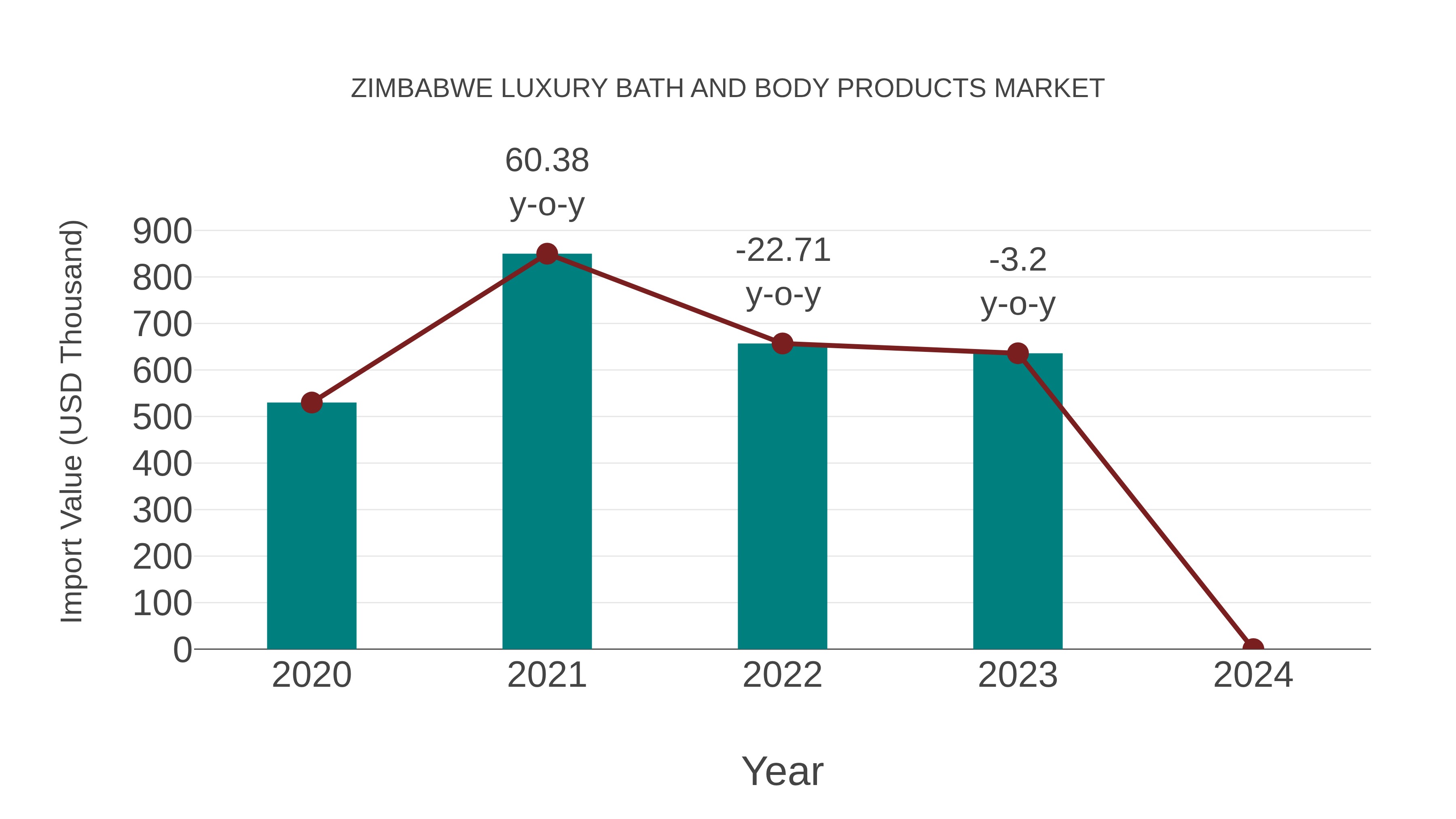
During 2020-2024, the Zimbabwe luxury bath and body products market witnessed a Compound Annual Growth Rate (CAGR) of 6.27%. Import trends remained steady, with a zero year-on-year growth rate in 2023-2024. This overall increase in imports was driven by sustained growth in demand for luxury bath and body products in the Zimbabwean market.
Zimbabwe Luxury Bath And Body Products Market Synopsis
The luxury bath and body products market in Zimbabwe is experiencing growth driven by increasing disposable incomes and a growing awareness of premium personal care products. Consumers are showing a preference for high-quality ingredients, organic formulations, and cruelty-free products. International luxury brands have a strong presence in the market, offering a wide range of products including body washes, lotions, scrubs, and fragrances. Additionally, there is a rising trend towards supporting local artisans and businesses, leading to the emergence of boutique luxury brands that focus on unique, handmade products. The market is becoming more competitive with a focus on innovation, sustainability, and customization to cater to the diverse preferences of Zimbabwean consumers seeking indulgent and effective bath and body products.
Zimbabwe Luxury Bath And Body Products Market Trends
The Zimbabwe luxury bath and body products market is experiencing a growing demand for natural and organic products, with consumers increasingly seeking products that are sustainable and environmentally friendly. There is also a trend towards premium packaging and unique formulations, as consumers are looking for products that offer a luxurious and indulgent experience. Opportunities exist for brands to tap into the rising disposable income of the middle and upper classes in Zimbabwe, as well as to leverage the growing popularity of online shopping platforms to reach a wider audience. Collaborations with local artisans and incorporating traditional African ingredients can also differentiate brands in the market and appeal to consumers looking for authentic and culturally rich products. Overall, there is a promising outlook for luxury bath and body products in Zimbabwe with room for innovation and growth.
Zimbabwe Luxury Bath And Body Products Market Challenges
In the Zimbabwe luxury bath and body products market, several challenges hinder growth and sustainability. These include economic instability and fluctuating currency values, which impact consumer purchasing power and overall demand for luxury products. Additionally, the lack of reliable infrastructure and distribution networks can hinder the efficient supply of these products to consumers across the country. Competition from both local and international brands also poses a challenge in capturing market share and building brand loyalty among consumers. Furthermore, high import costs and taxes on luxury goods can increase the overall cost of production and pricing for these products, making it challenging for companies to remain competitive while maintaining quality standards. Overall, navigating these challenges requires strategic planning, market adaptation, and a deep understanding of the local market dynamics.
Zimbabwe Luxury Bath And Body Products Market Investment Opportunities
The Zimbabwe Luxury Bath and Body Products Market is being primarily driven by increasing disposable income levels among consumers, leading to a growing demand for premium personal care products. The influence of global beauty trends and a growing awareness of the benefits of high-quality ingredients and formulations are also contributing to the market growth. Additionally, the expansion of the e-commerce sector in Zimbabwe has made luxury products more accessible to a wider consumer base, driving sales in the luxury bath and body products segment. Furthermore, the rising trend of self-care and wellness practices among consumers is fueling the demand for indulgent and luxurious bath and body products, leading to a positive outlook for the market in the country.
Zimbabwe Luxury Bath And Body Products Market Government Polices
Government policies in Zimbabwe related to the Luxury Bath and Body Products Market include regulations on importation, quality control standards, and taxation. The government imposes import tariffs and restrictions to protect local industries and encourage domestic production of luxury bath and body products. Quality control standards are enforced to ensure consumer safety and product efficacy. Additionally, taxation policies such as value-added tax (VAT) may apply to these products, affecting pricing and overall market competitiveness. It is important for businesses operating in this market to comply with these regulations to avoid penalties and maintain a strong market presence in Zimbabwe.
Zimbabwe Luxury Bath And Body Products Market Future Outlook
The future outlook for the Zimbabwe Luxury Bath and Body Products Market shows promising growth potential driven by increasing consumer awareness of personal grooming and wellness. The market is expected to witness a surge in demand for premium and high-quality bath and body products as disposable incomes rise and consumers seek indulgent and luxurious experiences. With a growing middle-class population and a shift towards sophisticated grooming routines, there is a significant opportunity for luxury brands to expand their presence and cater to the evolving preferences of Zimbabwean consumers. Key factors such as urbanization, changing lifestyles, and a preference for natural and organic ingredients are likely to shape the market`s trajectory, making it an attractive segment for both local and international players looking to capitalize on this trend.
Key Highlights of the Report:
- Zimbabwe Luxury Bath And Body Products Market Outlook
- Market Size of Zimbabwe Luxury Bath And Body Products Market, 2025
- Forecast of Zimbabwe Luxury Bath And Body Products Market, 2032
- Historical Data and Forecast of Zimbabwe Luxury Bath And Body Products Revenues & Volume for the Period 2022 - 2032F
- Zimbabwe Luxury Bath And Body Products Market Trend Evolution
- Zimbabwe Luxury Bath And Body Products Market Drivers and Challenges
- Zimbabwe Luxury Bath And Body Products Price Trends
- Zimbabwe Luxury Bath And Body Products Porter's Five Forces
- Zimbabwe Luxury Bath And Body Products Industry Life Cycle
- Historical Data and Forecast of Zimbabwe Luxury Bath And Body Products Market Revenues & Volume By Product for the Period 2022 - 2032F
- Historical Data and Forecast of Zimbabwe Luxury Bath And Body Products Market Revenues & Volume By Body Oil for the Period 2022 - 2032F
- Historical Data and Forecast of Zimbabwe Luxury Bath And Body Products Market Revenues & Volume By Body Lotions & Creams for the Period 2022 - 2032F
- Historical Data and Forecast of Zimbabwe Luxury Bath And Body Products Market Revenues & Volume By Body Washes for the Period 2022 - 2032F
- Historical Data and Forecast of Zimbabwe Luxury Bath And Body Products Market Revenues & Volume By Distribution Channel for the Period 2022 - 2032F
- Historical Data and Forecast of Zimbabwe Luxury Bath And Body Products Market Revenues & Volume By Online for the Period 2022 - 2032F
- Historical Data and Forecast of Zimbabwe Luxury Bath And Body Products Market Revenues & Volume By Offline for the Period 2022 - 2032F
- Zimbabwe Luxury Bath And Body Products Import Export Trade Statistics
- Market Opportunity Assessment By Product
- Market Opportunity Assessment By Distribution Channel
- Zimbabwe Luxury Bath And Body Products Top Companies Market Share
- Zimbabwe Luxury Bath And Body Products Competitive Benchmarking By Technical and Operational Parameters
- Zimbabwe Luxury Bath And Body Products Company Profiles
- Zimbabwe Luxury Bath And Body Products Key Strategic Recommendations






































