Zimbabwe Luxury Leather Goods Market: Import Trend Analysis
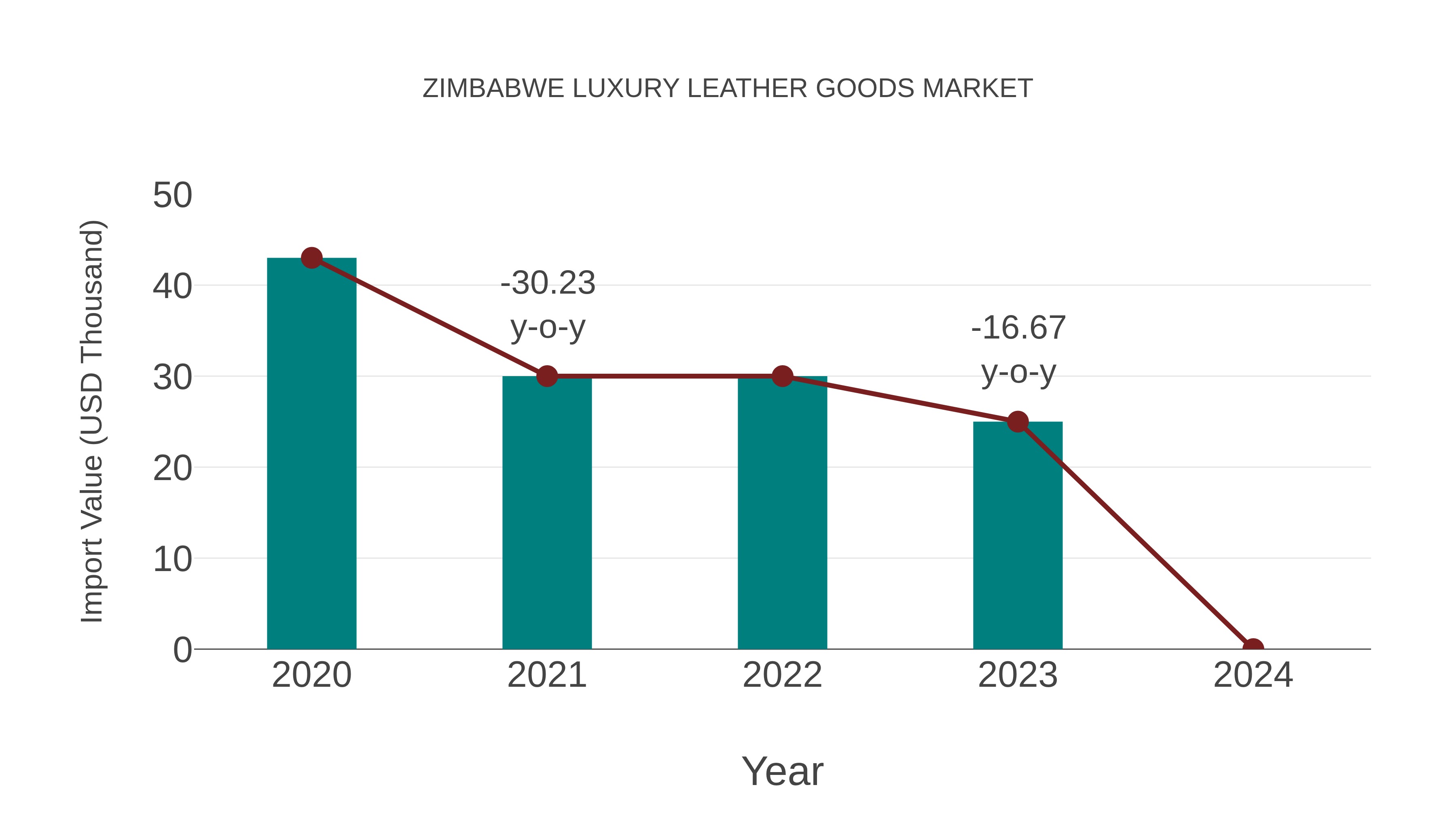
The import trend of Zimbabwe`s luxury leather goods market experienced a decline from 2020 to 2024, with a compound annual growth rate (CAGR) of -16.54%. The year-on-year growth rate for 2023-2024 was zero, indicating a stagnant phase in import activities during this period.
Zimbabwe Luxury Leather Goods Market Synopsis
The Zimbabwe Luxury Leather Goods Market is a niche segment within the country`s overall retail industry, characterized by high-quality, handcrafted leather products targeting affluent consumers. Despite economic challenges in the country, there is a growing demand for luxury leather goods such as handbags, wallets, belts, and accessories, driven by a desire for premium products and status symbols. Local artisans and designers play a significant role in creating unique and bespoke leather items, catering to both domestic and international markets. The market is also influenced by global trends and consumer preferences, with an emphasis on sustainable and ethically sourced materials. Key players in the Zimbabwe Luxury Leather Goods Market focus on craftsmanship, quality, and exclusivity to differentiate themselves and attract discerning customers seeking luxury and elegance in their accessories.
Zimbabwe Luxury Leather Goods Market Trends
The Zimbabwe luxury leather goods market is experiencing a growing demand for high-quality, locally-made products that showcase craftsmanship and authenticity. Consumers are increasingly seeking unique and sustainable pieces that reflect their individuality and support local artisans. This trend presents an opportunity for luxury leather goods brands to differentiate themselves by emphasizing traditional techniques, ethical sourcing, and personalized customer experiences. Collaborations with local designers and artists can also help brands tap into Zimbabwe`s rich cultural heritage and attract a diverse customer base. Additionally, the rise of e-commerce platforms provides a convenient avenue for reaching a wider audience beyond the local market. Overall, the Zimbabwe luxury leather goods market is ripe for innovation and partnerships that cater to the evolving preferences of discerning consumers.
Zimbabwe Luxury Leather Goods Market Challenges
In the Zimbabwe Luxury Leather Goods Market, several challenges are faced, including economic instability, limited access to high-quality raw materials, and a small target market with limited purchasing power. The country`s economic challenges have resulted in fluctuating consumer spending patterns, making it difficult for luxury brands to maintain consistent sales. Additionally, the industry faces difficulties in sourcing premium raw materials locally, leading to reliance on imports which can drive up production costs. Furthermore, the limited size of the affluent consumer base in Zimbabwe poses a challenge for luxury leather goods brands in attracting and retaining customers. Overall, these challenges make it difficult for luxury leather goods brands in Zimbabwe to thrive and expand their market presence.
Zimbabwe Luxury Leather Goods Market Investment Opportunities
The Zimbabwe Luxury Leather Goods Market is primarily driven by the increasing disposable income levels among the growing middle and upper-class population in the country. As individuals have more purchasing power, there is a greater demand for high-quality luxury leather goods as status symbols and for personal indulgence. Additionally, the influence of international fashion trends and the desire for unique and premium products contribute to the market`s growth. The rise of e-commerce platforms has also made luxury leather goods more accessible to a wider audience, further fueling the market expansion. With a focus on craftsmanship, durability, and style, Zimbabwean consumers are increasingly looking to invest in luxury leather products as a symbol of sophistication and social status.
Zimbabwe Luxury Leather Goods Market Government Polices
Government policies related to the Zimbabwe Luxury Leather Goods Market include the implementation of import tariffs and export restrictions to protect local manufacturers and promote domestic production. Additionally, the government has been providing support through financial incentives, such as tax breaks and subsidies, to encourage investment in the local leather industry. There are also regulations in place to ensure the quality and authenticity of luxury leather goods produced in Zimbabwe, with strict enforcement mechanisms to prevent counterfeiting and maintain the reputation of the industry. Overall, the government`s focus is on fostering a competitive and sustainable luxury leather goods market in Zimbabwe through a combination of protectionist measures and supportive policies for local businesses.
Zimbabwe Luxury Leather Goods Market Future Outlook
The future outlook for the Zimbabwe Luxury Leather Goods Market appears promising, driven by an increasing demand for high-quality, locally-made luxury products both domestically and internationally. With a growing middle class and rising disposable incomes, there is a notable shift towards luxury goods consumption in Zimbabwe. The country`s rich heritage in leather craftsmanship provides a competitive advantage, attracting discerning consumers looking for unique and handcrafted items. Furthermore, the global trend towards sustainable and ethically sourced products presents an opportunity for Zimbabwean luxury leather goods manufacturers to capitalize on the demand for environmentally-friendly and socially responsible goods. Overall, the market is likely to experience steady growth, supported by innovation, quality craftsmanship, and a focus on sustainability.
Key Highlights of the Report:
- Zimbabwe Luxury Leather Goods Market Outlook
- Market Size of Zimbabwe Luxury Leather Goods Market, 2025
- Forecast of Zimbabwe Luxury Leather Goods Market, 2032
- Historical Data and Forecast of Zimbabwe Luxury Leather Goods Revenues & Volume for the Period 2022 - 2032F
- Zimbabwe Luxury Leather Goods Market Trend Evolution
- Zimbabwe Luxury Leather Goods Market Drivers and Challenges
- Zimbabwe Luxury Leather Goods Price Trends
- Zimbabwe Luxury Leather Goods Porter's Five Forces
- Zimbabwe Luxury Leather Goods Industry Life Cycle
- Historical Data and Forecast of Zimbabwe Luxury Leather Goods Market Revenues & Volume By Product for the Period 2022 - 2032F
- Historical Data and Forecast of Zimbabwe Luxury Leather Goods Market Revenues & Volume By High- Grade for the Period 2022 - 2032F
- Historical Data and Forecast of Zimbabwe Luxury Leather Goods Market Revenues & Volume By Low-Grade for the Period 2022 - 2032F
- Historical Data and Forecast of Zimbabwe Luxury Leather Goods Market Revenues & Volume By Mid-Grade for the Period 2022 - 2032F
- Historical Data and Forecast of Zimbabwe Luxury Leather Goods Market Revenues & Volume By Application for the Period 2022 - 2032F
- Historical Data and Forecast of Zimbabwe Luxury Leather Goods Market Revenues & Volume By Men for the Period 2022 - 2032F
- Historical Data and Forecast of Zimbabwe Luxury Leather Goods Market Revenues & Volume By Women for the Period 2022 - 2032F
- Historical Data and Forecast of Zimbabwe Luxury Leather Goods Market Revenues & Volume By Distribution Channel for the Period 2022 - 2032F
- Historical Data and Forecast of Zimbabwe Luxury Leather Goods Market Revenues & Volume By Offline Retail Stores for the Period 2022 - 2032F
- Historical Data and Forecast of Zimbabwe Luxury Leather Goods Market Revenues & Volume By Online Retail Stores for the Period 2022 - 2032F
- Zimbabwe Luxury Leather Goods Import Export Trade Statistics
- Market Opportunity Assessment By Product
- Market Opportunity Assessment By Application
- Market Opportunity Assessment By Distribution Channel
- Zimbabwe Luxury Leather Goods Top Companies Market Share
- Zimbabwe Luxury Leather Goods Competitive Benchmarking By Technical and Operational Parameters
- Zimbabwe Luxury Leather Goods Company Profiles
- Zimbabwe Luxury Leather Goods Key Strategic Recommendations






































