Zimbabwe Outdoor Apparel Market: Import Trend Analysis
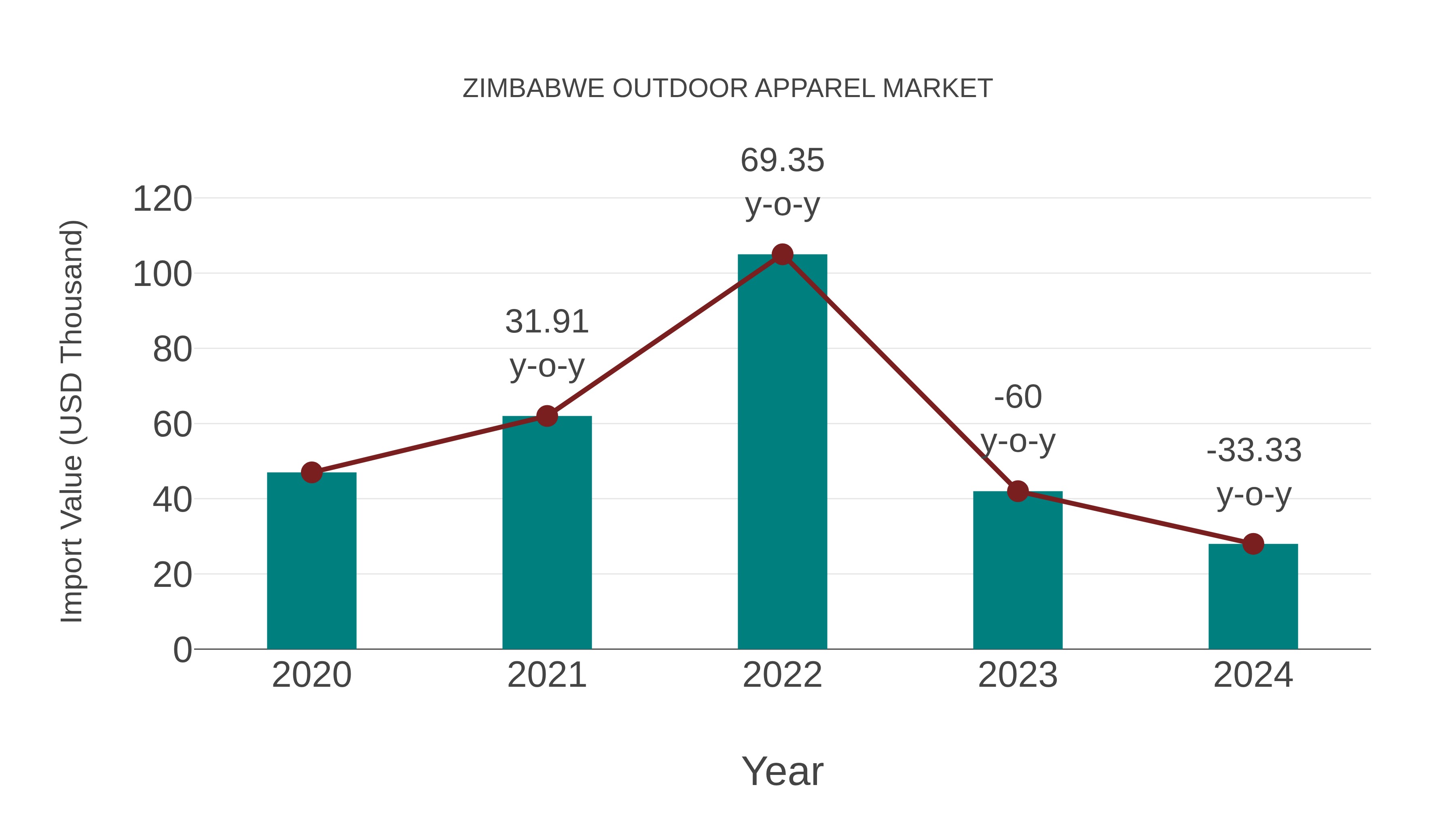
The Zimbabwe outdoor apparel market witnessed a declining trend in imports from 2020 to 2024, with a compound annual growth rate (CAGR) of -12.15%. Particularly in 2023-2024, there was a notable year-on-year decrease of -33.33%, contributing to the overall import decline during the period.
Zimbabwe Outdoor Apparel Market Overview
The Zimbabwe Outdoor Apparel Market is experiencing steady growth driven by a rising interest in outdoor activities and a growing awareness of the importance of functional and durable clothing. The market offers a variety of products including hiking gear, camping equipment, and active wear suitable for outdoor adventures. Local brands are gaining popularity for their quality and affordability, while international brands also have a presence in the market catering to different consumer segments. Factors such as increasing disposable income, a trend towards healthier lifestyles, and a surge in eco-conscious consumers are contributing to the market`s expansion. Retail outlets, online platforms, and specialty stores are key distribution channels for outdoor apparel in Zimbabwe, providing consumers with a wide range of options to choose from.
Zimbabwe Outdoor Apparel Market Trends and Opportunities
The Zimbabwe outdoor apparel market is experiencing a surge in demand for high-quality, durable clothing suitable for outdoor activities such as hiking, camping, and safaris. Consumers are increasingly valuing functionality, performance, and sustainability in their outdoor apparel choices. This trend has created opportunities for brands to introduce innovative, eco-friendly materials and technologies in their products. Additionally, there is a growing interest among Zimbabweans in outdoor recreational activities, driving the need for specialized outdoor gear. Collaborations with local designers and artisans to incorporate traditional elements into modern outdoor apparel could also appeal to a niche market. Overall, the market presents opportunities for brands to cater to the evolving preferences of consumers seeking practical and stylish outdoor clothing options in Zimbabwe.
Zimbabwe Outdoor Apparel Market Challenges
The Zimbabwe Outdoor Apparel Market faces several challenges, including limited access to high-quality materials and technology, which can hinder the production of innovative and durable outdoor clothing. Additionally, fluctuations in currency exchange rates and economic instability in the country can impact consumer purchasing power and overall demand for outdoor apparel. Competition from international brands with established reputations and distribution networks also poses a challenge for local outdoor apparel companies in Zimbabwe. Furthermore, inadequate marketing and promotional efforts, as well as a lack of awareness among consumers about the benefits of outdoor apparel, can make it difficult for domestic brands to gain traction in the market. Overall, addressing these challenges will require strategic investments in materials, technology, marketing, and distribution channels to compete effectively in the Zimbabwe Outdoor Apparel Market.
Zimbabwe Outdoor Apparel Market Drivers
The Zimbabwe Outdoor Apparel Market is primarily driven by the increasing popularity of outdoor recreational activities among the population, leading to a growing demand for specialized outdoor clothing and gear. Factors such as rising disposable income levels, changing lifestyles, and a greater emphasis on health and wellness are also contributing to the market`s growth. Additionally, the influence of social media and the proliferation of outdoor adventure enthusiasts sharing their experiences online are further fueling interest in outdoor apparel. The market is also benefiting from advancements in fabric technology, leading to the availability of high-performance, durable, and comfortable outdoor clothing options. Overall, these drivers are propelling the Zimbabwe Outdoor Apparel Market forward, presenting opportunities for both local and international brands to cater to the evolving needs of consumers seeking quality outdoor gear.
Zimbabwe Outdoor Apparel Market Government Policy
The Zimbabwean government has implemented various policies affecting the outdoor apparel market, including the promotion of locally made products through import tariffs and restrictions on foreign brands. Additionally, the government has supported initiatives to boost the local textile and garment industry by providing incentives for local manufacturers. Furthermore, there are regulations in place to ensure compliance with quality standards and ethical practices within the industry. These policies aim to stimulate domestic production, create employment opportunities, and enhance the competitiveness of Zimbabwean outdoor apparel brands in both local and international markets.
Zimbabwe Outdoor Apparel Market Future Outlook
The future outlook for the Zimbabwe Outdoor Apparel Market appears promising, driven by an increasing trend towards outdoor activities and a growing interest in fitness and wellness among the population. As more Zimbabweans embrace outdoor lifestyles, there is a rising demand for functional and stylish outdoor clothing and gear. International brands entering the market are expected to provide consumers with a wider range of options and drive competition, leading to innovation and improved product quality. Additionally, the government`s efforts to promote tourism and outdoor recreation are likely to further boost the demand for outdoor apparel in Zimbabwe. Overall, the market is anticipated to experience steady growth in the coming years, presenting opportunities for both local and international outdoor apparel brands to expand their presence and offerings in the country.
Key Highlights of the Report:
- Zimbabwe Outdoor Apparel Market Outlook
- Market Size of Zimbabwe Outdoor Apparel Market, 2025
- Forecast of Zimbabwe Outdoor Apparel Market, 2032
- Historical Data and Forecast of Zimbabwe Outdoor Apparel Revenues & Volume for the Period 2022 - 2032F
- Zimbabwe Outdoor Apparel Market Trend Evolution
- Zimbabwe Outdoor Apparel Market Drivers and Challenges
- Zimbabwe Outdoor Apparel Price Trends
- Zimbabwe Outdoor Apparel Porter's Five Forces
- Zimbabwe Outdoor Apparel Industry Life Cycle
- Historical Data and Forecast of Zimbabwe Outdoor Apparel Market Revenues & Volume By Product Type for the Period 2022 - 2032F
- Historical Data and Forecast of Zimbabwe Outdoor Apparel Market Revenues & Volume By Top Wear for the Period 2022 - 2032F
- Historical Data and Forecast of Zimbabwe Outdoor Apparel Market Revenues & Volume By Bottom Wear for the Period 2022 - 2032F
- Historical Data and Forecast of Zimbabwe Outdoor Apparel Market Revenues & Volume By Coverall for the Period 2022 - 2032F
- Historical Data and Forecast of Zimbabwe Outdoor Apparel Market Revenues & Volume By Others for the Period 2022 - 2032F
- Historical Data and Forecast of Zimbabwe Outdoor Apparel Market Revenues & Volume By Material for the Period 2022 - 2032F
- Historical Data and Forecast of Zimbabwe Outdoor Apparel Market Revenues & Volume By Natural for the Period 2022 - 2032F
- Historical Data and Forecast of Zimbabwe Outdoor Apparel Market Revenues & Volume By Synthetic for the Period 2022 - 2032F
- Zimbabwe Outdoor Apparel Import Export Trade Statistics
- Market Opportunity Assessment By Product Type
- Market Opportunity Assessment By Material
- Zimbabwe Outdoor Apparel Top Companies Market Share
- Zimbabwe Outdoor Apparel Competitive Benchmarking By Technical and Operational Parameters
- Zimbabwe Outdoor Apparel Company Profiles
- Zimbabwe Outdoor Apparel Key Strategic Recommendations






































