Zimbabwe Packaged Water Market: Import Trend Analysis
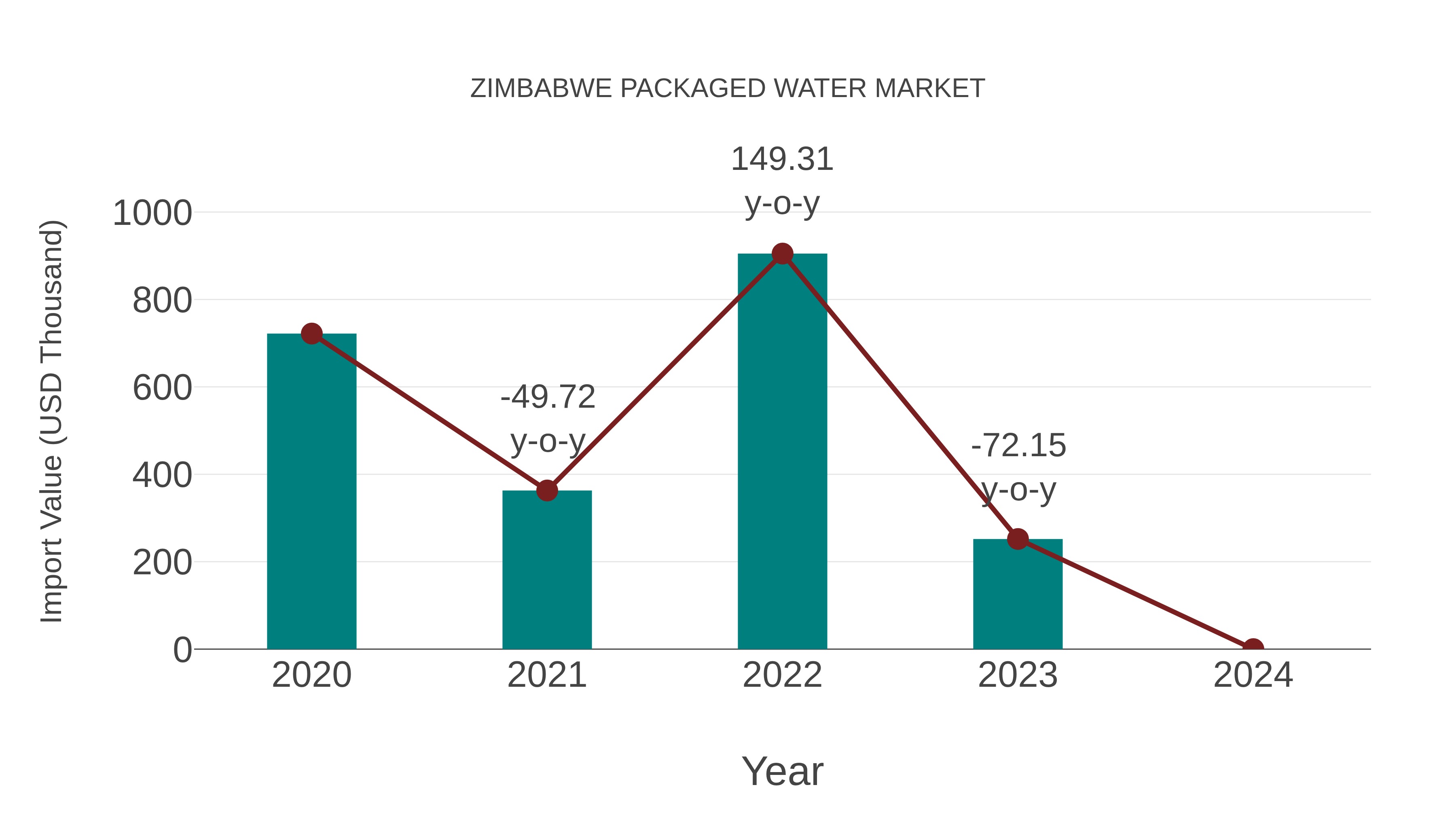
The Zimbabwe packaged water market experienced a significant decline in imports from 2020 to 2024, with a Compound Annual Growth Rate (CAGR) of -29.59%. The year-on-year growth rate for 2023-2024 was zero, contributing to the overall downward trend in imports during this period.
Zimbabwe Packaged water Market Overview
The Zimbabwe packaged water market is experiencing steady growth due to increasing urbanization, rising disposable income levels, and a growing awareness of the importance of safe drinking water. Consumers in Zimbabwe are increasingly opting for packaged water as a convenient and safe alternative to tap water, driven by concerns over water quality and contamination. Key players in the market are focusing on product innovation, such as introducing flavored and functional waters, to cater to changing consumer preferences. The market is also witnessing a shift towards eco-friendly packaging options to appeal to environmentally-conscious consumers. Despite facing challenges related to infrastructure and distribution, the Zimbabwe packaged water market is expected to continue its growth trajectory in the coming years.
Zimbabwe Packaged water Market Trends and Opportunities
The Zimbabwe packaged water market is experiencing significant growth driven by the increasing awareness of the importance of safe drinking water and the convenience of packaged options. Consumers are increasingly seeking purified and mineral-enriched water products, leading to a rise in demand for premium and value-added offerings. The market is also witnessing a shift towards environmentally friendly packaging solutions, such as recyclable materials and biodegradable bottles, in response to growing concerns about plastic waste. Opportunities exist for companies to innovate with unique flavors, functional additives, and sustainable packaging to cater to evolving consumer preferences. Additionally, expanding distribution channels and strategic marketing efforts targeting health-conscious consumers can further drive growth in the Zimbabwe packaged water market.
Zimbabwe Packaged water Market Challenges
In the Zimbabwe packaged water market, key challenges include intense competition among numerous brands leading to price wars and margin pressures, unreliable water supply infrastructure affecting production and distribution, fluctuating input costs such as packaging materials and transportation, and limited consumer purchasing power due to economic instability. Additionally, regulatory issues and compliance requirements in terms of water quality standards and packaging regulations pose challenges for market players. Brand differentiation and building consumer trust in a market flooded with options also present hurdles for companies operating in the Zimbabwe packaged water sector. Overall, navigating these challenges requires strategic planning, innovative marketing approaches, and operational efficiency to sustain growth and profitability in a competitive market environment.
Zimbabwe Packaged water Market Drivers
The Zimbabwe packaged water market is primarily driven by increasing awareness about the importance of clean and safe drinking water, particularly due to concerns about waterborne diseases and unreliable municipal water supply. The growing urban population and rising disposable income levels also contribute to the market growth, as more consumers are willing to pay for convenient and hygienic packaged water options. Additionally, changing lifestyle trends, such as the increasing preference for on-the-go beverages and the shift towards healthier choices, further boost the demand for packaged water in Zimbabwe. Furthermore, the expansion of distribution networks, innovative packaging solutions, and aggressive marketing strategies by key players in the market play a significant role in driving the overall growth of the packaged water sector in the country.
Zimbabwe Packaged water Market Government Policy
The Zimbabwean government has implemented policies to regulate the packaged water market to ensure quality and safety standards are met. The Zimbabwe National Standards (ZNS) agency sets requirements for the bottling, labeling, and testing of packaged water products to protect consumer health. In addition, the government has introduced pricing regulations to prevent price gouging and ensure affordability for consumers. The Ministry of Health and Child Care is responsible for monitoring and enforcing these regulations to maintain the integrity of the packaged water market in Zimbabwe. Overall, these policies aim to safeguard public health, promote fair competition, and maintain consumer trust in the quality of packaged water products in the country.
Zimbabwe Packaged water Market Future Outlook
The future outlook for the Zimbabwe packaged water market appears positive, driven by factors such as increasing health consciousness among consumers, a growing population, and the improving disposable income levels in the country. The demand for convenient and safe drinking water options is expected to rise, especially in urban areas where access to clean water may be limited. As the government and private sector continue to invest in infrastructure development and water purification technologies, the market is likely to witness further growth and innovation. Key players in the industry are expected to focus on product diversification, sustainable packaging solutions, and expanding distribution networks to cater to the evolving consumer preferences and regulatory requirements. Overall, the Zimbabwe packaged water market is projected to experience steady growth in the coming years.
Key Highlights of the Report:
- Zimbabwe Packaged water Market Outlook
- Market Size of Zimbabwe Packaged water Market, 2025
- Forecast of Zimbabwe Packaged water Market, 2032
- Historical Data and Forecast of Zimbabwe Packaged water Revenues & Volume for the Period 2022 - 2032F
- Zimbabwe Packaged water Market Trend Evolution
- Zimbabwe Packaged water Market Drivers and Challenges
- Zimbabwe Packaged water Price Trends
- Zimbabwe Packaged water Porter's Five Forces
- Zimbabwe Packaged water Industry Life Cycle
- Historical Data and Forecast of Zimbabwe Packaged water Market Revenues & Volume By Product for the Period 2022 - 2032F
- Historical Data and Forecast of Zimbabwe Packaged water Market Revenues & Volume By Still for the Period 2022 - 2032F
- Historical Data and Forecast of Zimbabwe Packaged water Market Revenues & Volume By Carbonated for the Period 2022 - 2032F
- Historical Data and Forecast of Zimbabwe Packaged water Market Revenues & Volume By Flavored for the Period 2022 - 2032F
- Historical Data and Forecast of Zimbabwe Packaged water Market Revenues & Volume By Functional for the Period 2022 - 2032F
- Zimbabwe Packaged water Import Export Trade Statistics
- Market Opportunity Assessment By Product
- Zimbabwe Packaged water Top Companies Market Share
- Zimbabwe Packaged water Competitive Benchmarking By Technical and Operational Parameters
- Zimbabwe Packaged water Company Profiles
- Zimbabwe Packaged water Key Strategic Recommendations






































