Zimbabwe Pressure Vessel Market Growth Rate Analysis (2025 - 2031)
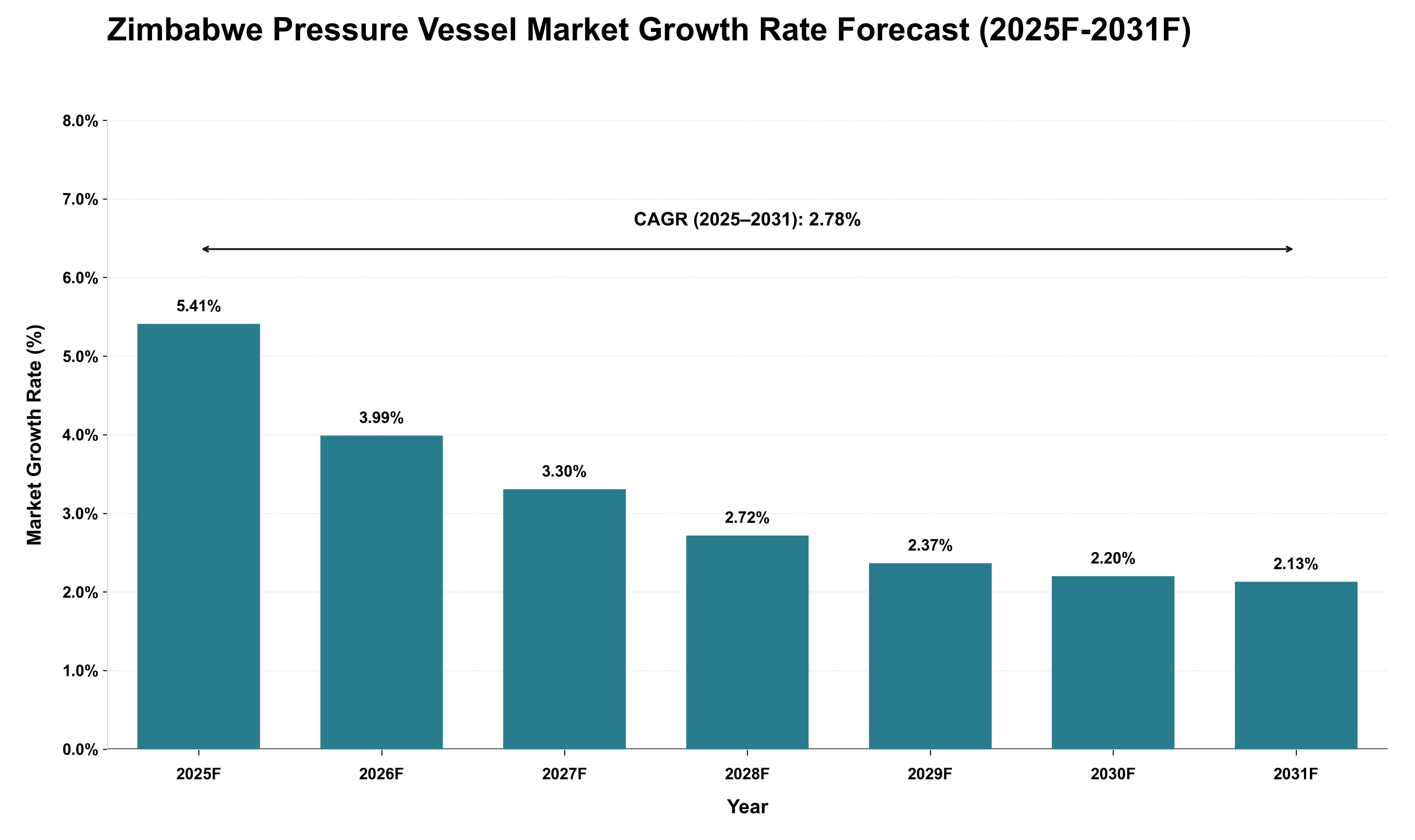
The Zimbabwe pressure vessel market will experience a compound annual growth rate (CAGR) of 2.78% from 2025 to 2031, driven primarily by technological advancements and shifts in product substitution. As industries increasingly adopt innovative materials and manufacturing processes, the demand for more efficient and durable pressure vessels will rise, particularly in sectors such as energy and manufacturing. The initial growth rate of 5.41% in 2025 reflects a robust response to these technological changes, but subsequent years will see a gradual decline in growth rates as the market adjusts to evolving import dependencies and cyclical trends influenced by global supply chain dynamics. By 2031, the growth is projected to stabilize at 2.13%, indicating a transition towards more sustainable production practices while still accommodating the ongoing need for compliance with international safety standards and regulations within Zimbabwe's industrial landscape.
Key Highlights of the Report:
- Zimbabwe Pressure Vessel Market Outlook
- Market Size of Zimbabwe Pressure Vessel Market, 2024
- Forecast of Zimbabwe Pressure Vessel Market, 2031
- Historical Data and Forecast of Zimbabwe Pressure Vessel Revenues & Volume for the Period 2021-2031
- Zimbabwe Pressure Vessel Market Trend Evolution
- Zimbabwe Pressure Vessel Market Drivers and Challenges
- Zimbabwe Pressure Vessel Price Trends
- Zimbabwe Pressure Vessel Porter`s Five Forces
- Zimbabwe Pressure Vessel Industry Life Cycle
- Historical Data and Forecast of Zimbabwe Pressure Vessel Market Revenues & Volume By Type for the Period 2021-2031
- Historical Data and Forecast of Zimbabwe Pressure Vessel Market Revenues & Volume By Boiler for the Period 2021-2031
- Historical Data and Forecast of Zimbabwe Pressure Vessel Market Revenues & Volume By Reactor for the Period 2021-2031
- Historical Data and Forecast of Zimbabwe Pressure Vessel Market Revenues & Volume By Separator for the Period 2021-2031
- Historical Data and Forecast of Zimbabwe Pressure Vessel Market Revenues & Volume By Heat Source for the Period 2021-2031
- Historical Data and Forecast of Zimbabwe Pressure Vessel Market Revenues & Volume By Fired Pressure Vessel for the Period 2021-2031
- Historical Data and Forecast of Zimbabwe Pressure Vessel Market Revenues & Volume By Unfired Pressure Vessel for the Period 2021-2031
- Historical Data and Forecast of Zimbabwe Pressure Vessel Market Revenues & Volume By Application for the Period 2021-2031
- Historical Data and Forecast of Zimbabwe Pressure Vessel Market Revenues & Volume By Storage Vessels for the Period 2021-2031
- Historical Data and Forecast of Zimbabwe Pressure Vessel Market Revenues & Volume By Processing Vessels for the Period 2021-2031
- Zimbabwe Pressure Vessel Import Export Trade Statistics
- Market Opportunity Assessment By Type
- Market Opportunity Assessment By Heat Source
- Market Opportunity Assessment By Application
- Zimbabwe Pressure Vessel Top Companies Market Share
- Zimbabwe Pressure Vessel Competitive Benchmarking By Technical and Operational Parameters
- Zimbabwe Pressure Vessel Company Profiles
- Zimbabwe Pressure Vessel Key Strategic Recommendations






































