Zimbabwe Thread Rolling Machine Market Growth Rate Analysis (2025 - 2031)
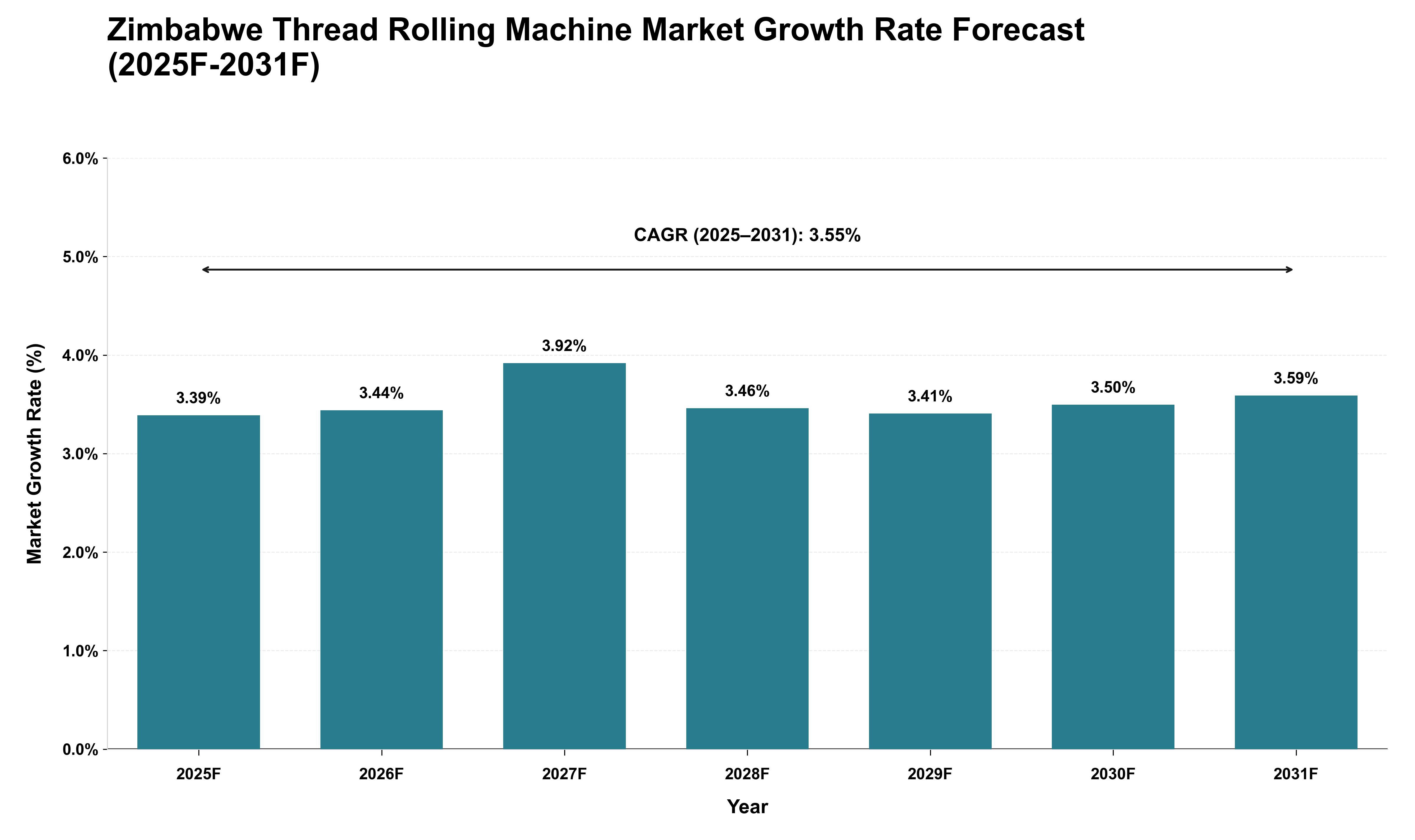
The outlook for the Zimbabwe thread rolling machine market will be shaped by evolving regulatory frameworks and trade policies that influence import dependencies and domestic manufacturing capabilities. As the forecasted CAGR of 3.55% suggests, growth will be driven by a combination of increased investment in local manufacturing infrastructure and a gradual easing of trade restrictions, which will facilitate access to advanced technologies. The annual growth rates indicate a slight fluctuation, with notable peaks in 2027 at 3.92%, reflecting potential policy shifts aimed at enhancing industrial productivity. Furthermore, as global supply chains stabilize post-pandemic, Zimbabwe is expected to benefit from improved import conditions for essential components, thereby supporting consistent demand for thread rolling machines. Overall, these macroeconomic factors will create an environment conducive to sustained growth within this sector through 2031.
Key Highlights of the Report:
- Zimbabwe Thread Rolling Machine Market Outlook
- Market Size of Zimbabwe Thread Rolling Machine Market, 2024
- Forecast of Zimbabwe Thread Rolling Machine Market, 2031
- Historical Data and Forecast of Zimbabwe Thread Rolling Machine Revenues & Volume for the Period 2021-2031
- Zimbabwe Thread Rolling Machine Market Trend Evolution
- Zimbabwe Thread Rolling Machine Market Drivers and Challenges
- Zimbabwe Thread Rolling Machine Price Trends
- Zimbabwe Thread Rolling Machine Porter`s Five Forces
- Zimbabwe Thread Rolling Machine Industry Life Cycle
- Historical Data and Forecast of Zimbabwe Thread Rolling Machine Market Revenues & Volume By Type for the Period 2021-2031
- Historical Data and Forecast of Zimbabwe Thread Rolling Machine Market Revenues & Volume By Two Axis Thread Rolling Machine for the Period 2021-2031
- Historical Data and Forecast of Zimbabwe Thread Rolling Machine Market Revenues & Volume By Three Axis Thread Rolling Machine for the Period 2021-2031
- Historical Data and Forecast of Zimbabwe Thread Rolling Machine Market Revenues & Volume By Application for the Period 2021-2031
- Historical Data and Forecast of Zimbabwe Thread Rolling Machine Market Revenues & Volume By Construction for the Period 2021-2031
- Historical Data and Forecast of Zimbabwe Thread Rolling Machine Market Revenues & Volume By Industrial for the Period 2021-2031
- Historical Data and Forecast of Zimbabwe Thread Rolling Machine Market Revenues & Volume By Others for the Period 2021-2031
- Zimbabwe Thread Rolling Machine Import Export Trade Statistics
- Market Opportunity Assessment By Type
- Market Opportunity Assessment By Application
- Zimbabwe Thread Rolling Machine Top Companies Market Share
- Zimbabwe Thread Rolling Machine Competitive Benchmarking By Technical and Operational Parameters
- Zimbabwe Thread Rolling Machine Company Profiles
- Zimbabwe Thread Rolling Machine Key Strategic Recommendations






































