Brazil Malt Beverages Market Top 5 Importing Countries and Market Competition (HHI) Analysis
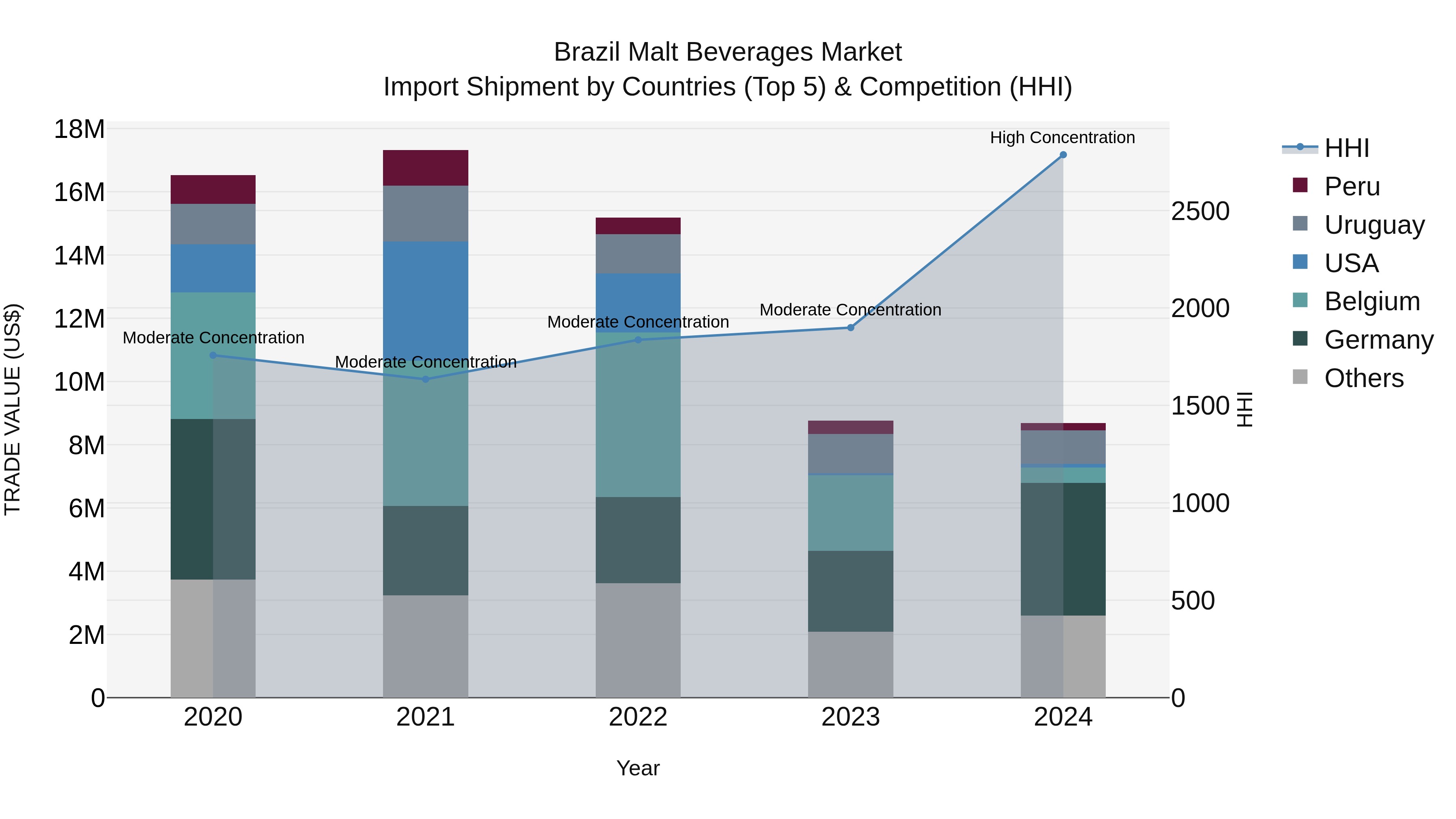
Brazil`s malt beverages import market saw a notable shift in 2024, with top exporters being Germany, Argentina, Uruguay, Belgium, and the UK. The Herfindahl-Hirschman Index (HHI) indicated a transition from moderate to high concentration, reflecting market dynamics. Despite a challenging CAGR of -14.87% from 2020 to 2024, the sector experienced a slightly improved growth rate of -0.94% in 2024 compared to the previous year. This data suggests a complex landscape for malt beverage imports in Brazil, highlighting the need for strategic analysis and decision-making by industry players.
Brazil Malt Beverages Market Highlights
| Report Name | Brazil Malt Beverages Market |
| Forecast period | 2025-2031 |
| CAGR | 6% |
| Growing Sector | Alcoholic Beverages |
Topics Covered in the Brazil Malt Beverages Market Report
Brazil Malt Beverages Market report thoroughly covers the market by product type, and by application. The market report provides an unbiased and detailed analysis of the ongoing market trends, opportunities/high growth areas, and market drivers which would help the stakeholders to devise and align their market strategies according to the current and future market dynamics.
Brazil Malt Beverages Market Synopsis
Brazil Malt Beverages Market is characterized by a robust growth trajectory, fueled by both traditional and innovative product offerings. The rising trend of health-conscious consumption, along with the shift towards non-alcoholic beverages, has led to a notable increase in the demand for malt beverages, positioning them as a viable alternative to other soft drinks and alcoholic beverages. The growing craft beer industry also plays a vital role in boosting the market share of malt beverages, especially flavored options that appeal to younger consumers.
According to 6Wresearch, the Brazil Malt Beverages Market is projected to grow at a CAGR of 6% during the forecast period 2025-2031. Brazil Malt Beverages Market is on a robust growth trajectory, fueled by several key factors. Increasing health consciousness among consumers is driving demand for malt beverages, particularly flavored and non-alcoholic options. This segment is gaining traction as consumers are looking for alternatives to sugary soft drinks and alcoholic beverages. Also, Brazil Malt Beverages Market Growth can be attributed to the expanding distribution channels, such as e-commerce and modern retail formats, which enhance product accessibility. In addition, the growing urban population, especially millennials, is increasingly turning to malt beverages, boosting market size and share.
Despite its promising outlook, the Brazil Malt Beverages Market faces several challenges. Intense competition from both established beverage brands and new entrants can lead to price wars, affecting profit margins. Additionally, fluctuating commodity prices for ingredients like malt and hops can result in increased production costs, making it challenging for companies to maintain pricing strategies. Regulatory constraints, including labeling requirements and alcohol content regulations, can also pose challenges for manufacturers, particularly those looking to introduce innovative products. Companies must navigate these regulatory landscapes carefully to ensure compliance while remaining competitive.
Brazil Malt Beverages Market Trends
In terms of Brazil Malt Beverages Industry trends, flavored malt beverages are at the forefront of innovation. The introduction of unique and exotic flavors is attracting younger consumers, who are more adventurous in their drinking preferences. Brands are leveraging social media and influencer marketing to tap into this demographic, promoting their flavored products as trendy and modern.
Additionally, there is a significant rise in the popularity of craft malt beverages, which are perceived as higher quality and more artisanal compared to mass-produced alternatives. Non-alcoholic malt beverages are also witnessing an upswing, as consumers prioritize health and wellness, leading to a rise in the market share of this category. Research indicates that non-alcoholic options are expected to capture a larger segment of the market as more consumers adopt sober-curious lifestyles.
Investment Opportunities in the Brazil Malt Beverages Market
Brazil Malt Beverages Market presents numerous investment opportunities, particularly for new entrants and existing companies looking to diversify their product lines. The demand for craft beers and unique flavored malt beverages creates avenues for innovation and brand differentiation. Investing in marketing strategies that emphasize quality, sustainability, and local sourcing can yield substantial returns, as consumers increasingly gravitate towards brands that align with their values.
Furthermore, tapping into the burgeoning e-commerce sector presents significant potential for growth, as online sales continue to rise, especially post-pandemic. Companies that can effectively utilize digital marketing and e-commerce platforms to reach consumers are well-positioned to capture a larger market share.
Leading Players in the Brazil Malt Beverages Market
Brazil Malt Beverages Market is characterized by several key players that are driving innovation and competition within the sector. Notable companies include Ambev, Heineken Brasil, Grupo Petrópolis, Diageo, Cervejaria Nova Schin, and Kraft Heinz. These companies leverage their brand strength, innovation, and market insights to capture consumer attention and drive growth within the Brazil Malt Beverages Market. As the market evolves, these key players will continue to adapt their strategies to meet the demands of an increasingly health-conscious and flavor-seeking consumer base.
Government Regulations
Government regulations play a critical role in shaping the Brazil Malt Beverages Market Share. Compliance with regulations surrounding labeling, health claims, and alcohol content is essential for market players. The government’s focus on promoting healthier beverage options can be advantageous for the malt beverage sector, as it aligns with consumer trends toward low-calorie and nutritious products.
Additionally, regulatory bodies are increasingly scrutinizing advertising practices, especially those targeting minors, prompting brands to adopt responsible marketing strategies. Companies must remain vigilant regarding compliance with these regulations while innovating their product offerings to meet consumer demands.
Future Insights of the Brazil Malt Beverages Market
Brazil Malt Beverages Market Size is set to continue its growth trajectory, with future insights indicating a shift towards more sustainable practices and products. The growing emphasis on environmental sustainability is likely to influence consumer preferences, driving demand for organic and sustainably sourced malt beverages.
As awareness regarding health and nutrition increases, consumers are expected to seek out products that not only taste good but also offer health benefits. This shift presents opportunities for brands to develop products that cater to these preferences, thereby expanding their market reach.
Market Segmentation Analysis
The report offers a comprehensive study of the subsequent market segments and their leading categories.
Flavored Malt Beverages to Dominate the Market-By Product Type
According to Ayushi, Senior Research Analyst, 6Wresearch, the Flavored Malt Beverages segment is experiencing significant growth, particularly among younger consumers who prefer innovative flavor combinations. Brands are investing in research and development to create new, unique flavors that appeal to this demographic, driving the overall market growth. The ability to differentiate products through flavors is becoming a key competitive advantage.
Alcoholic Beverages to Dominate the Market-By Application
The alcoholic segment is seeing growth, driven by the rising popularity of craft malt beverages. The craft beer movement in Brazil has stimulated interest in malt-based alcoholic drinks, encouraging consumers to explore diverse flavors and styles. This sector is expected to capture a more significant share of the market as the trend toward artisanal and locally-produced beverages continues.
Key Attractiveness of the Report
- 10 Years of Market Numbers.
- Historical Data Starting from 2021 to 2024
- Base Year: 2024
- Forecast Data until 2031
- Key Performance Indicators Impacting the Market
- Major Upcoming Developments and Projects
Key Highlights of the Report:
- Brazil Malt Beverages Market Outlook
- Market Size of Brazil Malt Beverages Market, 2024
- Forecast of Brazil Malt Beverages Market, 2031
- Historical Data and Forecast of Brazil Malt Beverages Revenues & Volume for the Period 2021 - 2031
- Brazil Malt Beverages Market Trend Evolution
- Brazil Malt Beverages Market Drivers and Challenges
- Brazil Malt Beverages Price Trends
- Brazil Malt Beverages Porter's Five Forces
- Brazil Malt Beverages Industry Life Cycle
- Historical Data and Forecast of Brazil Malt Beverages Market Revenues & Volume By Product Type for the Period 2021 - 2031
- Historical Data and Forecast of Brazil Malt Beverages Market Revenues & Volume By Flavored for the Period 2021 - 2031
- Historical Data and Forecast of Brazil Malt Beverages Market Revenues & Volume By Unflavored for the Period 2021 - 2031
- Historical Data and Forecast of Brazil Malt Beverages Market Revenues & Volume By Applications for the Period 2021 - 2031
- Historical Data and Forecast of Brazil Malt Beverages Market Revenues & Volume By Alcoholic for the Period 2021 - 2031
- Historical Data and Forecast of Brazil Malt Beverages Market Revenues & Volume By Non-Alcoholic for the Period 2021 - 2031
- Brazil Malt Beverages Import Export Trade Statistics
- Market Opportunity Assessment By Product Type
- Market Opportunity Assessment By Applications
- Brazil Malt Beverages Top Companies Market Share
- Brazil Malt Beverages Competitive Benchmarking By Technical and Operational Parameters
- Brazil Malt Beverages Company Profiles
- Brazil Malt Beverages Key Strategic Recommendations
Market Covered
The market report has been segmented and sub segmented into the following categories:
By Product Type
- Flavored
- Unflavored
By Applications
- Alcoholic
- Non-Alcoholic






































