Peru Malt Beverages Market Growth Rate Analysis (2025 - 2031)
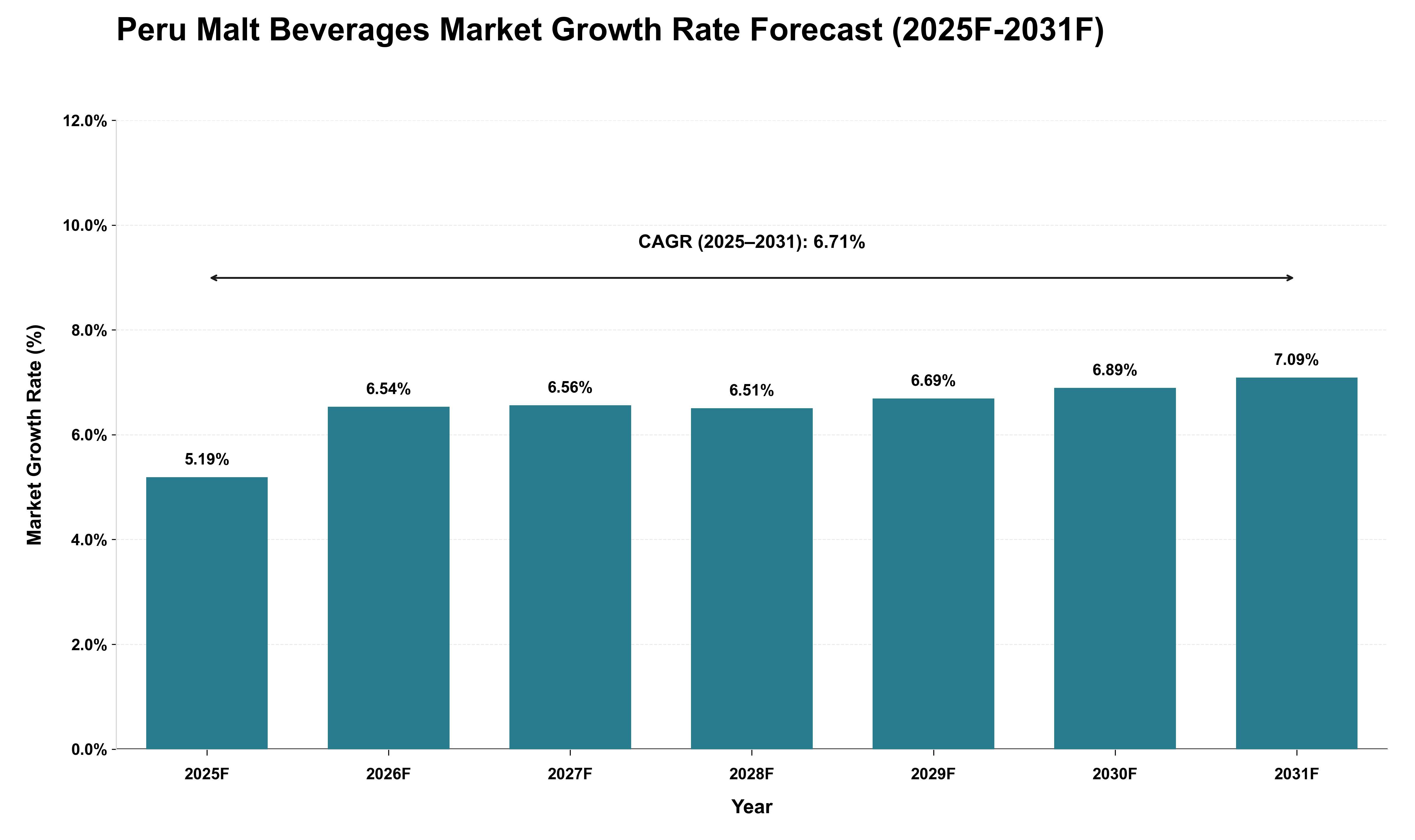
The Peru malt beverages market will experience a notable transformation driven by evolving consumer preferences and increasing disposable incomes, which will enhance import demand for diverse malt beverage offerings. As the forecasted CAGR of 6.71% indicates, annual growth rates will progressively rise from 5.19% in 2025 to 7.09% by 2031, reflecting a robust upward trajectory in trade flows. This growth will be supported by an expanding middle class that seeks premium and varied beverage options, prompting local producers to enhance their product portfolios while also relying on imports to meet consumer expectations for quality and variety. Additionally, the anticipated increase in export opportunities for Peruvian malt beverages will further stimulate trade dynamics, as international markets recognize the unique attributes of these products. Overall, the interplay between domestic consumption trends and global market access will shape the future landscape of Peru's malt beverages sector significantly during this period.
Key Highlights of the Report:
- Peru Malt Beverages Market Outlook
- Market Size of Peru Malt Beverages Market, 2025
- Forecast of Peru Malt Beverages Market, 2032
- Historical Data and Forecast of Peru Malt Beverages Revenues & Volume for the Period 2022 - 2032F
- Peru Malt Beverages Market Trend Evolution
- Peru Malt Beverages Market Drivers and Challenges
- Peru Malt Beverages Price Trends
- Peru Malt Beverages Porter's Five Forces
- Peru Malt Beverages Industry Life Cycle
- Historical Data and Forecast of Peru Malt Beverages Market Revenues & Volume By Product Type for the Period 2022 - 2032F
- Historical Data and Forecast of Peru Malt Beverages Market Revenues & Volume By Flavored for the Period 2022 - 2032F
- Historical Data and Forecast of Peru Malt Beverages Market Revenues & Volume By Unflavored for the Period 2022 - 2032F
- Historical Data and Forecast of Peru Malt Beverages Market Revenues & Volume By Applications for the Period 2022 - 2032F
- Historical Data and Forecast of Peru Malt Beverages Market Revenues & Volume By Alcoholic for the Period 2022 - 2032F
- Historical Data and Forecast of Peru Malt Beverages Market Revenues & Volume By Non-Alcoholic for the Period 2022 - 2032F
- Peru Malt Beverages Import Export Trade Statistics
- Market Opportunity Assessment By Product Type
- Market Opportunity Assessment By Applications
- Peru Malt Beverages Top Companies Market Share
- Peru Malt Beverages Competitive Benchmarking By Technical and Operational Parameters
- Peru Malt Beverages Company Profiles
- Peru Malt Beverages Key Strategic Recommendations






































