Japan 3D Graphene Market (2026-2032) | Drivers, Segmentation, Demand, Challenges, Strategic Insights, Trends, Consumer Insights, Opportunities, Industry, Forecast, Companies, Outlook, Segments, Restraints, Pricing Analysis, Revenue, Competition, Growth, Investment Trends, Analysis, Supply, Value, Size, Strategy, Competitive, Share
Market Forecast By Material Type (Pure, Composite), By Application (Energy, Electronics, Medical), By Manufacturing Process (Chemical Vapor Deposition, Plasma-enhanced), By End user (Automotive, Healthcare, Energy) And Competitive Landscape
| Product Code: ETC11486098 | Publication Date: Apr 2025 | Updated Date: Jul 2026 | Product Type: Market Research Report | |
| Publisher: 6Wresearch | Author: Bhawna Singh | No. of Pages: 65 | No. of Figures: 34 | No. of Tables: 19 |
Japan 3D Graphene Market Growth Rate
According to 6Wresearch internal database and industry insights, the Japan 3D Graphene Market is growing at a compound annual growth rate (CAGR) of 1.4% during the forecast period (2026-2032).
Japan 3D Graphene Market Year-wise Growth Rate and Key Drivers
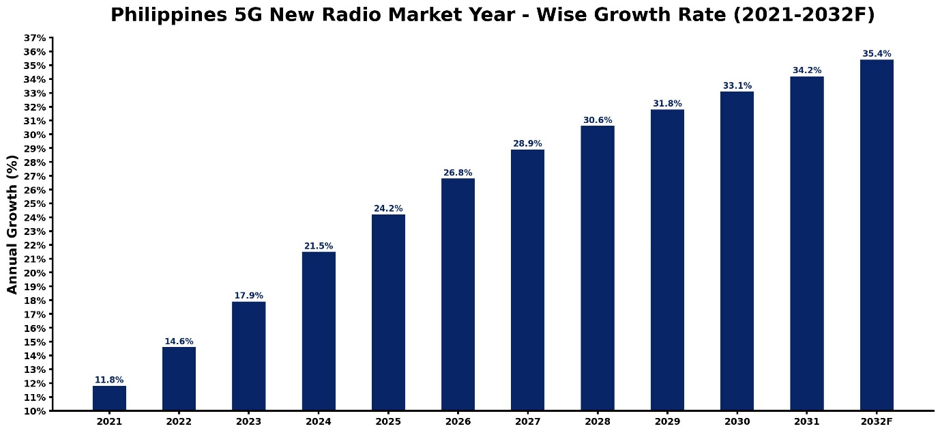
This graph illustrates the annual growth rates of the Japan 3D Graphene Market from 2021 to 2032, highlighting a steady upward trajectory and projected market expansion over the forecast period.
The table below provides a summary of the historical and forecasted growth rates of the Japan 3D Graphene Market, and the rationale behind the performance of each year.
| Years | Estimated Annual Growth (%) | Key Reasons for Growth |
| 2021 | 6.1% | Increased use of graphene in electronics and further development of research on nanomaterials. |
| 2022 | 6.8% | Growing use in automotive coatings Growing use of industrial nanotechnology. |
| 2023 | 7.5% | High R&D spending, rising integration in semiconductor applications. |
| 2024 | 8.3% | Development of graphene-based energy storage applications and improved manufacturing methods. |
| 2025 | 8.9% | Growing commercialization of electronics and increasing adoption of healthcare devices |
| 2026 | 9.2% | Higher consumption in complex electronics, driven by government programs on nanotech. |
| 2027 | 9.4% | Growing demand for healthcare biosensors, surgical-grade materials. |
| 2028 | 9.6% | Steady growth in energy storage systems and a broad industrial deployment. |
| 2029 | 9.7% | Progress in 3D Graphene Composites and Commercialization Scaling. |
| 2030 | 9.8% | Increased integration of medical technologies and applications for precision healthcare. |
| 2031 | 9.9% | Expansion of smart materials in automotive and high-performance electronics. |
| 2032 | 10% | Mature adoption across electronics, healthcare devices, and government-backed innovation programs. |
Topics Covered in the Japan 3D Graphene Market Report
Japan 3D Graphene Market report thoroughly covers the market by country, material type, application, manufacturing process, and end user. The market report provides an unbiased and detailed analysis of ongoing market trends, opportunities/high growth areas, and market drivers, which would help stakeholders devise and align their market strategies according to the current and future market dynamics.
Japan 3D Graphene Market Highlights
| Report Name | Japan 3D Graphene Market |
| Forecast period | 2026-2032 |
| CAGR | 1.4% |
| Growing Sector | Electronics and Energy Storage |
Japan 3D Graphene Market Synopsis
Japan 3D Graphene Market is expected to grow at a healthy rate during the forecast period due to increasing demand for lightweight, high-strength and highly conductive materials in advanced industries. The market is aided by strong semiconductor ecosystem, strong R&D infrastructure and rapid adoption of nanotechnology in electronics, automotive and healthcare sectors. Increasing emphasis on energy-efficient storage systems, flexible electronics and next-generation sensors is further boosting market growth, while ongoing innovations in growing industrial commercialization activities are fortifying long-term adoption prospects in emerging high-tech applications.
Evaluation of Growth Drivers in the Japan 3D Graphene Market (2026-2032)
Below are some of the mentioned growth drivers and their impact on market dynamics:
| Drivers | Primary Segments Affected | Why It Matters |
| Rising Demand for Advanced Materials | Material Type (Composite), Application (Electronics) | Improves device performance, enhances electrical conductivity, and supports next-generation high-efficiency material incorporation. |
| Growth in Energy Storage Technologies | Application (Energy), End User (Energy) | Recovers battery capacity, charging speed, and overall energy efficiency for innovative storage systems. |
| Expansion of Semiconductor Industry | Application (Electronics) | Supports device miniaturization, higher processing speeds, and better-quality thermal and electrical performance. |
| Government Support for Nanotechnology | Material Type, Manufacturing Process | It accelerates R&D innovation, strengthens commercialization pathways and expands industrial-scale adoption of graphene materials. |
| Increasing Automotive Lightweight Trends | End User (Automotive) | Lessens vehicle weight, improves fuel efficiency, and enhances overall structural intensity and durability. |
The Japan 3D Graphene Market is projected to grow significantly, with a CAGR of 1.4% during the forecast period of 2026-2032. The market is increasing due to increasing utilization of graphene in high-performance electronics, energy storage systems and biomedical applications. Additionally, strong government support for advanced material research and the rising investments in semiconductor innovation are fueling the growth across the country. The automotive and industrial sectors are also rapidly adopting them due to increasing demand for lightweight and high conductivity materials.
Evaluation of Restraints in the Japan 3D Graphene Market
Below are some of the mentioned restrains and their impact on market dynamics:
| Restraints | Primary Segments Affected | What This Means |
| High Production Costs | Material Type | Restricts large-scale commercialization, limits price competitiveness, and slows adoption in cost-sensitive industrial applications. |
| Complex Manufacturing Processes | Manufacturing Process | Slows mass production and scalability, increases technical barriers, and delays commercialization timelines. |
| Limited Commercial Awareness | End User | Reduces adoption across industries, slows market penetration, and limits early-stage investment interest. |
| Supply Chain Constraints | End User, Application | Impacts raw material availability and distribution causing production slow down and unreliable supply variability. |
| Regulatory Compliance Challenges | Manufacturing Process | Increases operational requirements and costs, while extending approval timelines for industrial and medical applications. |
Japan 3D Graphene Market Challenges
The Japan 3D Graphene market is being hampered by high fabrication costs, limited large-scale production capability, and complex synthesis processes. There are no standard production methods and the dependence on advanced research infrastructure delays commercialization. In addition, the slow adoption of nanotech in traditional industries and the competition from alternative nanomaterials also hinder the market’s growth. Additionally, inconsistent quality standards and high entry barriers limit scalability, while reliance on specialized facilities and technologies increases overall production complexity and delays widespread industrial integration.
Japan 3D Graphene Market Trends
Some major trends contributing to the Japan 3D Graphene Market Growth are:
- Adoption in Medical Devices: Graphene-based biosensors and diagnostic tools are gaining momentum in healthcare applications, improving early disease detection, exactness, and enables faster, minimally intrusive medical diagnostics solutions.
- Advancements in Nanotechnology R&D: Strong research ecosystem in Japan is surging material innovation, enabling breakthroughs in graphene synthesis, improving performance, scalability, and supporting commercialization through multiple high-tech industries.
- Increasing Use in Automotive Coatings: Graphene coatings improve durability, conductivity, and thermal resistance in vehicles, enhancing corrosion protection, extending component lifespan, and supporting lightweight, high-performance automotive manufacturing solutions.
Investment Opportunities in the Japan 3D Graphene Market
Here are some investment opportunities in the Japan 3D Graphene Industry:
- Battery Innovation Development: Investing in graphene-based batteries can dramatically increase energy density and performance, allowing faster charging, longer lifespan, and improved efficiency for next-generation energy storage systems.
- Semiconductor Enhancement: Graphene can be added to semiconductors for next-generation chip performance, resulting in faster processing speeds, smaller sizes, and enhanced thermal and electrical conductivity in advanced electronics.
- Medical Device Applications: Graphene biosensors developments aid in advanced healthcare diagnostics for highly sensitive detection, real-time monitoring and better accuracy in disease diagnosis and patient care solutions.
Top 5 Leading Players in the Japan 3D Graphene Market
Here are some top companies contributing to Japan 3D Graphene Market Share:
Nippon Graphene Co., Ltd.
| Company Name | Nippon Graphene Co., Ltd. |
| Established Year | 2005 |
| Headquarters | Tokyo, Japan |
| Official Website | - |
Nippon Graphene Co., Ltd. is a key innovator in advanced graphene materials, specializing in high-purity 3D graphene production for electronics and energy applications.
Osaka Gas Co., Ltd.
| Company Name | Osaka Gas Co., Ltd. |
| Established Year | 1897 |
| Headquarters | Osaka, Japan |
| Official Website | Click Here |
Osaka Gas Co., Ltd. specializes in energy supply, gas utilities, and integrated energy services.
ADEKA Corporation
| Company Name | ADEKA Corporation |
| Established Year | 1917 |
| Headquarters | Tokyo, Japan |
| Official Website | Click Here |
ADEKA Corporation specializes in chemicals, polymer additives, and advanced materials.
Kaneka Corporation
| Company Name | Kaneka Corporation |
| Established Year | 1949 |
| Headquarters | Osaka, Japan |
| Official Website | Click Here |
Kaneka Corporation specializes in advanced chemical materials, polymers, and healthcare-related products.
OCSiAl Group
| Company Name | OCSiAl Group |
| Established Year | 2009 |
| Headquarters | Luxembourg |
| Official Website | Click Here |
OCSiAl Group specializes in single-wall carbon nanotube (SWCNT) production and advanced nanomaterials.
Government Regulations Introduced in the Japan 3D Graphene Market
According to the Japanese government data, initiatives to promote advanced material innovation are driving growth in the Japan 3D Graphene Market. The Ministry of Economy, Trade and Industry (METI) actively funds nanotech research programs to speed up commercialization of graphene-based materials. Besides, the Japanese “Moonshot Research and Development Program” is also funding breakthroughs in energy storage and advanced materials. Moreover, university-industry collaboration frameworks further strengthen R&D commercialization and global competitiveness.
Future Insights of the Japan 3D Graphene Market
The future of the Japan 3D Graphene Market seems promising with opportunities in the electronics, energy, and healthcare application segments. With the continuous technological advancements, expanding graphene-based energy storage systems, and increasing investment in semiconductor innovation are expected to drive long-term growth. Government sponsored R&D efforts and increasing uptake by industry will further drive the growth of the market, while ongoing advances in nanomaterial engineering and increased collaboration between industry and research institutions will boost the commercialization prospects for the future.
Market Segmentation Analysis
The report offers a comprehensive study of the following market segments and their leading categories:
By Material Type – Composite Dominated the Market, Set for Rapid Expansion
According to Bhawna Singh, Senior Research Analyst, 6Wresearch, composite graphene materials dominated the Japan 3D Graphene Market with a 62.5% share in 2025, driven by strong demand for enhanced mechanical strength, conductivity, and multifunctional performance across electronics and automotive industries. The segment is expected to grow at a CAGR of 9.6% during 2026–2032 due to increasing industrial-scale adoption and integration into advanced engineering applications.
By Application – Electronics Dominated the Market, Set for Rapid Expansion
The electronics application segment reported for 58.3% of the market in 2025, driven by rising semiconductor demand, miniaturization of devices, and high conductivity requirements. It is expected to grow at a CAGR of 9.8% through 2026-2032 due to expanding use in flexible electronics, sensors, and high-performance computing systems.
By Manufacturing Process – Chemical Vapor Deposition Dominated the Market, Set for Rapid Expansion
Chemical Vapor Deposition held 55.7% Japan 3D Graphene Market Share in 2025 due to its ability to produce high-quality graphene layers with excellent structural control. It is likely to grow at a CAGR of 9.5% during 2026–2032 forecast period as demand for its high-purity graphene increase across electronics and energy applications.
By End User – Energy Sector Dominated the Market, Set for Rapid Expansion
The energy sector dominated with 60.2% share of the market in 2025, driven by increase in adoption in batteries, supercapacitors, and renewable energy storage systems. Also, it is projected to grow at a CAGR of 9.7% through 2026-2032 owing to Japan’s strong focus on clean energy transition and innovative storage technologies.
Note: Market size estimations and growth projections presented in this report are based on 6Wresearch’s advanced forecasting approach, validated with industry datasets as of June 2026.
Key attractiveness of the report
- 10 Years Market Numbers.
- Historical Data Starting from 2022 to 2025.
- Base Year: 2025.
- Forecast Data until 2032.
- Key Performance Indicators Impacting the Market.
- Major Upcoming Developments and Projects.
Key Highlights of the Report:
- Japan 3D Graphene Market Outlook
- Market Size of Japan 3D Graphene Market, 2025
- Forecast of Japan 3D Graphene Market, 2032
- Historical Data and Forecast of Japan 3D Graphene Revenues & Volume for the Period 2022- 2032
- Japan 3D Graphene Market Trend Evolution
- Japan 3D Graphene Market Drivers and Challenges
- Japan 3D Graphene Price Trends
- Japan 3D Graphene Porter's Five Forces
- Japan 3D Graphene Industry Life Cycle
- Historical Data and Forecast of Japan 3D Graphene Market Revenues & Volume By Material Type for the Period 2022- 2032
- Historical Data and Forecast of Japan 3D Graphene Market Revenues & Volume By Pure for the Period 2022- 2032
- Historical Data and Forecast of Japan 3D Graphene Market Revenues & Volume By Composite for the Period 2022- 2032
- Historical Data and Forecast of Japan 3D Graphene Market Revenues & Volume By Application for the Period 2022- 2032
- Historical Data and Forecast of Japan 3D Graphene Market Revenues & Volume By Energy for the Period 2022- 2032
- Historical Data and Forecast of Japan 3D Graphene Market Revenues & Volume By Electronics for the Period 2022- 2032
- Historical Data and Forecast of Japan 3D Graphene Market Revenues & Volume By Medical for the Period 2022- 2032
- Historical Data and Forecast of Japan 3D Graphene Market Revenues & Volume By Manufacturing Process for the Period 2022- 2032
- Historical Data and Forecast of Japan 3D Graphene Market Revenues & Volume By Chemical Vapor Deposition for the Period 2022- 2032
- Historical Data and Forecast of Japan 3D Graphene Market Revenues & Volume By Plasma-enhanced for the Period 2022- 2032
- Historical Data and Forecast of Japan 3D Graphene Market Revenues & Volume By End user for the Period 2022- 2032
- Historical Data and Forecast of Japan 3D Graphene Market Revenues & Volume By Automotive for the Period 2022- 2032
- Historical Data and Forecast of Japan 3D Graphene Market Revenues & Volume By Healthcare for the Period 2022- 2032
- Historical Data and Forecast of Japan 3D Graphene Market Revenues & Volume By Energy for the Period 2022- 2032
- Japan 3D Graphene Import Export Trade Statistics
- Market Opportunity Assessment By Material Type
- Market Opportunity Assessment By Application
- Market Opportunity Assessment By Manufacturing Process
- Market Opportunity Assessment By End user
- Japan 3D Graphene Top Companies Market Share
- Japan 3D Graphene Competitive Benchmarking By Technical and Operational Parameters
- Japan 3D Graphene Company Profiles
- Japan 3D Graphene Key Strategic Recommendations
Market covered
The report subsequently covers the market by following segments and subsegments.
By Material Type
- Pure
- Composite
By Application
- Energy
- Electronics
- Medical
By Manufacturing Process
- Chemical Vapor Deposition
- Plasma-enhanced
By End User
- Automotive
- Healthcare
- Energy
Japan 3D Graphene Market (2026-2032) : FAQs
The Japan 3D Graphene Market is projected to grow at a CAGR of 1.4% during the forecast period (2026-2032).
The growth is mainly due to composite graphene materials for their improved strength, high conductivity and wide industrial applications.
The electronics application segment is the major segment due to the growth in semiconductor, miniaturization and high-performance device requirements.
Energy sector is the major end-user, owing to the increasing demand for innovative batteries, supercapacitors and renewable energy storage systems.
6Wresearch actively monitors the Japan 3D Graphene Market and publishes its comprehensive annual report, highlighting emerging trends, growth drivers, revenue analysis, and forecast outlook. Our insights help businesses to make data-backed strategic decisions with ongoing market dynamics. Our analysts track relevent industries related to the Japan 3D Graphene Market, allowing our clients with actionable intelligence and reliable forecasts tailored to emerging regional needs.
Yes, we provide customisation as per your requirements. To learn more, feel free to contact us on sales@6wresearch.com
| 1 Executive Summary |
| 2 Introduction |
| 2.1 Key Highlights of the Report |
| 2.2 Report Description |
| 2.3 Market Scope & Segmentation |
| 2.4 Research Methodology |
| 2.5 Assumptions |
| 3 Japan 3D Graphene Market Overview |
| 3.1 Japan Country Macro Economic Indicators |
| 3.2 Japan 3D Graphene Market Revenues & Volume, 2022 & 2032F |
| 3.3 Japan 3D Graphene Market - Industry Life Cycle |
| 3.4 Japan 3D Graphene Market - Porter's Five Forces |
| 3.5 Japan 3D Graphene Market Revenues & Volume Share, By Material Type, 2022 & 2032F |
| 3.6 Japan 3D Graphene Market Revenues & Volume Share, By Application, 2022 & 2032F |
| 3.7 Japan 3D Graphene Market Revenues & Volume Share, By Manufacturing Process, 2022 & 2032F |
| 3.8 Japan 3D Graphene Market Revenues & Volume Share, By End user, 2022 & 2032F |
| 4 Japan 3D Graphene Market Dynamics |
| 4.1 Impact Analysis |
| 4.2 Market Drivers |
| 4.2.1 Technological advancements in 3D graphene manufacturing processes |
| 4.2.2 Growing demand for lightweight and durable materials in various industries |
| 4.2.3 Increased research and development activities focused on enhancing 3D graphene applications |
| 4.3 Market Restraints |
| 4.3.1 High production costs associated with 3D graphene manufacturing |
| 4.3.2 Limited scalability of 3D graphene production on an industrial level |
| 4.3.3 Regulatory challenges related to the commercialization of 3D graphene products |
| 5 Japan 3D Graphene Market Trends |
| 6 Japan 3D Graphene Market, By Types |
| 6.1 Japan 3D Graphene Market, By Material Type |
| 6.1.1 Overview and Analysis |
| 6.1.2 Japan 3D Graphene Market Revenues & Volume, By Material Type, 2022 - 2032F |
| 6.1.3 Japan 3D Graphene Market Revenues & Volume, By Pure, 2022 - 2032F |
| 6.1.4 Japan 3D Graphene Market Revenues & Volume, By Composite, 2022 - 2032F |
| 6.2 Japan 3D Graphene Market, By Application |
| 6.2.1 Overview and Analysis |
| 6.2.2 Japan 3D Graphene Market Revenues & Volume, By Energy, 2022 - 2032F |
| 6.2.3 Japan 3D Graphene Market Revenues & Volume, By Electronics, 2022 - 2032F |
| 6.2.4 Japan 3D Graphene Market Revenues & Volume, By Medical, 2022 - 2032F |
| 6.3 Japan 3D Graphene Market, By Manufacturing Process |
| 6.3.1 Overview and Analysis |
| 6.3.2 Japan 3D Graphene Market Revenues & Volume, By Chemical Vapor Deposition, 2022 - 2032F |
| 6.3.3 Japan 3D Graphene Market Revenues & Volume, By Plasma-enhanced, 2022 - 2032F |
| 6.4 Japan 3D Graphene Market, By End user |
| 6.4.1 Overview and Analysis |
| 6.4.2 Japan 3D Graphene Market Revenues & Volume, By Automotive, 2022 - 2032F |
| 6.4.3 Japan 3D Graphene Market Revenues & Volume, By Healthcare, 2022 - 2032F |
| 6.4.4 Japan 3D Graphene Market Revenues & Volume, By Energy, 2022 - 2032F |
| 7 Japan 3D Graphene Market Import-Export Trade Statistics |
| 7.1 Japan 3D Graphene Market Export to Major Countries |
| 7.2 Japan 3D Graphene Market Imports from Major Countries |
| 8 Japan 3D Graphene Market Key Performance Indicators |
| 8.1 Research and development investment in 3D graphene technologies |
| 8.2 Number of patents filed for 3D graphene innovations |
| 8.3 Adoption rate of 3D graphene in key industries |
| 9 Japan 3D Graphene Market - Opportunity Assessment |
| 9.1 Japan 3D Graphene Market Opportunity Assessment, By Material Type, 2022 & 2032F |
| 9.2 Japan 3D Graphene Market Opportunity Assessment, By Application, 2022 & 2032F |
| 9.3 Japan 3D Graphene Market Opportunity Assessment, By Manufacturing Process, 2022 & 2032F |
| 9.4 Japan 3D Graphene Market Opportunity Assessment, By End user, 2022 & 2032F |
| 10 Japan 3D Graphene Market - Competitive Landscape |
| 10.1 Japan 3D Graphene Market Revenue Share, By Companies, 2025 |
| 10.2 Japan 3D Graphene Market Competitive Benchmarking, By Operating and Technical Parameters |
| 11 Company Profiles |
| 12 Recommendations |
| 13 Disclaimer |
Global Go To Market Strategy - 2030
Export potential enables firms to identify high-growth global markets with greater confidence by combining advanced trade intelligence with a structured quantitative methodology. The framework analyzes emerging demand trends and country-level import patterns while integrating macroeconomic and trade datasets such as GDP and population forecasts, bilateral import–export flows, tariff structures, elasticity differentials between developed and developing economies, geographic distance, and import demand projections. Using weighted trade values from 2020–2024 as the base period to project country-to-country export potential for 2030, these inputs are operationalized through calculated drivers such as gravity model parameters, tariff impact factors, and projected GDP per-capita growth. Through an analysis of hidden potentials, demand hotspots, and market conditions that are most favorable to success, this method enables firms to focus on target countries, maximize returns, and global expansion with data, backed by accuracy.
By factoring in the projected importer demand gap that is currently unmet and could be potential opportunity, it identifies the potential for the Exporter (Country) among 190 countries, against the general trade analysis, which identifies the biggest importer or exporter.
To discover high-growth global markets and optimize your business strategy:
Click Here
Pricing
- Single User License$ 1,995
- Department License$ 2,400
- Site License$ 3,120
- Global License$ 3,795

Leadership Perspectives from Industry Events
Search
Thought Leadership and Analyst Meet





Our Clients








6WResearch In News
- India Air Conditioner Market Set for Strong Rebound in 2026 After Weather-Led Correction and GST-Driven Recovery: 6Wresearch
- ADAS in India: How Automatic Emergency Braking, Blind Spot Detection & Driver Monitoring are Transforming Road Safety
- Doha a strategic location for EV manufacturing hub: IPA Qatar
- Demand for luxury TVs surging in the GCC, says Samsung
- Empowering Growth: The Thriving Journey of Bangladesh’s Cable Industry
- Demand for luxury TVs surging in the GCC, says Samsung
Latest Reports
- Nicaragua RPG Gaming Market (2026-2032)
- New Zealand RPG Gaming Market (2026-2032)
- Netherlands RPG Gaming Market (2026-2032)
- Nauru RPG Gaming Market (2026-2032)
- Namibia RPG Gaming Market (2026-2032)
- Mozambique RPG Gaming Market (2026-2032)
- Montenegro RPG Gaming Market (2026-2032)
- Mongolia RPG Gaming Market (2026-2032)
- Monaco RPG Gaming Market (2026-2032)
- Micronesia RPG Gaming Market (2026-2032)
Industry Events and Analyst Meet

EV India Expo 2026

HIMTEX 2026

India Refining Summit 2026

India EV Show 2026

EV tech India Expo 2026
Whitepaper
- Middle East & Africa Commercial Security Market Click here to view more.
- Middle East & Africa Fire Safety Systems & Equipment Market Click here to view more.
- GCC Drone Market Click here to view more.
- Middle East Lighting Fixture Market Click here to view more.
- GCC Physical & Perimeter Security Market Click here to view more.


