Algeria Physiotherapy Equipment Market Summary
The algeria physiotherapy equipment market was estimated at USD 383 Million in 2025 and is projected to reach USD 532 Million by 2032, growing at a CAGR of 6.0% from 2026 to 2032.
Algeria Physiotherapy Equipment Market Year-wise Growth Rate and Key Drivers
This graph highlights how the Algeria Physiotherapy Equipment Market has steadily grown over the past five years, supported by major growth factors.
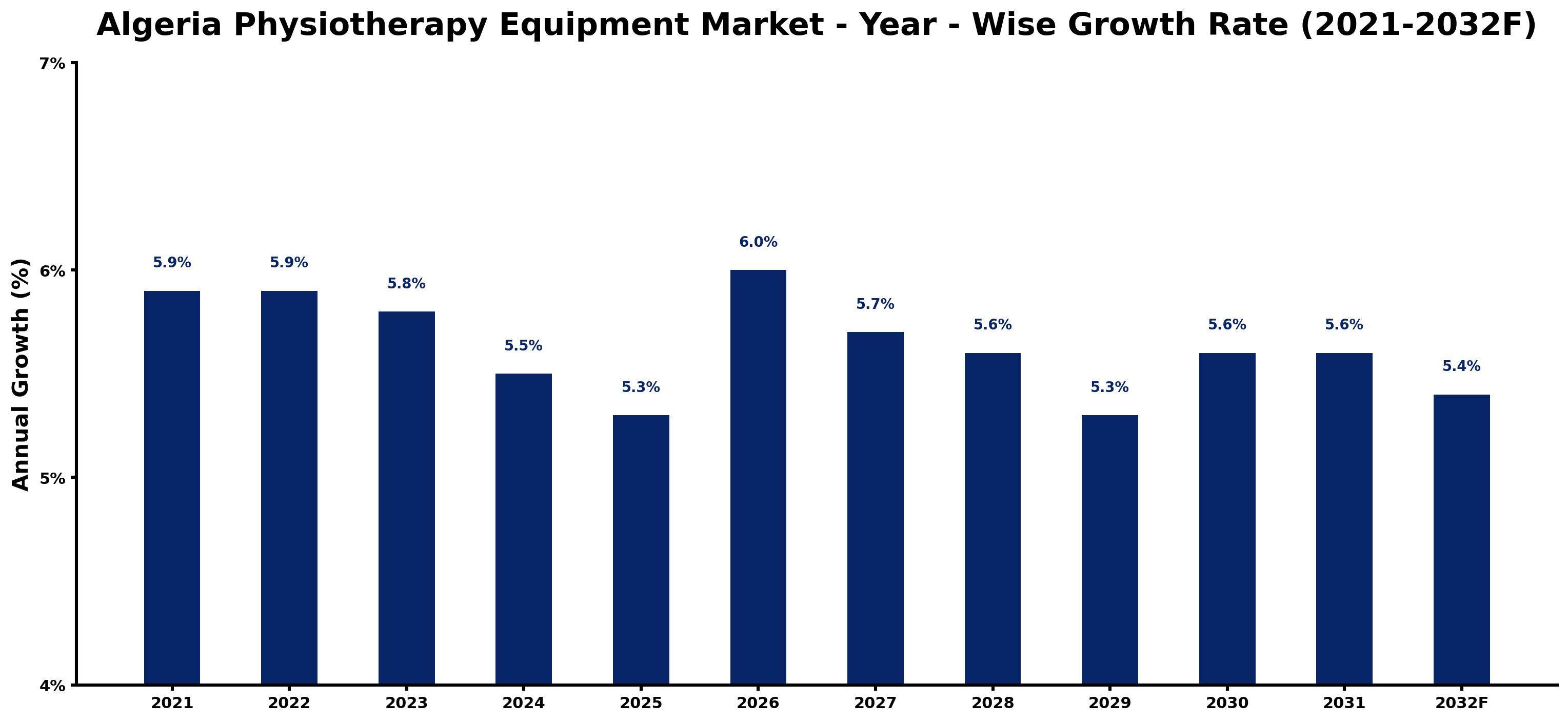
The table below presents the year wise growth rates along with the key drivers influencing the market
| Year | Growth Rate | Major Drivers |
| 2021 | 5.9% | Healthcare infrastructure development was prioritized, enhancing physiotherapy services across Algeria. |
| 2022 | 5.9% | Local manufacturers began producing affordable physiotherapy equipment, improving market accessibility significantly. |
| 2023 | 5.8% | An increase in sports activities led to higher demand for rehabilitation equipment nationwide. |
| 2024 | 5.5% | Public awareness campaigns highlighted the importance of physiotherapy for injury recovery. |
| 2025 | 5.3% | Technological innovation in physiotherapy equipment boosted treatment effectiveness and patient satisfaction. |
| 2026 | 6.0% | Emerging telehealth services expanded access to physiotherapy consultations and support. |
| 2027 | 5.7% | International partnerships fostered knowledge transfer and improved product quality in the market. |
| 2028 | 5.6% | An aging population necessitated more specialized physiotherapy solutions for elderly care. |
| 2029 | 5.3% | Urbanization trends resulted in burgeoning outpatient clinics offering physiotherapy services. |
| 2030 | 5.6% | Local universities introduced advanced physiotherapy programs, educating skilled practitioners for the market. |
| 2031 | 5.6% | Corporate wellness programs increasingly included physiotherapy, promoting employee health management. |
| 2032 | 5.4% | Sustainability initiatives encouraged eco-friendly manufacturing practices in physiotherapy equipment production. |
Note - Market size estimations and growth projections presented in this report are based on 6Wresearch's advanced forecasting approach, validated with industry datasets as of June 2026.
Algeria Physiotherapy Equipment Market Synopsis
The Algeria Physiotherapy Equipment Market is projected to reach 6.0% and witness significant growth during the forecast period (2026-2032). Factors contributing to this growth include an increasing prevalence of chronic diseases, a rapidly expanding elderly population, and heightened awareness of the importance of rehabilitation and physical therapy in recovery. The demand for physiotherapy equipment is further propelled by advancements in technology, with manufacturers striving to introduce innovative products to meet the evolving requirements of healthcare providers and patients alike.
Algeria Physiotherapy Equipment Market Growth Drivers
The growth of the Algeria Physiotherapy Equipment Market is driven by several key factors. First, the rising incidence of chronic diseases such as diabetes, cardiovascular issues, and musculoskeletal disorders necessitates increased accessibility to rehabilitation services. Second, the demographic shift towards a larger elderly population is creating greater demand for physiotherapy as older individuals often require physical rehabilitation post-illness or surgery. Third, the growing public awareness regarding the benefits of physiotherapy is encouraging more individuals to seek treatment and, consequently, increasing the need for various physiotherapy equipment. Fourth, investment in healthcare infrastructure by both public and private sectors in Algeria is facilitating access to modern physiotherapy services and equipment. Lastly, the introduction of advanced technologies, such as digital health solutions and tele-rehabilitation platforms, is revolutionizing the way physiotherapy is delivered, creating opportunities for market expansion.
Algeria Physiotherapy Equipment Market Trends and Opportunities
Emerging trends within the Algeria Physiotherapy Equipment Market indicate a significant shift towards integrating advanced technologies in rehabilitation practices. The following trends are particularly noteworthy:
- There is a growing demand for portable and user-friendly physiotherapy devices that enhance treatment efficacy and patient convenience.
- The rise of digital health solutions, including tele-rehabilitation options, is becoming increasingly popular as it allows healthcare providers to offer remote therapeutic support and monitor patient progress.
- Healthcare facilities are leaning towards eco-friendly and sustainable physiotherapy equipment, aligning with global movements for environmental responsibility.
- Innovation in robotics and automation within rehabilitation equipment is expected to improve patient outcomes and streamline therapy sessions.
- Healthcare providers are increasingly focusing on customized therapy solutions that cater specifically to the diverse needs of patients across age groups and medical conditions.
Algeria Physiotherapy Equipment Market Challenges and Restraints
Despite the positive outlook, the Algeria Physiotherapy Equipment Market is facing several challenges. One major issue is the limited public awareness surrounding the benefits of physiotherapy, which hampers service utilization and equipment adoption. Additionally, there exists a shortage of qualified professionals in the field, making it difficult to deliver effective therapy services. The high costs associated with advanced physiotherapy equipment pose another barrier, particularly in underprivileged regions where budget constraints limit purchasing capabilities. Furthermore, inadequate healthcare infrastructure in certain areas restricts access to necessary physiotherapy services. Lastly, regulatory challenges, including the lack of standardized guidelines for equipment procurement and usage, complicate market operations and could hinder growth.
Algeria Physiotherapy Equipment Market Government Investment and Initiatives
The Algerian government has made substantial investments and initiated various policies to enhance the physiotherapy equipment market. The Ministry of Health plays a pivotal role in regulating and promoting standards for physiotherapy equipment, ensuring the safety and quality for both patients and professionals. Import regulations and licensing are strictly enforced to facilitate the entry of high-quality equipment while maintaining international standards. Furthermore, there are efforts to foster local manufacturing capabilities to reduce dependency on imports, encouraging innovation within the sector. Training programs for physiotherapists have also been introduced to elevate the skill set required for utilizing advanced equipment effectively, thereby improving service delivery across the country. Overall, government policies are aimed at enhancing the healthcare environment, ensuring the availability of quality physiotherapy equipment, and supporting local industry growth.
Algeria Physiotherapy Equipment Market Latest Developments (May 2025 - June 2026)
Recent developments in the Algeria Physiotherapy Equipment Market have focused on advancing technological integration and improving healthcare accessibility. During this period, a notable increase in investment has been observed in local healthcare facilities, leading to the procurement of modern physiotherapy equipment. Additionally, new initiatives aimed at telehealth solutions have been launched, making physiotherapy services more accessible in remote areas. Training sessions have been conducted to familiarize healthcare professionals with innovative equipment, enhancing service delivery. Sustainability has also become a focal point, with new eco-friendly equipment options emerging in the market. These developments reflect a progressive shift towards a comprehensive healthcare approach in Algeria.
Algeria Physiotherapy Equipment Market - Key Attractiveness of the Report
- 10 Years of Market Numbers
- Historical Data Starting from 2022 to 2025
- Base Year: 2025
- Forecast Data until 2032
- Key Performance Indicators Impacting the Market
- Major Upcoming Developments and Projects
Key Highlights of the Report:
- Algeria Physiotherapy Equipment Market Outlook
- Market Size of Algeria Physiotherapy Equipment Market, 2025
- Forecast of Algeria Physiotherapy Equipment Market, 2032F
- Historical Data and Forecast of Algeria Physiotherapy Equipment Revenues & Volume for the Period 2022-2032F
- Algeria Physiotherapy Equipment Market Trend Evolution
- Algeria Physiotherapy Equipment Market Drivers and Challenges
- Algeria Physiotherapy Equipment Price Trends
- Algeria Physiotherapy Equipment Porter's Five Forces
- Algeria Physiotherapy Equipment Industry Life Cycle
- Historical Data and Forecast of Algeria Physiotherapy Equipment Market Revenues & Volume By Product Types for the Period 2022-2032F
- Historical Data and Forecast of Algeria Physiotherapy Equipment Market Revenues & Volume By Equipment for the Period 2022-2032F
- Historical Data and Forecast of Algeria Physiotherapy Equipment Market Revenues & Volume By Accessories for the Period 2022-2032F
- Historical Data and Forecast of Algeria Physiotherapy Equipment Market Revenues & Volume By Application? for the Period 2022-2032F
- Historical Data and Forecast of Algeria Physiotherapy Equipment Market Revenues & Volume By Musculoskeletal Applications for the Period 2022-2032F
- Historical Data and Forecast of Algeria Physiotherapy Equipment Market Revenues & Volume By Neurological Applications for the Period 2022-2032F
- Historical Data and Forecast of Algeria Physiotherapy Equipment Market Revenues & Volume By Cardiovascular & Pulmonary Applications for the Period 2022-2032F
- Historical Data and Forecast of Algeria Physiotherapy Equipment Market Revenues & Volume By Pediatric Applications for the Period 2022-2032F
- Historical Data and Forecast of Algeria Physiotherapy Equipment Market Revenues & Volume By Gynecological Applications for the Period 2022-2032F
- Historical Data and Forecast of Algeria Physiotherapy Equipment Market Revenues & Volume By Other? for the Period 2022-2032F
- Historical Data and Forecast of Algeria Physiotherapy Equipment Market Revenues & Volume By End-user for the Period 2022-2032F
- Historical Data and Forecast of Algeria Physiotherapy Equipment Market Revenues & Volume By Physiotherapy & Rehabilitation Centers for the Period 2022-2032F
- Historical Data and Forecast of Algeria Physiotherapy Equipment Market Revenues & Volume By Hospitals for the Period 2022-2032F
- Historical Data and Forecast of Algeria Physiotherapy Equipment Market Revenues & Volume By Home Care Settings for the Period 2022-2032F
- Historical Data and Forecast of Algeria Physiotherapy Equipment Market Revenues & Volume By Physician Offices for the Period 2022-2032F
- Historical Data and Forecast of Algeria Physiotherapy Equipment Market Revenues & Volume By Others for the Period 2022-2032F
- Algeria Physiotherapy Equipment Import Export Trade Statistics
- Market Opportunity Assessment By Product Types
- Market Opportunity Assessment By Application?
- Market Opportunity Assessment By End-user
- Algeria Physiotherapy Equipment Top Companies Market Share
- Algeria Physiotherapy Equipment Competitive Benchmarking By Technical and Operational Parameters
- Algeria Physiotherapy Equipment Company Profiles
- Algeria Physiotherapy Equipment Key Strategic Recommendations






































