Argentina Food Blenders and Mixers Market: Import Trend Analysis
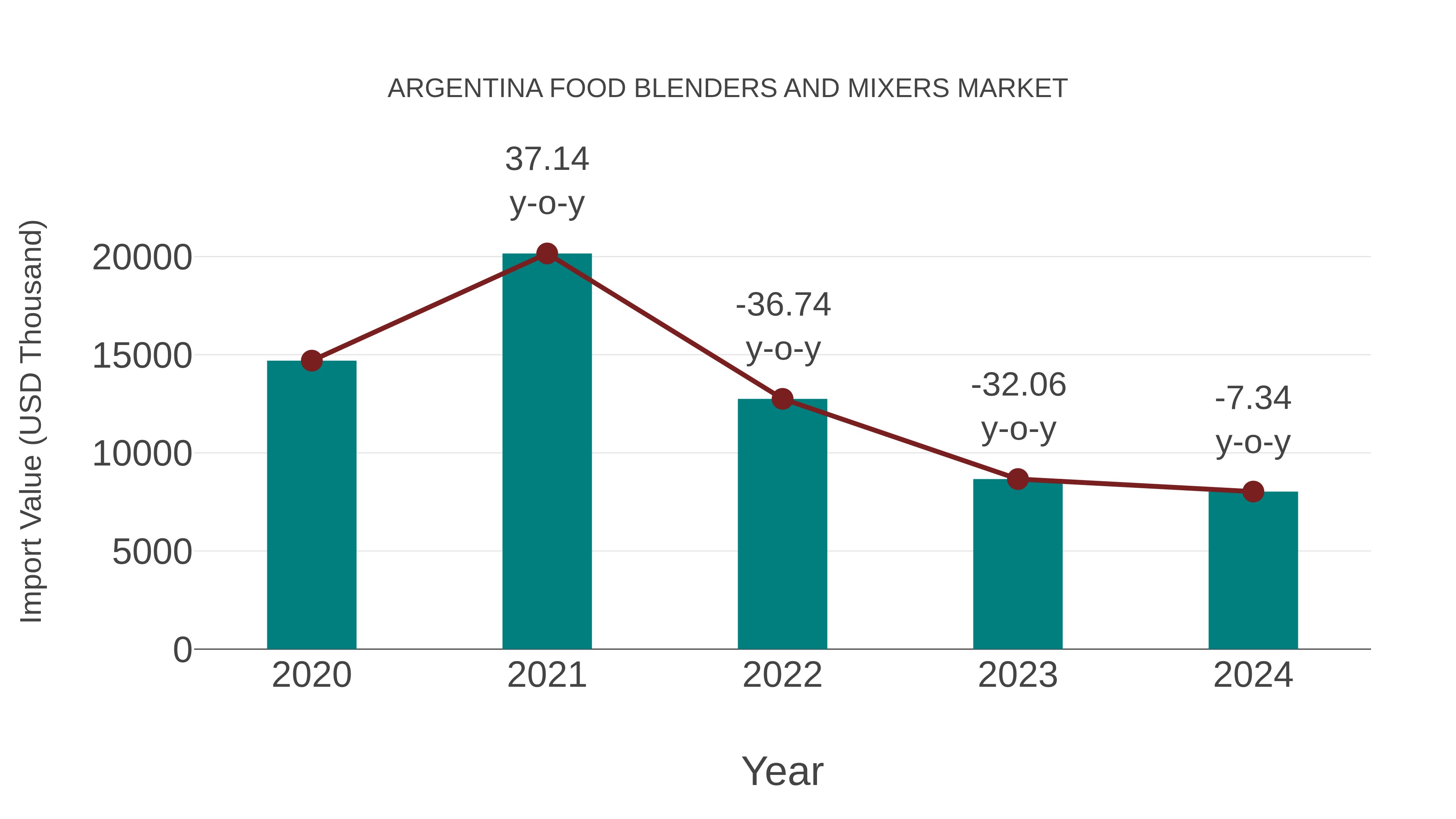
The Argentina food blenders and mixers market witnessed a significant decline in imports during 2020-2024, with a CAGR of -14.03%. In 2023-2024, the year-on-year growth rate further decreased by -7.34%, contributing to the overall downward trend in import volumes during the period.
Argentina Food Blenders and Mixers Market Synopsis
The Argentina Food Blenders and Mixers Market is experiencing steady growth due to increasing consumer demand for convenient and efficient kitchen appliances. With a focus on modernizing kitchen equipment, manufacturers are introducing advanced features such as multiple speed settings, digital interfaces, and enhanced blending capabilities. Key players in the market are investing in research and development to offer innovative products that cater to diverse consumer needs. The market is also witnessing a rise in demand for commercial-grade blenders and mixers in restaurants, cafes, and bakeries. Additionally, the trend towards healthy eating habits is driving the demand for blenders and mixers that can efficiently process fruits, vegetables, and other ingredients. Overall, the Argentina Food Blenders and Mixers Market is poised for further growth with a focus on technological advancements and product innovation.
Argentina Food Blenders and Mixers Market Trends
The Argentina Food Blenders and Mixers Market is experiencing steady growth driven by increasing consumer demand for convenient and efficient cooking appliances. The market is seeing a rise in demand for high-quality blenders and mixers that offer versatile functions such as blending, mixing, chopping, and grinding. Manufacturers are focusing on developing advanced technologies to enhance product performance and durability. Additionally, there is a growing trend towards compact and space-saving blender and mixer designs to cater to the needs of small households and urban dwellers. Opportunities lie in catering to the health-conscious consumer segment by offering blenders and mixers that support healthy eating habits, such as smoothie-making capabilities and easy cleaning features. Overall, the market presents opportunities for innovation, product diversification, and strategic partnerships to capitalize on the evolving consumer preferences in Argentina.
Argentina Food Blenders and Mixers Market Challenges
In the Argentina Food Blenders and Mixers Market, some of the key challenges faced include intense competition from both domestic and international manufacturers, leading to price wars and margin pressures. Additionally, fluctuations in raw material prices can impact production costs, affecting the overall profitability of companies in the market. Regulatory hurdles and compliance requirements also pose challenges for manufacturers, especially in terms of food safety standards and labeling regulations. Moreover, the economic instability and currency fluctuations in Argentina can impact consumer purchasing power, leading to fluctuations in demand for food blenders and mixers. Adapting to rapidly changing consumer preferences and technological advancements in the industry further add to the complexities faced by players in the market.
Argentina Food Blenders and Mixers Market Investment Opportunities
The Argentina Food Blenders and Mixers Market is primarily driven by increasing consumer demand for convenient and time-saving kitchen appliances, coupled with the rising trend of home cooking and baking. The growing preference for healthier and customized food options has also boosted the demand for food blenders and mixers, as they enable consumers to prepare a variety of dishes and beverages with ease. Additionally, advancements in technology, such as the development of multifunctional blenders and mixers with smart features, are further propelling market growth. The expanding food and beverage industry in Argentina, coupled with the rising disposable income levels of consumers, is expected to continue driving the demand for food blenders and mixers in the country.
Argentina Food Blenders and Mixers Market Government Polices
Government policies related to the Argentina Food Blenders and Mixers Market include regulations on food safety standards, import and export requirements, and tariffs. The government has implemented measures to ensure that food blenders and mixers meet strict quality and safety standards to protect consumer health. Import and export regulations play a crucial role in controlling the flow of products in and out of the country, with tariffs impacting the cost of imported goods. Additionally, the government may offer incentives or subsidies to support local manufacturers and promote the growth of the domestic market. Overall, these policies aim to maintain a competitive and sustainable environment for businesses operating in the food blenders and mixers market in Argentina.
Argentina Food Blenders and Mixers Market Future Outlook
The future outlook for the Argentina Food Blenders and Mixers Market appears promising, driven by factors such as increasing urbanization, changing consumer lifestyles, and a growing demand for convenience foods. The market is expected to witness steady growth due to rising disposable incomes, a growing focus on healthy eating habits, and the expanding food and beverage industry in the region. Technological advancements in blending and mixing equipment are anticipated to drive innovation and product development, catering to the evolving consumer preferences. However, challenges such as fluctuations in raw material prices and regulatory constraints may impact market growth. Overall, the Argentina Food Blenders and Mixers Market is poised for expansion, offering opportunities for manufacturers to introduce innovative products and capture a larger market share.
Key Highlights of the Report:
- Argentina Food Blenders and Mixers Market Outlook
- Market Size of Argentina Food Blenders and Mixers Market, 2025
- Forecast of Argentina Food Blenders and Mixers Market, 2032
- Historical Data and Forecast of Argentina Food Blenders and Mixers Revenues & Volume for the Period 2022 - 2032F
- Argentina Food Blenders and Mixers Market Trend Evolution
- Argentina Food Blenders and Mixers Market Drivers and Challenges
- Argentina Food Blenders and Mixers Price Trends
- Argentina Food Blenders and Mixers Porter's Five Forces
- Argentina Food Blenders and Mixers Industry Life Cycle
- Historical Data and Forecast of Argentina Food Blenders and Mixers Market Revenues & Volume By Type for the Period 2022 - 2032F
- Historical Data and Forecast of Argentina Food Blenders and Mixers Market Revenues & Volume By High Shear for the Period 2022 - 2032F
- Historical Data and Forecast of Argentina Food Blenders and Mixers Market Revenues & Volume By Shaft for the Period 2022 - 2032F
- Historical Data and Forecast of Argentina Food Blenders and Mixers Market Revenues & Volume By Ribbon Mixer for the Period 2022 - 2032F
- Historical Data and Forecast of Argentina Food Blenders and Mixers Market Revenues & Volume By Double Cone for the Period 2022 - 2032F
- Historical Data and Forecast of Argentina Food Blenders and Mixers Market Revenues & Volume By Planetary Mixer for the Period 2022 - 2032F
- Historical Data and Forecast of Argentina Food Blenders and Mixers Market Revenues & Volume By Screw Mixers & Blenders for the Period 2022 - 2032F
- Historical Data and Forecast of Argentina Food Blenders and Mixers Market Revenues & Volume By Application for the Period 2022 - 2032F
- Historical Data and Forecast of Argentina Food Blenders and Mixers Market Revenues & Volume By Bakery for the Period 2022 - 2032F
- Historical Data and Forecast of Argentina Food Blenders and Mixers Market Revenues & Volume By Dairy for the Period 2022 - 2032F
- Historical Data and Forecast of Argentina Food Blenders and Mixers Market Revenues & Volume By Beverages for the Period 2022 - 2032F
- Historical Data and Forecast of Argentina Food Blenders and Mixers Market Revenues & Volume By Confectionery for the Period 2022 - 2032F
- Argentina Food Blenders and Mixers Import Export Trade Statistics
- Market Opportunity Assessment By Type
- Market Opportunity Assessment By Application
- Argentina Food Blenders and Mixers Top Companies Market Share
- Argentina Food Blenders and Mixers Competitive Benchmarking By Technical and Operational Parameters
- Argentina Food Blenders and Mixers Company Profiles
- Argentina Food Blenders and Mixers Key Strategic Recommendations






































