Argentina Milk Protein Market: Import Trend Analysis
The Argentina milk protein market witnessed a significant decline in imports during 2020-2024, with a Compound Annual Growth Rate (CAGR) of -26.38%. The year-on-year growth rate for 2023-2024 stood at -79.16%, indicating a continued downward trend in import volumes over this period.
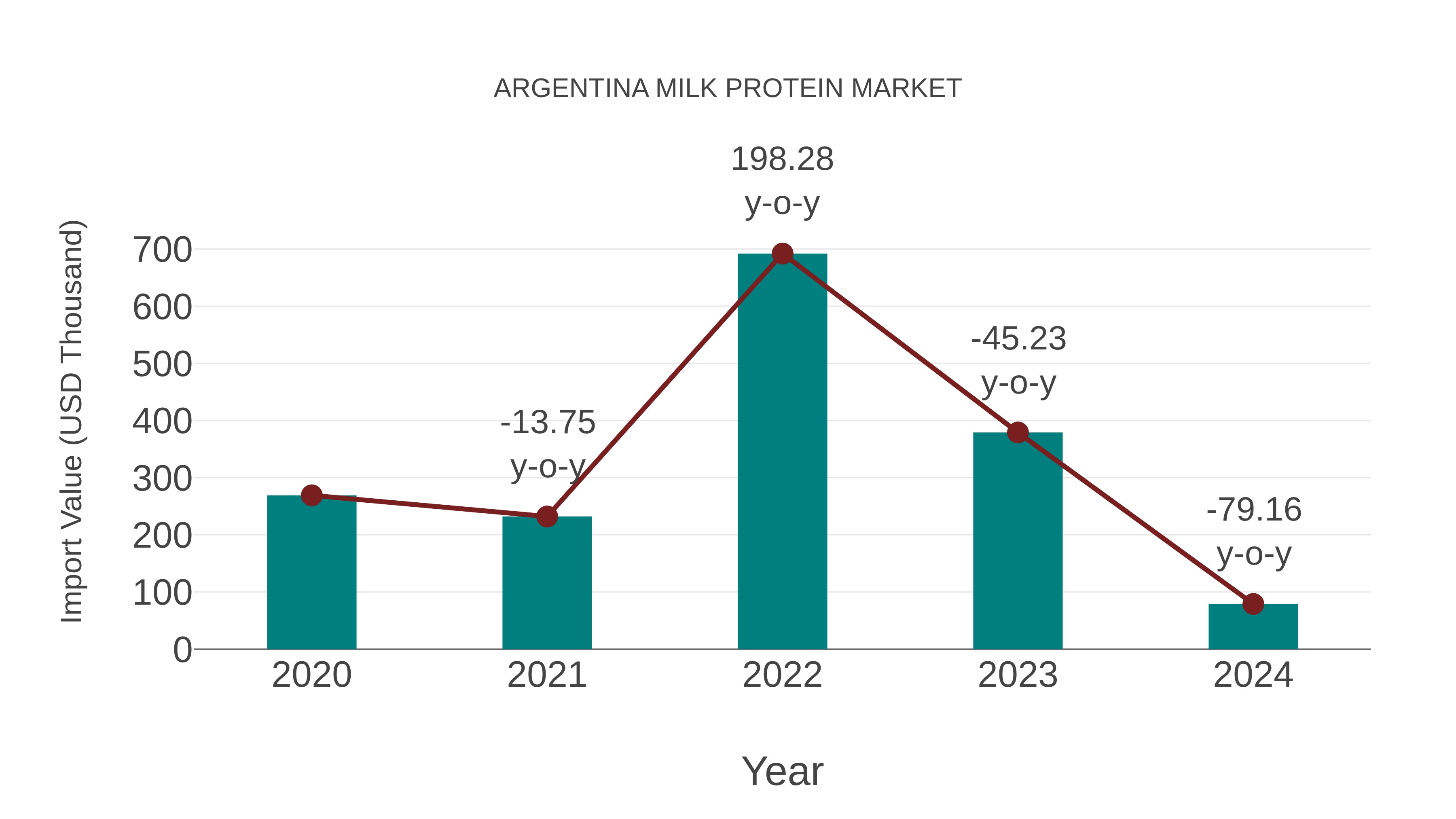
Argentina Milk Protein Market Synopsis
The market for milk protein in Argentina is expanding, supported by the demand for high-quality protein sources in sports nutrition, functional foods, and dietary supplements. Milk protein, including whey protein and casein, offers essential amino acids, muscle-building properties, and nutritional benefits, catering to consumers` health and wellness preferences.
Drivers of the market
The Argentina milk protein market is being driven by several factors. Firstly, the growing awareness of the health benefits of milk proteins, including whey and casein, is driving the demand for dairy-based protein supplements and functional foods in Argentina. Milk proteins are valued for their high nutritional quality, containing essential amino acids and bioactive compounds that support muscle growth, weight management, and overall health. Moreover, the increasing popularity of fitness trends, sports nutrition, and wellness lifestyles is driving the consumption of milk protein-based products such as protein powders, bars, and shakes in Argentina. Additionally, the rising prevalence of lactose intolerance and dairy allergies is fueling the demand for alternative protein sources derived from milk, such as lactose-free protein isolates and hydrolysates.
Challenges of the market
The Argentina milk protein market faces several challenges despite the increasing demand for protein-rich ingredients in food and beverage products. One significant obstacle is the competition from alternative protein sources such as plant-based proteins and protein isolates, which offer similar nutritional benefits with lower production costs and environmental impact. Fluctuations in milk prices and supply chain disruptions pose risks for milk protein producers and affect product pricing and profitability. Moreover, concerns about protein allergens and dietary restrictions raise barriers to entry for new suppliers and hinder market expansion opportunities.
Government Policy of the market
Government policies in Argentina support the dairy industry, including regulations for milk protein products such as whey protein concentrates and caseinates. Measures include quality standards enforcement, production incentives, and export promotion to enhance competitiveness and market access in the milk protein market.
Key Highlights of the Report:
- Argentina Milk Protein Market Outlook
- Market Size of Argentina Milk Protein Market, 2025
- Forecast of Argentina Milk Protein Market, 2032
- Historical Data and Forecast of Argentina Milk Protein Revenues & Volume for the Period 2022-2032F
- Argentina Milk Protein Market Trend Evolution
- Argentina Milk Protein Market Drivers and Challenges
- Argentina Milk Protein Price Trends
- Argentina Milk Protein Porter's Five Forces
- Argentina Milk Protein Industry Life Cycle
- Historical Data and Forecast of Argentina Milk Protein Market Revenues & Volume By Type for the Period 2022-2032F
- Historical Data and Forecast of Argentina Milk Protein Market Revenues & Volume By Whey Protein Isolates for the Period 2022-2032F
- Historical Data and Forecast of Argentina Milk Protein Market Revenues & Volume By Whey Protein Concentrates for the Period 2022-2032F
- Historical Data and Forecast of Argentina Milk Protein Market Revenues & Volume By Milk Protein Hydrolysates for the Period 2022-2032F
- Historical Data and Forecast of Argentina Milk Protein Market Revenues & Volume By Milk Protein Isolates for the Period 2022-2032F
- Historical Data and Forecast of Argentina Milk Protein Market Revenues & Volume By Milk Protein Concentrates for the Period 2022-2032F
- Historical Data and Forecast of Argentina Milk Protein Market Revenues & Volume By Others for the Period 2022-2032F
- Historical Data and Forecast of Argentina Milk Protein Market Revenues & Volume By Form for the Period 2022-2032F
- Historical Data and Forecast of Argentina Milk Protein Market Revenues & Volume By Liquid for the Period 2022-2032F
- Historical Data and Forecast of Argentina Milk Protein Market Revenues & Volume By Dry for the Period 2022-2032F
- Historical Data and Forecast of Argentina Milk Protein Market Revenues & Volume By Applications for the Period 2022-2032F
- Historical Data and Forecast of Argentina Milk Protein Market Revenues & Volume By Dairy Products for the Period 2022-2032F
- Historical Data and Forecast of Argentina Milk Protein Market Revenues & Volume By Sports Nutrition for the Period 2022-2032F
- Historical Data and Forecast of Argentina Milk Protein Market Revenues & Volume By Infant Formula for the Period 2022-2032F
- Historical Data and Forecast of Argentina Milk Protein Market Revenues & Volume By Others for the Period 2022-2032F
- Argentina Milk Protein Import Export Trade Statistics
- Market Opportunity Assessment By Type
- Market Opportunity Assessment By Form
- Market Opportunity Assessment By Applications
- Argentina Milk Protein Top Companies Market Share
- Argentina Milk Protein Competitive Benchmarking By Technical and Operational Parameters
- Argentina Milk Protein Company Profiles
- Argentina Milk Protein Key Strategic Recommendations






































