Argentina Soybean Meal Market Size Growth Rate
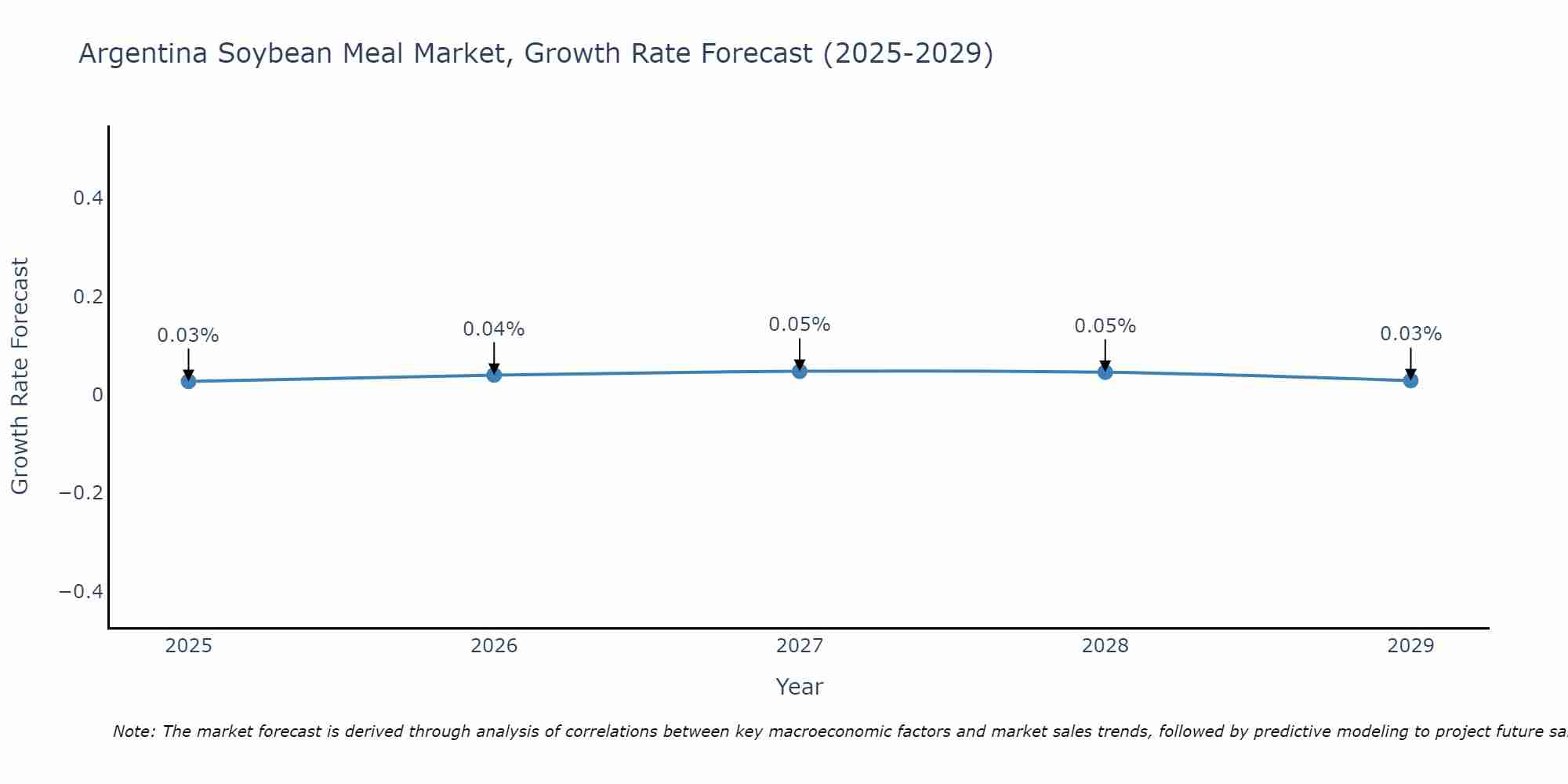
The Argentina Soybean Meal Market is projected to witness mixed growth rate patterns during 2025 to 2029. Starting at 0.03% in 2025, the market peaks at 0.05% in 2027, and settles at 0.03% by 2029.
Argentina Soybean Meal Market Synopsis
The Argentina Soybean Meal Market is a key player in the global market, with Argentina being one of the largest producers and exporters of soybean meal. The country`s fertile land and favorable climate conditions contribute to high-quality soybean production. Argentina`s strategic location also allows for easy access to international markets, making it a preferred supplier for many countries. The soybean meal market in Argentina is driven by factors such as increasing demand for protein-rich animal feed, growth in the livestock industry, and advancements in agricultural technology. However, challenges such as fluctuating weather conditions and government policies impacting export regulations can affect market dynamics. Overall, the Argentina Soybean Meal Market holds a significant position in the global agricultural industry, with potential for further growth and innovation.
Argentina Soybean Meal Market Trends
Currently, the Argentina Soybean Meal Market is experiencing several key trends. Increased demand from the livestock feed industry is driving growth in the market, as soybean meal is a key ingredient in animal feed formulations. Additionally, the market is benefiting from expanding export opportunities, particularly to countries in Asia and Europe. However, challenges such as fluctuating soybean prices and trade uncertainties are impacting market dynamics. Sustainability concerns are also influencing consumer preferences, with a growing emphasis on responsibly sourced soybean products. Overall, the Argentina Soybean Meal Market is poised for continued growth, driven by rising global demand for high-quality protein sources in animal feed and ongoing efforts to enhance sustainability practices in the industry.
Argentina Soybean Meal Market Challenges
In the Argentina Soybean Meal Market, several challenges are faced. These challenges include fluctuations in international demand and prices, weather-related risks such as droughts or excessive rainfall affecting crop yields, transportation and infrastructure constraints that impact logistics and distribution, as well as regulatory uncertainties and trade policies. Additionally, competition from other major soybean meal exporters like the United States and Brazil poses a challenge to Argentina`s market share. Political and economic instability in the country can also have an adverse effect on the market, influencing investor confidence and impacting overall production and trade. Overall, navigating these challenges requires market participants to stay informed, adapt to changing conditions, and implement strategic risk management practices to ensure competitiveness in the Argentina Soybean Meal Market.
Argentina Soybean Meal Market Investment Opportunities
Investment opportunities in the Argentina Soybean Meal market include investing in soybean processing plants, trading soybean meal futures contracts, investing in companies involved in the production and distribution of soybean meal, and exploring opportunities in value-added products derived from soybeans. With Argentina being one of the world`s largest soybean producers and exporters, the market offers significant potential for growth and profitability. Additionally, factors such as increasing global demand for protein-rich feed ingredients and the country`s competitive advantage in soybean production further enhance the attractiveness of investment opportunities in the Argentina Soybean Meal market. However, it is important for investors to closely monitor factors such as weather conditions, trade policies, and currency fluctuations that can impact the market dynamics and profitability of investments in this sector.
Jordan Agar Market Government Policies
The Argentina Soybean Meal Market is significantly influenced by government policies, with key regulations aimed at promoting the growth of the industry. The Argentine government imposes export taxes on soybean meal, with rates varying based on market conditions and overall economic objectives. Additionally, policies such as export quotas and restrictions on foreign exchange transactions impact the market dynamics by controlling the flow of soybean meal exports. Furthermore, the government provides support to the industry through various incentives and subsidies to encourage production and maintain competitiveness in the global market. Overall, government policies play a crucial role in shaping the Argentina Soybean Meal Market, impacting aspects such as pricing, trade volumes, and overall industry growth.
Argentina Soybean Meal Market Future Outlook
The Argentina Soybean Meal Market is expected to show steady growth in the coming years, driven by factors such as increasing demand for protein-rich animal feed, technological advancements in processing techniques, and favorable government policies supporting the agricultural sector. The country`s strong position as a leading soybean meal producer and exporter globally will continue to bolster its market presence. However, challenges such as fluctuating global market prices, weather-related risks affecting crop yields, and competition from other soybean meal producing countries may pose some obstacles to growth. Overall, the Argentina Soybean Meal Market is poised for expansion, particularly as the world`s population continues to grow, increasing the need for sustainable food production practices and efficient utilization of agricultural resources.
Key Highlights of the Report:
- Argentina Soybean Meal Market Outlook
- Market Size of Argentina Soybean Meal Market, 2021
- Forecast of Argentina Soybean Meal Market, 2031
- Historical Data and Forecast of Argentina Soybean Meal Revenues & Volume for the Period 2018 - 2031
- Argentina Soybean Meal Market Trend Evolution
- Argentina Soybean Meal Market Drivers and Challenges
- Argentina Soybean Meal Price Trends
- Argentina Soybean Meal Porter's Five Forces
- Argentina Soybean Meal Industry Life Cycle
- Historical Data and Forecast of Argentina Soybean Meal Market Revenues & Volume By Application for the Period 2018 - 2031
- Historical Data and Forecast of Argentina Soybean Meal Market Revenues & Volume By Animal Feed for the Period 2018 - 2031
- Historical Data and Forecast of Argentina Soybean Meal Market Revenues & Volume By Food Industry for the Period 2018 - 2031
- Historical Data and Forecast of Argentina Soybean Meal Market Revenues & Volume By Beverage for the Period 2018 - 2031
- Historical Data and Forecast of Argentina Soybean Meal Market Revenues & Volume By Healthcare Products for the Period 2018 - 2031
- Argentina Soybean Meal Import Export Trade Statistics
- Market Opportunity Assessment By Application
- Argentina Soybean Meal Top Companies Market Share
- Argentina Soybean Meal Competitive Benchmarking By Technical and Operational Parameters
- Argentina Soybean Meal Company Profiles
- Argentina Soybean Meal Key Strategic Recommendations






































