Australia Carbonated Beverages Market: Import Trend Analysis
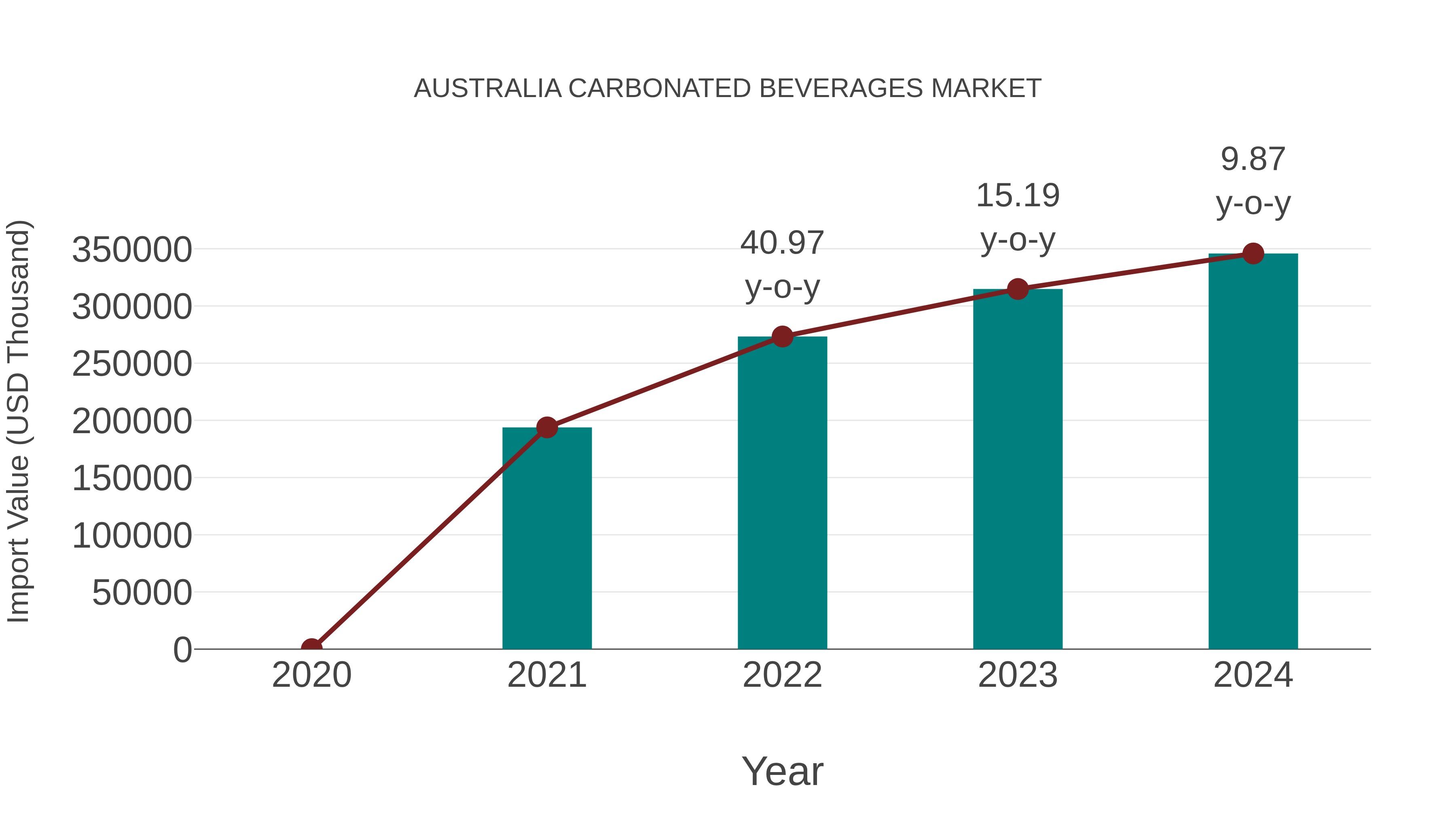
In the Australia carbonated beverages market, the import trend exhibited a notable growth rate of 9.87% from 2023 to 2024, with a compound annual growth rate (CAGR) of 21.29% for the period 2020-2024. This upward momentum can be attributed to a surge in consumer demand for diverse beverage options and an increasingly open trade environment, driving market stability and fostering competition among importers.
Australia Carbonated Beverages Market Overview
The carbonated beverages market in Australia is characterized by a wide range of fizzy drinks, including colas, lemon-lime sodas, flavored carbonated waters, and energy drinks. Despite growing concerns about sugar intake and health consciousness among consumers, carbonated beverages remain popular choices for refreshment and enjoyment. Beverage companies in Australia continuously introduce new flavors, formulations, and packaging formats to attract consumers and differentiate their products in a competitive market landscape. As beverage consumption patterns evolve, manufacturers also focus on offering healthier and low-calorie options to meet changing consumer preferences.
Drivers of the market
The Australia carbonated beverages market is influenced by several factors, including changing consumer lifestyles, urbanization, and the growing popularity of convenience beverages. Carbonated beverages remain a staple in the Australia beverage industry, with a wide range of offerings, including sodas, soft drinks, and sparkling water. Market drivers include innovative product launches, marketing strategies by leading beverage companies, and increasing disposable incomes. Health and wellness trends, including demand for low-sugar and natural alternatives, also impact market dynamics. Additionally, factors such as changing retail landscape, distribution channels, and consumer preferences contribute to the growth of the carbonated beverages market in Australia.
Challenges of the market
Challenges in the carbonated beverages market include shifting consumer preferences towards healthier alternatives, sugar taxes, and environmental concerns regarding packaging waste.
Government Policy of the market
Challenges in the carbonated beverages market in Australia include shifting consumer preferences, health concerns, and competition from alternative beverage categories. Government policies may include regulations promoting sugar reduction, labeling transparency, and responsible marketing practices. Addressing challenges in the market requires collaboration between beverage companies, government agencies, and public health organizations to develop innovative products, improve nutritional profiles, and educate consumers about healthier beverage choices.
Key Highlights of the Report:
- Australia Carbonated Beverages Market Outlook
- Market Size of Australia Carbonated Beverages Market, 2025
- Forecast of Australia Carbonated Beverages Market, 2032
- Historical Data and Forecast of Australia Carbonated Beverages Revenues & Volume for the Period 2022-2032F
- Australia Carbonated Beverages Market Trend Evolution
- Australia Carbonated Beverages Market Drivers and Challenges
- Australia Carbonated Beverages Price Trends
- Australia Carbonated Beverages Porter's Five Forces
- Australia Carbonated Beverages Industry Life Cycle
- Historical Data and Forecast of Australia Carbonated Beverages Market Revenues & Volume By Product Types for the Period 2022-2032F
- Historical Data and Forecast of Australia Carbonated Beverages Market Revenues & Volume By Soft Drinks for the Period 2022-2032F
- Historical Data and Forecast of Australia Carbonated Beverages Market Revenues & Volume By Carbonated Water for the Period 2022-2032F
- Historical Data and Forecast of Australia Carbonated Beverages Market Revenues & Volume By Sports & Energy Drinks for the Period 2022-2032F
- Historical Data and Forecast of Australia Carbonated Beverages Market Revenues & Volume By Others for the Period 2022-2032F
- Historical Data and Forecast of Australia Carbonated Beverages Market Revenues & Volume By Flavour for the Period 2022-2032F
- Historical Data and Forecast of Australia Carbonated Beverages Market Revenues & Volume By Cola for the Period 2022-2032F
- Historical Data and Forecast of Australia Carbonated Beverages Market Revenues & Volume By Fruit Based for the Period 2022-2032F
- Historical Data and Forecast of Australia Carbonated Beverages Market Revenues & Volume By Others for the Period 2022-2032F
- Historical Data and Forecast of Australia Carbonated Beverages Market Revenues & Volume By Distribution Channel for the Period 2022-2032F
- Historical Data and Forecast of Australia Carbonated Beverages Market Revenues & Volume By Hypermarkets & Supermarkets for the Period 2022-2032F
- Historical Data and Forecast of Australia Carbonated Beverages Market Revenues & Volume By Convenience Stores for the Period 2022-2032F
- Historical Data and Forecast of Australia Carbonated Beverages Market Revenues & Volume By Food Service Outlets for the Period 2022-2032F
- Historical Data and Forecast of Australia Carbonated Beverages Market Revenues & Volume By Transport Terminals for the Period 2022-2032F
- Historical Data and Forecast of Australia Carbonated Beverages Market Revenues & Volume By Online Stores & D2C for the Period 2022-2032F
- Australia Carbonated Beverages Import Export Trade Statistics
- Market Opportunity Assessment By Product Types
- Market Opportunity Assessment By Flavour
- Market Opportunity Assessment By Distribution Channel
- Australia Carbonated Beverages Top Companies Market Share
- Australia Carbonated Beverages Competitive Benchmarking By Technical and Operational Parameters
- Australia Carbonated Beverages Company Profiles
- Australia Carbonated Beverages Key Strategic Recommendations






































