Australia Cocoa Products Market: Import Trend Analysis
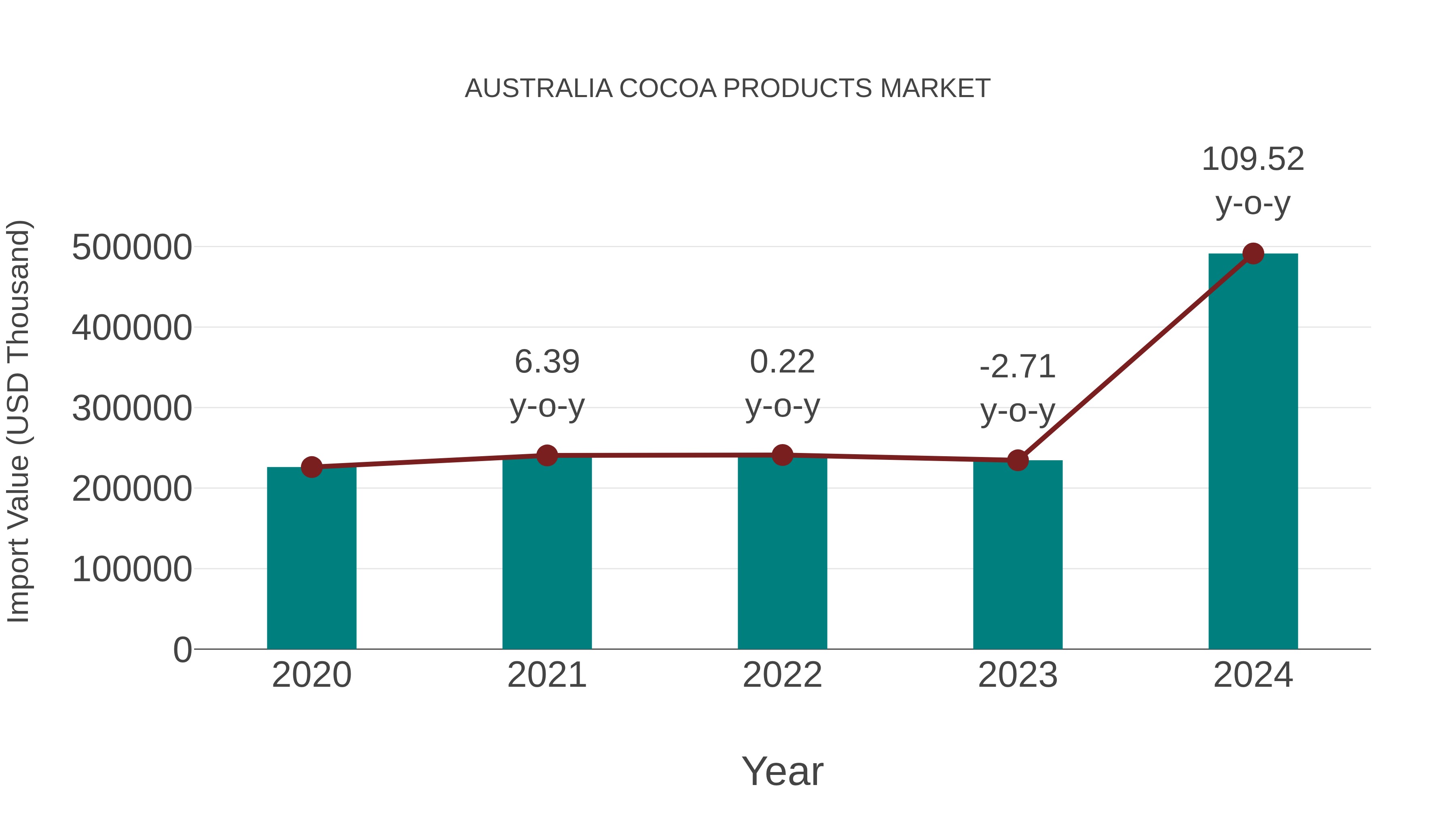
In the Australia cocoa products market, the import trend experienced significant growth from 2023 to 2024, with a notable increase of 109.52%. The compound annual growth rate (CAGR) for the period between 2020 and 2024 stood at 21.42%. This surge in import momentum can be attributed to evolving consumer preferences towards premium cocoa products, indicating a potential demand shift towards higher-quality goods in the market.
Australia Cocoa Products Market Overview
The Australia Cocoa Products market comprises a wide range of finished goods derived from cocoa beans, including chocolate bars, truffles, pralines, hot chocolate mixes, and cocoa-based beverages. This market segment is driven by consumer preferences for indulgent and premium chocolate products, as well as the demand for functional and healthy cocoa-based products. Factors such as the expansion of gourmet and artisanal chocolate brands, the influence of foodservice and hospitality sectors, and the rise of e-commerce platforms for specialty foods contribute to the growth of this market.
Drivers of the market
In the Australia Cocoa Products market, several drivers play a crucial role. One significant factor is the increasing consumer demand for a wide range of cocoa-based products, including chocolate, cocoa powder, cocoa butter, and cocoa nibs. Moreover, the growing popularity of premium and gourmet chocolate products has spurred the development of innovative cocoa-based products to cater to diverse consumer preferences. Additionally, the rising awareness of the health benefits associated with cocoa consumption has fueled demand for cocoa products as functional ingredients in food and beverage formulations. Furthermore, marketing efforts to promote cocoa products as indulgent treats and healthy snacks are driving market growth in Australia.
Challenges of the market
The Australia cocoa products market encounters challenges related to consumer awareness and demand for premium cocoa products, competition from imported chocolate brands, and pricing pressures from retailers. Moreover, meeting dietary and health-related preferences of consumers and managing distribution channels pose challenges for market growth.
Government Policy of the market
In the Australia Cocoa Products market, government policies focus on consumer protection, food safety regulations, and trade standards to ensure product quality and integrity. Regulatory agencies such as the Australia Competition and Consumer Commission (ACCC) enforce labeling requirements, allergen declarations, and nutritional standards for cocoa products to provide accurate information to consumers. Government initiatives may also support market development efforts through export promotion programs, market access negotiations, and industry partnerships. Furthermore, policies promoting sustainable sourcing practices and ethical production methods may influence consumer preferences and market trends in the Australia Cocoa Products market.
Key Highlights of the Report:
- Australia Cocoa Products Market Outlook
- Market Size of Australia Cocoa Products Market, 2024
- Forecast of Australia Cocoa Products Market, 2031
- Historical Data and Forecast of Australia Cocoa Products Revenues & Volume for the Period 2018 - 2031
- Australia Cocoa Products Market Trend Evolution
- Australia Cocoa Products Market Drivers and Challenges
- Australia Cocoa Products Price Trends
- Australia Cocoa Products Porter's Five Forces
- Australia Cocoa Products Industry Life Cycle
- Historical Data and Forecast of Australia Cocoa Products Market Revenues & Volume By Type for the Period 2018 - 2031
- Historical Data and Forecast of Australia Cocoa Products Market Revenues & Volume By Cocoa Beans for the Period 2018 - 2031
- Historical Data and Forecast of Australia Cocoa Products Market Revenues & Volume By Cocoa Butter for the Period 2018 - 2031
- Historical Data and Forecast of Australia Cocoa Products Market Revenues & Volume By Cocoa Powder & Cake for the Period 2018 - 2031
- Historical Data and Forecast of Australia Cocoa Products Market Revenues & Volume By Cocoa Paste & Liquor for the Period 2018 - 2031
- Historical Data and Forecast of Australia Cocoa Products Market Revenues & Volume By Chocolate for the Period 2018 - 2031
- Historical Data and Forecast of Australia Cocoa Products Market Revenues & Volume By Application for the Period 2018 - 2031
- Historical Data and Forecast of Australia Cocoa Products Market Revenues & Volume By Confectionery for the Period 2018 - 2031
- Historical Data and Forecast of Australia Cocoa Products Market Revenues & Volume By Food & Beverages for the Period 2018 - 2031
- Historical Data and Forecast of Australia Cocoa Products Market Revenues & Volume By Cosmetics for the Period 2018 - 2031
- Historical Data and Forecast of Australia Cocoa Products Market Revenues & Volume By Pharmaceutical for the Period 2018 - 2031
- Australia Cocoa Products Import Export Trade Statistics
- Market Opportunity Assessment By Type
- Market Opportunity Assessment By Application
- Australia Cocoa Products Top Companies Market Share
- Australia Cocoa Products Competitive Benchmarking By Technical and Operational Parameters
- Australia Cocoa Products Company Profiles
- Australia Cocoa Products Key Strategic Recommendations






































