Australia Cosmetics Market: Import Trend Analysis
In the Australia cosmetics market, the import trend experienced a -5.18% growth rate from 2023 to 2024, with a compound annual growth rate (CAGR) of 7.87% from 2020 to 2024. This decline in import momentum in 2024 could be attributed to shifting demand patterns or fluctuations in trade policies impacting market stability.
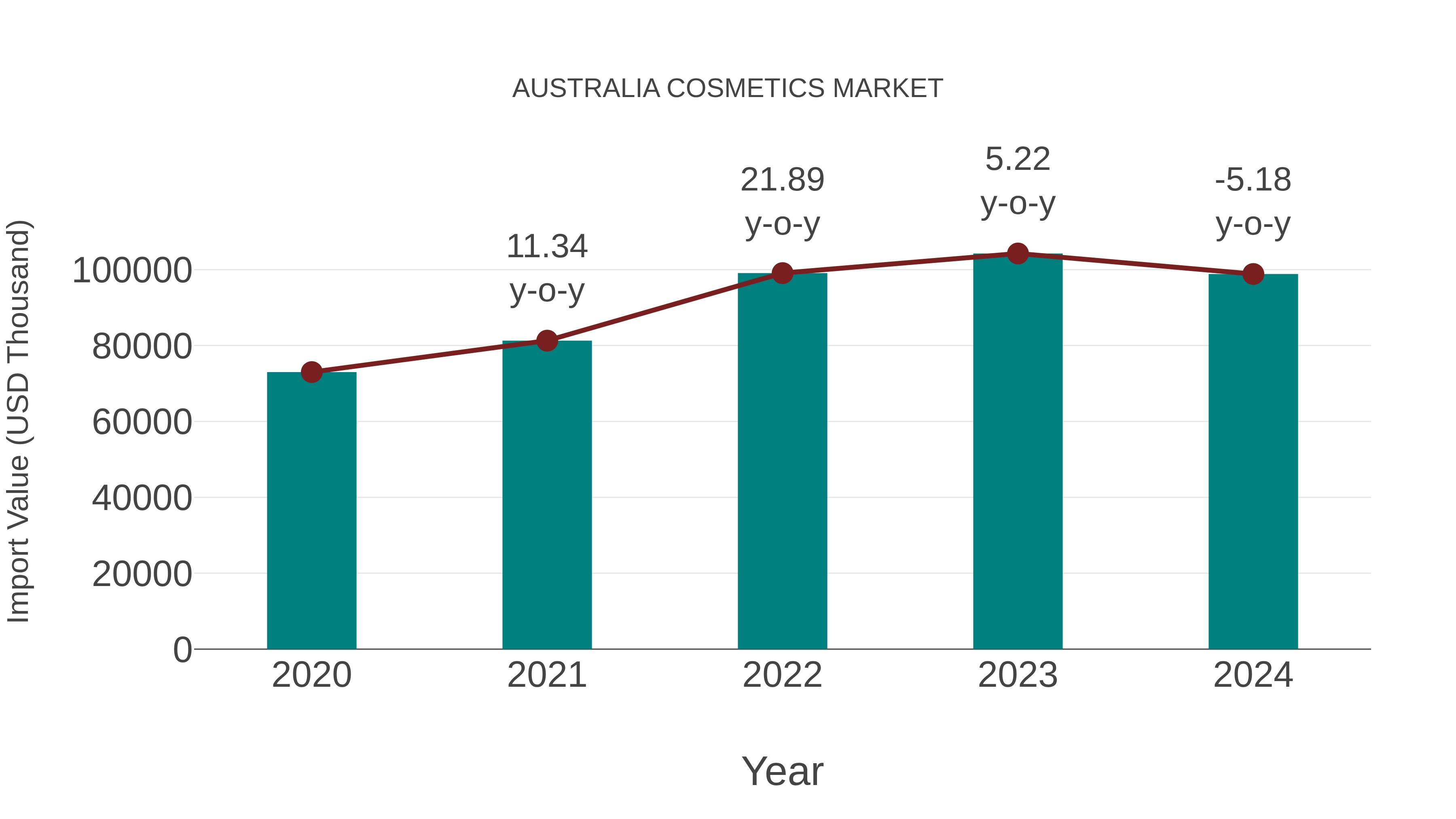
Australia Cosmetics Market Growth Rate
According to 6Wresearch internal database and industry insights, the Australia Cosmetics Market is projected to grow at a compound annual growth rate (CAGR) of 6.6% during the forecast period 2026–2032.
Five-Year Growth Trajectory of the Australia Cosmetics Market with Core Drivers
Below is the evaluation of the year-wise growth rate along with key drivers:
| Years | Estimated Annual Growth (%) | Growth Drivers |
| 2021 | 4.9% | Rising demand for personal grooming and skincare products. |
| 2022 | 5.1% | Increased interest in sustainable and organic cosmetics. |
| 2023 | 530.00% | Growing e-commerce presence driving cosmetic product accessibility. |
| 2024 | 5.5% | Shift toward natural and organic ingredients in beauty products. |
| 2025 | 5.8% | Surge in consumer spending on premium cosmetics and beauty treatments. |
Topics Covered in the Australia Cosmetics Market Report
The Australia Cosmetics Market report thoroughly covers the market by product type, and category. The report provides a detailed analysis of ongoing market trends, opportunities/high-growth areas, and market drivers, helping stakeholders devise and align their market strategies according to current and future market dynamics.
Australia Cosmetics Market Highlights
| Report Name | Australia Cosmetics Market |
| Forecast Period | 2026–2032 |
| CAGR | 6.60% |
| Growing Sector | Personal Care and Beauty |
Australia Cosmetics Market Synopsis
Due to the growing concern of consumer in personal grooming, skincare, and beauty products, the cosmetic industry of Australia is witnessing huge expansion. The rise of e-commerce platforms and surge in the requirement for organic and natural products, benefits the market significantly. In addition, the beauty industry is further supported by government initiatives that emphasize the usage of sustainable practices. This growth is further proliferated by social media influence and celebrity endorsements.
Evaluation of Growth Drivers in the Australia Cosmetics Market
Below are some prominent drivers and their influence on the market dynamics:
| Drivers | Primary Segments Affected | Why It Matters |
| Rising Beauty Consciousness | By End-Use Sector (Face Care, Hair Care) | Increased focus on personal grooming boosts product demand. |
| Demand for Sustainable Products | By Category (Organic/Natural, Synthetic) | Consumers increasingly prefer eco-friendly, organic products. |
| E-commerce Growth | By Distribution Channel (Online Retail, Offline Retail) | Online retail platforms make cosmetics more accessible. |
| Celebrity Endorsements | By Product Type (Color Cosmetics, Bath Products) | Celebrity-driven product promotions increase market appeal. |
| Innovations in Product Formulations | By Product Type (Face Care, Hair Care) | Technological advancements in formulations enhance product performance. |
The Australia Cosmetics Market Size is projected to grow at a CAGR of 6.6% during the forecast period of 2026–2032. The interest of consumer, in personal grooming, skincare, and beauty products is rising and this is due to several factors such as the rise of e-commerce platforms, which has increased the accessibility of cosmetic products. And this growth is especially popular among organic and natural offerings. The expansion of beauty industry is further supported by government initiatives, as they focus more on sustainable and eco-friendly practices. Along with this, the awareness about the benefits of these products, is rising due to the social media influence and celebrity endorsements. The product performance is further improved with advancements in product formulations and packaging technology, ensuring a sustained Australia Cosmetics Market Growth across various cosmetic categories.
Evaluation of Restraints in the Australia Cosmetics Market
Below are some prominent restraints and their influence on the market dynamics:
| Restraints | Primary Segments Affected | What This Means |
| High Price of Premium Products | By Product Type (Face Care, Body Care) | High-priced luxury cosmetics may limit consumer access. |
| Skin Sensitivity Issues | By Product Type (Face Care, Bath Products) | Sensitive skin reactions may prevent some buyers from experimenting with new products. |
| Strict Regulatory Standards | By Category (Organic/Natural, Synthetic) | Regulatory compliance increases production costs and delays product launches. |
| Intense Competition | By Product Type (Hair Care, Color Cosmetics) | High competition from both local and international brands restricts market share. |
Australia Cosmetics Market Challenges
The premium products are expensive in cost, which restricts its adoption among price-sensitive consumers. Then compliance with regulatory standards especially in the certification process of organic and natural products, the production cost surges, forming another hurdle for manufacturers. The competition from both local and international brands is severe, which smaller companies find daunting, to establish a strong foothold in the market. Differentiation opportunity is expected in the market with the changing consumer preference for sustainable and organic products.
Australia Cosmetics Market Trends
Some major trends contributing to the Australia Cosmetics Market growth are:
- Rise in Organic and Natural Products: The demand for organic and natural cosmetics products is growing as consumers now actively check the ingredient lists of their beauty products. The trend exists as people now understand the environmental and health advantages which these products.
- E-commerce Surge: The e-commerce industry is experiencing significant growth as customers choose to shop online for cosmetics, which enables them to access multiple beauty products and thus expands the market.
- Personalized Beauty Solutions: The demand for personalized beauty solutions has grown as consumers want solutions which match their unique skin type, age and personal preferences. The market has responded to this demand by introducing more customized cosmetics and skincare products.
- Celebrity and Influencer Influence: Celebrity and influencer endorsements are increasingly driving product demand, with social media platforms playing a key role in promoting new beauty trends and products.
Investment Opportunities in the Australia Cosmetics Market
Some investment opportunities that will shape the dynamics of the Australia Cosmetics Market include:
- Expansion in E-commerce Platforms: The company will achieve better market access through its online platform investments which will help them reach customers in tier-2 and tier-3 cities.
- Sustainable Product Lines: Sustainable Product Lines: The company will develop organic, natural and environmentally friendly cosmetic products to meet the rising consumer requirement for sustainable cosmetics.
- Advanced Product Development: The research in the development of new face and hair care along with color cosmetic formulations to meet the growing consumer demand for cutting-edge beauty solutions.
- Brand Partnerships: Partnering with celebrities, influencers, and local beauty experts to promote cosmetic products and expand market visibility.
Top 5 Leading Players in the Australia Cosmetics Market
Below is the list of prominent companies leading the Australia Cosmetics Market:
1. L'Oréal Group
| Company Name | L'Oréal Group |
| Established Year | 1909 |
| Headquarters | Clichy, France |
| Official Website | Click Here |
L'Oréal is a global leader in beauty and personal care products, with a strong presence in the Australian market offering a wide range of skin, hair, and beauty care products.
2. Estée Lauder Companies
| Company Name | Estée Lauder Companies |
| Established Year | 1946 |
| Headquarters | New York, USA |
| Official Website | Click Here |
Estée Lauder offers luxury cosmetic products in Australia, focusing on skincare, makeup, and fragrance brands, and is known for high-quality, premium offerings.
3. Procter & Gamble (P&G)
| Company Name | Procter & Gamble (P&G) |
| Established Year | 1837 |
| Headquarters | Cincinnati, Ohio, USA |
| Official Website | Click Here |
Procter & Gamble offers a wide variety of personal care products in Australia, including hair care, skin care, and hygiene products.
4. Shiseido Company
| Company Name | Shiseido Company |
| Established Year | 1872 |
| Headquarters | Tokyo, Japan |
| Official Website | Click Here |
Shiseido is a Japanese multinational offering skincare, hair care, and cosmetic products in Australia, known for its premium and scientifically backed beauty solutions.
5. Colgate-Palmolive Company
| Company Name | Colgate-Palmolive Company |
| Established Year | 1806 |
| Headquarters | New York, USA |
| Official Website | Click Here |
Colgate-Palmolive offers a broad range of personal care and beauty products, including oral care, skin care, and hair care items in Australia.
Government Regulations in the Australia Cosmetics Market
According to Australian Government Data, government regulations in Australia emphasize on improving the safety, quality, and sustainability of cosmetics. Programs support the certification and adoption of natural and organic products, emphasizing transparency and consumer safety. Notable government initiatives include the Australian Government Department of Health, which gives regulatory frameworks for cosmetic safety, labeling, and ingredient transparency, and the Australian Organic Standards, ensuring that organic cosmetics meet stringent environmental and health standards, promoting sustainability in the industry.
Future Insights of the Australia Cosmetics Market
The Australia Cosmetics Market Share is expected to rise steadily, supported by the surging requirement for personal grooming, growing awareness of skincare, and expanding online retail channels. The demand for organic and natural products will continue to rise, driven by consumer preferences for sustainable beauty solutions. In addition, the government's efforts to promote industry standards and improve accessibility will further propel the market forward. Furthermore, improvements in product formulations and packaging are enhancing consumer appeal and propelling demand.
Market Segmentation Analysis
The report offers a comprehensive study of the following market segments and their leading categories:
By Product Type – Face Care to Lead the Market
According to Rashika, Senior Research Analyst, 6Wresearch, Face care products will dominate the market due to growing consumer interest in skincare routines and the increasing demand for anti-aging products and treatments.
By Category – Organic/Natural to Lead the Market
Organic and natural products will govern as consumers increasingly prefer eco-friendly and chemical-free cosmetics, fueled by health and environmental concerns. This shift is further propelled by the rising availability of certified organic products and the rise of sustainability-focused beauty brands.
Key Attractiveness of the Report
- 10 Years of Market Numbers
- Historical Data Starting from 2022 to 2025
- Base Year: 2025
- Forecast Data until 2032
- Key Performance Indicators Impacting the Market
- Major Upcoming Developments and Projects
Key Highlights of the Report:
- Australia Cosmetics Market Outlook
- Market Size of Australia Cosmetics Market, 2025
- Forecast of Australia Cosmetics Market, 2032
- Historical Data and Forecast of Australia Cosmetics Revenues & Volume for the Period 2022-2032F
- Australia Cosmetics Market Trend Evolution
- Australia Cosmetics Market Drivers and Challenges
- Australia Cosmetics Price Trends
- Australia Cosmetics Porter's Five Forces
- Australia Cosmetics Industry Life Cycle
- Historical Data and Forecast of Australia Cosmetics Market Revenues & Volume By Product Type for the Period 2022-2032F
- Historical Data and Forecast of Australia Cosmetics Market Revenues & Volume By Face Care for the Period 2022-2032F
- Historical Data and Forecast of Australia Cosmetics Market Revenues & Volume By Body Care for the Period 2022-2032F
- Historical Data and Forecast of Australia Cosmetics Market Revenues & Volume By Hair Care for the Period 2022-2032F
- Historical Data and Forecast of Australia Cosmetics Market Revenues & Volume By Bath Products for the Period 2022-2032F
- Historical Data and Forecast of Australia Cosmetics Market Revenues & Volume By Color Cosmetics for the Period 2022-2032F
- Historical Data and Forecast of Australia Cosmetics Market Revenues & Volume By Category for the Period 2022-2032F
- Historical Data and Forecast of Australia Cosmetics Market Revenues & Volume By Organic/Natural for the Period 2022-2032F
- Historical Data and Forecast of Australia Cosmetics Market Revenues & Volume By Synthetic for the Period 2022-2032F
- Australia Cosmetics Import Export Trade Statistics
- Market Opportunity Assessment By Product Type
- Market Opportunity Assessment By Category
- Australia Cosmetics Top Companies Market Share
- Australia Cosmetics Competitive Benchmarking By Technical and Operational Parameters
- Australia Cosmetics Company Profiles
- Australia Cosmetics Key Strategic Recommendations






































