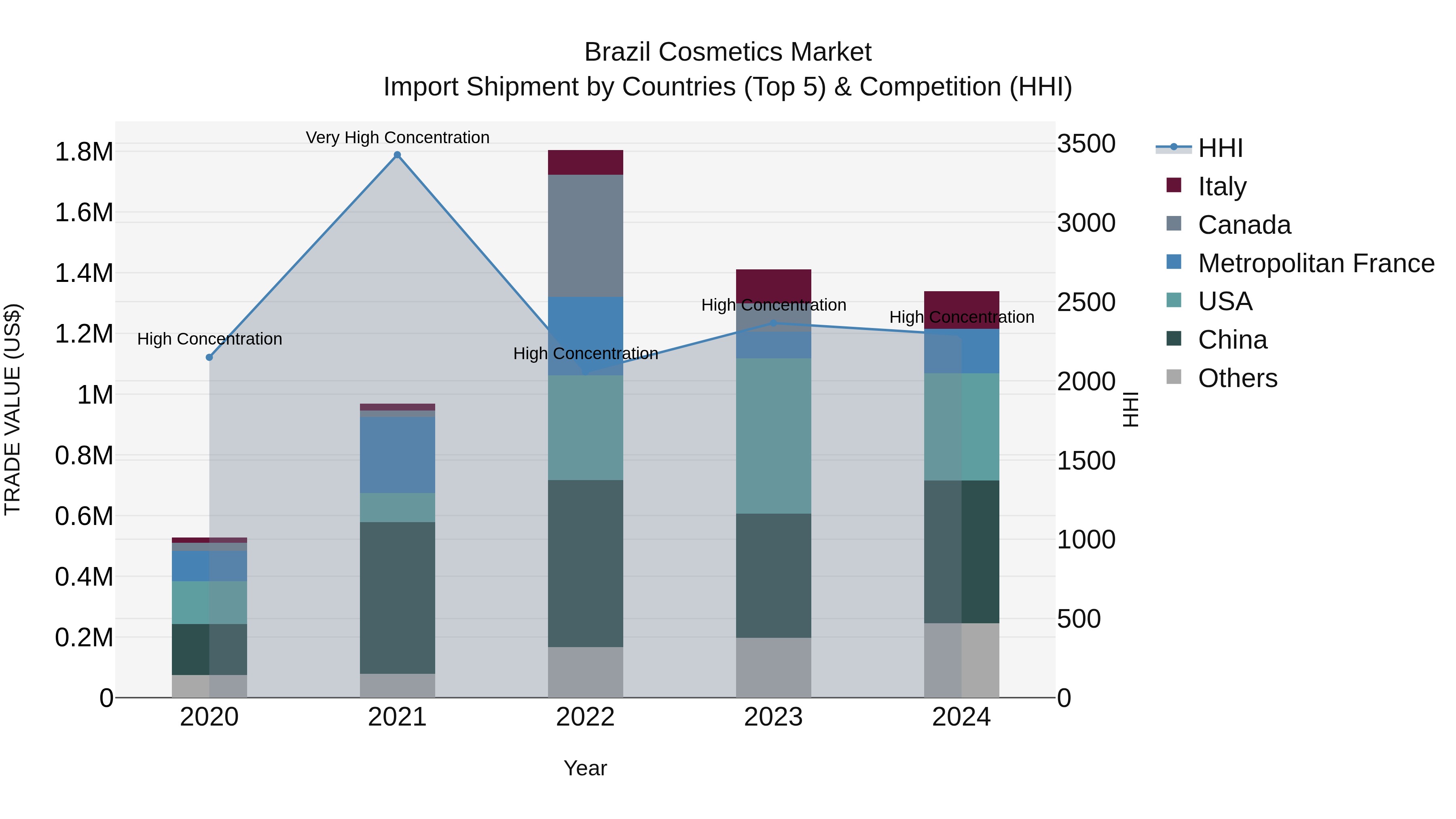
Brazil Cosmetics Market Top 5 Importing Countries and Market Competition (HHI) Analysis
Brazil continues to be a key market for cosmetics imports, with top exporting countries including China, USA, Germany, Metropolitan France, and Italy in 2024. Despite a slight decrease in growth rate from 2023 to 2024 (-5.1%), the compound annual growth rate (CAGR) for the period 2020-24 stands impressively high at 26.21%. The high Herfindahl-Hirschman Index (HHI) concentration indicates a competitive market landscape, emphasizing the significance of these top exporting countries in Brazil`s cosmetics import industry.
Brazil Cosmetics Market Growth Rate
According to 6Wresearch internal database and industry insights, the Brazil Cosmetics Market is projected to grow at a compound annual growth rate (CAGR) of 6.8% during the forecast period 2026–2032.
Topics Covered in the Brazil Cosmetics Market Report
The Brazil Cosmetics Market report thoroughly covers the market by product type, and category. The report provides a detailed analysis of ongoing market trends, opportunities/high-growth areas, and market drivers, helping stakeholders devise and align their market strategies according to current and future market dynamics.
Brazil Cosmetics Market Highlights
| Report Name | Brazil Cosmetics Market |
| Forecast Period | 2026–2032 |
| CAGR | 6.8% |
| Growing Sector | Personal Care and Beauty |
Brazil Cosmetics Market Synopsis
The Brazil cosmetic industry experiences substantial growth as consumers increasingly value their personal grooming and skincare and beauty product needs. The market receives substantial advantages from the growth of e-commerce platform and increasing consumer demand for organic and natural products. Government programs that promote sustainable practices create additional support for the beauty industry. The presence of social media and celebrity endorsements drive further growth of the industry.
Evaluation of Growth Drivers in the Brazil Cosmetics Market
Below are some prominent drivers and their influence on the market dynamics:
| Drivers | Primary Segments Affected | Why It Matters |
| Rising Beauty Consciousness | By End-Use Sector (Face Care, Hair Care) | Increased focus on personal grooming boosts product demand. |
| Demand for Sustainable Products | By Category (Organic/Natural, Synthetic) | Consumers increasingly prefer eco-friendly, organic products. |
| E-commerce Growth | By Distribution Channel (Online Retail, Offline Retail) | Online retail platforms make cosmetics more accessible. |
| Celebrity Endorsements | By Product Type (Color Cosmetics, Bath Products) | Celebrity-driven product promotions increase market appeal. |
| Innovations in Product Formulations | By Product Type (Face Care, Hair Care) | Technological advancements in formulations enhance product performance. |
The Brazil Cosmetics Market Size is projected to grow at a CAGR of 6.8% during the forecast period of 2026–2032. Consumer interest in personal grooming, skincare, and beauty products is growing due to the growth e-commerce platforms as it enables people to access cosmetics products more easily. The demand for organic and natural products continues to increase at a rapid pace. The beauty industry grows due to government programs which support the use of sustainable development and environmentally friendly methods. Social media platforms together with celebrity endorsements have increased product demand through their power to raise public awareness. Product development and packaging technology improvements lead to better product performance which drives market expansion across different product categories.
Evaluation of Restraints in the Brazil Cosmetics Market
Below are some prominent restraints and their influence on the market dynamics:
| Restraints | Primary Segments Affected | What This Means |
| High Price of Premium Products | By Product Type (Face Care, Body Care) | High-priced luxury cosmetics may limit consumer access. |
| Skin Sensitivity Issues | By Product Type (Face Care, Bath Products) | Sensitive skin reactions may refrain some buyers from experimenting with new products. |
| Strict Regulatory Standards | By Category (Organic/Natural, Synthetic) | Regulatory compliance increases production costs and delays product launches |
| Intense Competition | By Product Type (Hair Care, Color Cosmetics) | Huge competition from both local and international brands restricts market share. |
Brazil Cosmetics Market Challenges
Premium products are expensive which makes them unsuitable for consumers who prioritize low prices. The process of meeting regulatory requirements which includes organic and natural product certification standards leads to higher production expenses that manufacturers need to manage. Small businesses face challenges in building market presence because both domestic and foreign competitors create strong market competition. The opportunity to create unique products exists as consumers increasingly prefer sustainable and organic items.
Brazil Cosmetics Market Trends
Some major trends contributing to the Brazil Cosmetics Market growth are:
- Rise in Organic and Natural Products: The demand for organic and natural cosmetics products is growing as consumers now actively check the ingredient lists of their beauty products. The trend exists as people now understand the environmental and health advantages which these products.
- E-commerce Surge: The e-commerce industry is experiencing significant growth as customers choose to shop online for cosmetics, which enables them to access multiple beauty products and thus expands the market.
- Personalized Beauty Solutions: The demand for personalized beauty solutions has grown as consumers want solutions which match their unique skin type, age and personal preferences. The market has responded to this demand by introducing more customized cosmetics and skincare products.
- Celebrity and Influencer Influence: Celebrity and influencer endorsements are increasingly driving product demand, with social media platforms playing a key role in promoting new beauty trends and products.
Investment Opportunities in the Brazil Cosmetics Market
Some investment opportunities that will shape the dynamics of the Brazil Cosmetics Market include:
- Expansion in E-commerce Platforms: The company will achieve better market access through its online platform investments which will help them reach customers in tier-2 and tier-3 cities.
- Sustainable Product Lines: Sustainable Product Lines: The company will develop organic, natural and environmentally friendly cosmetic products to meet the rising consumer requirement for sustainable cosmetics.
- Advanced Product Development: The research in the development of new face and hair care along with color cosmetic formulations to meet the growing consumer demand for cutting-edge beauty solutions.
- Brand Partnerships: Partnering with celebrities, influencers, and local beauty experts to promote cosmetic products and expand market visibility.
Top 5 Leading Players in the Brazil Cosmetics Market
Below is the list of prominent companies leading the Brazil Cosmetics Market:
L'Oréal Group
| Company Name | L'Oréal Group |
|---|---|
| Established Year | 1909 |
| Headquarters | Clichy, France |
| Official Website | Click Here |
L'Oréal is a global leader in beauty and personal care products, with a strong presence in the Brazilian market offering a wide range of skin, hair, and beauty care products.
Estée Lauder Companies
| Company Name | Estée Lauder Companies |
|---|---|
| Established Year | 1946 |
| Headquarters | New York, USA |
| Official Website | Click Here |
Estée Lauder offers premium skincare, makeup, and fragrance products in Brazil, known for their high quality and luxurious offerings.
Procter & Gamble (P&G)
| Company Name | Procter & Gamble (P&G) |
|---|---|
| Established Year | 1837 |
| Headquarters | Cincinnati, Ohio, USA |
| Official Website | Click Here |
Procter & Gamble offers a diverse range of personal care products, including skincare, haircare, and hygiene products in Brazil, with popular global brands like Pantene and Olay.
Natura &Co
| Company Name | Natura &Co |
|---|---|
| Established Year | 1969 |
| Headquarters | São Paulo, Brazil |
| Official Website | - |
Natura &Co is a leading Brazilian company in beauty and personal care, offering skincare, makeup, and fragrances with a strong emphasis on sustainability and natural ingredients.
Unilever
| Company Name | Unilever |
|---|---|
| Established Year | 1930 |
| Headquarters | London, UK, and Rotterdam, Netherlands |
| Official Website | Click Here |
Unilever is a global leader in personal care, offering a wide range of beauty and grooming products in Brazil, including Dove, Axe, and TRESemmé, focusing on quality and accessibility.
Government Regulations in the Brazil Cosmetics Market
According to Brazilian Government Data, multiple regulations have been established to safeguard the quality and transparent information of cosmetic products to the public. The Brazilian Health Regulatory Agency (ANVISA) oversees safety and labeling requirements and ingredient standards for cosmetic products. The regulations establish certification processes for organic and natural cosmetics which protect consumer safety and support environmental sustainability. The initiatives seek to improve product quality while maintaining cosmetic products compliance with health and safety standards for consumer protection.
Future Insights of the Brazil Cosmetics Market
The Brazil Cosmetics Market Share will experience continuous growth due to the rising personal grooming needs and increasing skincare awareness along with growing online retailing. The demand for organic and natural products will continue to rise. The growing preferences of consumer for sustainable beauty solutions propel this demand. The government's initiatives to establish industry standards and create better accessibility will strengthen market growth. Product formulation advancements and packaging improvements are increasing consumer attraction which drives higher product demand.
Market Segmentation Analysis
The report offers a comprehensive study of the following market segments and their leading categories:
By Product Type – Face Care to Lead the Market
According to Rashika, Senior Research Analyst, 6Wresearch, Face care products will dominate the market due to growing consumer interest in skincare routines and the increasing demand for anti-aging products and treatments.
By Category – Organic/Natural to Lead the Market
Organic and natural products will govern as consumers increasingly prefer eco-friendly and chemical-free cosmetics, fueled by health and environmental concerns. This shift is further propelled by the rising availability of certified organic products and the rise of sustainability-focused beauty brands.
Key Attractiveness of the Report
- 10 Years of Market Numbers
- Historical Data Starting from 2022 to 2025
- Base Year: 2025
- Forecast Data until 2032
- Key Performance Indicators Impacting the Market
- Major Upcoming Developments and Projects
Key Highlights of the Report:
- Brazil Cosmetics Market Outlook
- Market Size of Brazil Cosmetics Market, 2025
- Forecast of Brazil Cosmetics Market, 2032
- Historical Data and Forecast of Brazil Cosmetics Revenues & Volume for the Period 2022- 2032F
- Brazil Cosmetics Market Trend Evolution
- Brazil Cosmetics Market Drivers and Challenges
- Brazil Cosmetics Price Trends
- Brazil Cosmetics Porter's Five Forces
- Brazil Cosmetics Industry Life Cycle
- Historical Data and Forecast of Brazil Cosmetics Market Revenues & Volume By Product Type for the Period 2022- 2032F
- Historical Data and Forecast of Brazil Cosmetics Market Revenues & Volume By Face Care for the Period 2022- 2032F
- Historical Data and Forecast of Brazil Cosmetics Market Revenues & Volume By Body Care for the Period 2022- 2032F
- Historical Data and Forecast of Brazil Cosmetics Market Revenues & Volume By Hair Care for the Period 2022- 2032F
- Historical Data and Forecast of Brazil Cosmetics Market Revenues & Volume By Bath Products for the Period 2022- 2032F
- Historical Data and Forecast of Brazil Cosmetics Market Revenues & Volume By Color Cosmetics for the Period 2022- 2032F
- Historical Data and Forecast of Brazil Cosmetics Market Revenues & Volume By Category for the Period 2022- 2032F
- Historical Data and Forecast of Brazil Cosmetics Market Revenues & Volume By Organic/Natural for the Period 2022- 2032F
- Historical Data and Forecast of Brazil Cosmetics Market Revenues & Volume By Synthetic for the Period 2022- 2032F
- Brazil Cosmetics Import Export Trade Statistics
- Market Opportunity Assessment By Product Type
- Market Opportunity Assessment By Category
- Brazil Cosmetics Top Companies Market Share
- Brazil Cosmetics Competitive Benchmarking By Technical and Operational Parameters
- Brazil Cosmetics Company Profiles
- Brazil Cosmetics Key Strategic Recommendations
Market Covered
The report provides a detailed analysis of the following market segments and subsegments:
By Product Type:
- Face Care
- Body Care
- Hair Care
- Bath Products
- Color Cosmetics
By Category:
- Organic/Natural
- Synthetic






































