Kuwait Cosmetics Market: Import Trend Analysis
In the Kuwait cosmetics market, the import trend from 2020 to 2024 exhibited a robust Compound Annual Growth Rate (CAGR) of 20.53%. This import momentum indicates a strong demand shift towards foreign cosmetics products, contributing to the market`s stability and enhancing trade performance during this period.
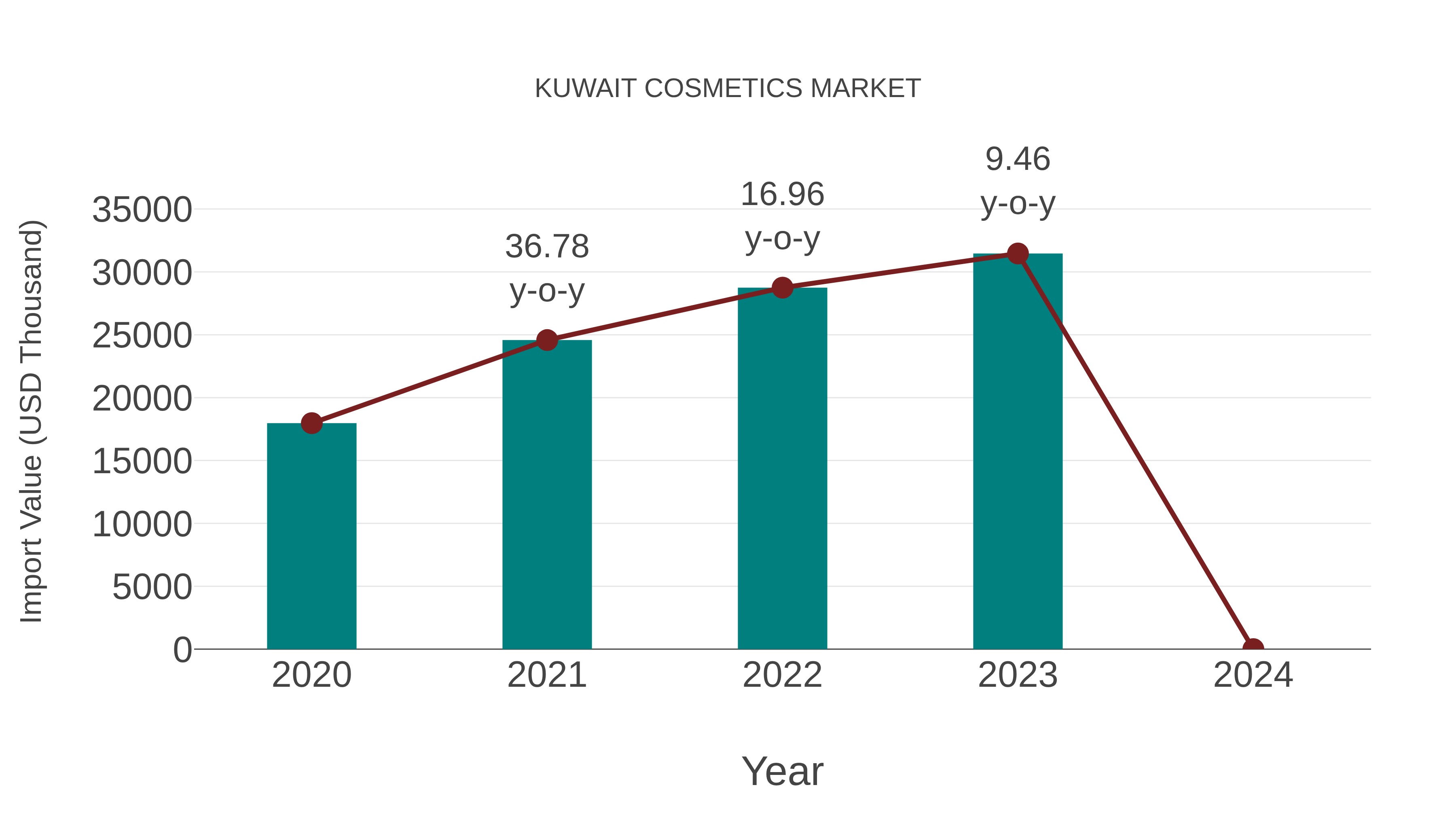
Kuwait Cosmetics Market Growth Rate
According to 6Wresearch internal database and industry insights, the Kuwait Cosmetics Market is projected to grow at a compound annual growth rate (CAGR) of 6.5% during the forecast period 2026–2032.
Topics Covered in the Kuwait Cosmetics Market Report
The Kuwait Cosmetics Market report thoroughly covers the market by product type, and category. The report provides a detailed analysis of ongoing market trends, opportunities/high-growth areas, and market drivers, helping stakeholders devise and align their market strategies according to current and future market dynamics.
Kuwait Cosmetics Market Highlights
| Report Name | Kuwait Cosmetics Market |
| Forecast period | 2026–2032 |
| CAGR | 6.5% |
| Growing Sector | Personal Care and Beauty |
Kuwait cosmetics market Synopsis
The Kuwait cosmetics industry is growing as customers prefer premium skincare products, fragrances and makeup items. Market growth results from high disposable income levels together with consumers who prefer specific brands. The market benefits from two developments which are the increasing number of luxury retail stores and the expansion of online beauty shopping platforms. Influencers and local beauty trends play a major role in guiding consumer choices.
Evaluation of Growth Drivers in the Kuwait Cosmetics Market
Below are some prominent drivers and their influence on the market dynamics:
| Drivers | Primary Segments Affected | Why It Matters |
| Rising Beauty Consciousness | By Product Type (Face Care, Color Cosmetics) | Increased focus on appearance boosts demand for skincare and makeup |
| Demand for Premium Brands | By Product Type (Face Care, Fragrances) | Consumers prefer high-end, globally recognized products |
| E-commerce Growth | By Distribution Channel (Online Retail, Offline Retail) | Online platforms improve product accessibility and brand exposure |
| Halal & Clean Beauty Trend | By Category (Organic/Natural) | Preference for ingredient transparency supports natural product growth |
| Influencer Marketing | By Product Type (Color Cosmetics, Bath Products) | Social media promotions enhance product appeal and sales |
The Kuwait Cosmetics Market Size is projected to grow at a CAGR of 6.5% during the forecast period of 2026–2032. Rising consumer expenditure on skincare, fragrances, and premium beauty items is driving the market forward. The expansion of digital retail platforms enables consumers to access international brands conveniently. The increasing public knowledge about ingredient safety together with the halal certification of cosmetics products drives higher demand for organic and natural cosmetics. Government oversight establishes product safety requirements which result in increased trust from customers. The ongoing development of new product formulas together with their packaging systems drives the Kuwait Cosmetics Market Growth. The growing popularity of high-end shopping experiences at malls and beauty boutiques leads to increased sales of premium products.
Evaluation of Restraints in the Kuwait Cosmetics Market
Below are some prominent restraints and their influence on the market dynamics:
| Restraints | Primary Segments Affected | What This Means |
| High Price of Premium Products | By Product Type (Face Care, Color Cosmetics) | Luxury pricing may restrict mid-income consumer access |
| Strict Import Regulations | By Category (Organic/Natural, Synthetic) | Compliance requirements may delay product entry |
| Market Competition | By Product Type (Hair Care, Color Cosmetics) | Intense rivalry limits market share growth for smaller brands |
| Changing Consumer Trends | By Product Type (All) | The inventory management is affected due to rapidly changing trends |
Kuwait Cosmetics Market Challenges
High dependence on imported cosmetic brands exposes the market to supply chain disruptions. The implementation of premium pricing strategies will restrict products from reaching the mass-market. New companies face operational challenges due to strict regulatory requirements that demand complete ingredient disclosure and halal certification. Established international brands maintain strong customer loyalty which generates obstacles for new brands to enter the market. The growing popularity of niche and personalized beauty solutions offer brands with opportunities to expand their product lines.
Kuwait Cosmetics Market Trends
Some major trends contributing to the Kuwait Cosmetics Market growth are:
- Rise in Halal and Clean Beauty Products: Consumers want to buy cosmetics which provide detailed ingredient information and halal certification and this trend drives demand for organic and natural products.
- Growth of Luxury Beauty Retail: Expansion of high-end retail stores and beauty boutiques which sell luxury products to customers who want to buy expensive items.
- E-commerce Expansion: Online beauty stores and social commerce channels improve accessibility and cross-border brand availability.
- Personalized Skincare Solutions: Customers prefer personalized beauty products which match their skin type and environmental conditions.
Investment Opportunities in the Kuwait Cosmetics Market
Some investment opportunities that will shape the dynamics of the Kuwait Cosmetics Market include:
- Expansion of Online Beauty Platforms: Digital channel investments enable brands to establish connections with consumers who use online beauty platforms.
- Halal-Certified Product Development: The development of halal-certified cosmetics helps companies to gain market acceptance through their halal-certified product lines.
- Premium Skincare Innovation: The funding which supports anti-aging products and climate-specific skincare research enables companies to establish their unique market position.
- Influencer Partnerships: Brand partnerships with regional influencers help companies to increase their brand recognition and create stronger relationships with their customers.
Top 5 Leading Players in the Kuwait Cosmetics Market
Below is the list of prominent companies leading the Kuwait Cosmetics Market:
1. L'Oréal Group
| Company Name | L'Oréal Group |
|---|---|
| Established Year | 1909 |
| Headquarters | Clichy, France |
| Official Website | Click Here |
L'Oréal offers a wide portfolio of skincare, makeup, and haircare products in Kuwait, catering to both luxury and mass-market segments.
2. Estée Lauder Companies
| Company Name | Estée Lauder Companies |
|---|---|
| Established Year | 1946 |
| Headquarters | New York, USA |
| Official Website | Click Here |
Estée Lauder is recognized for premium skincare and fragrance products, maintaining a strong presence in Kuwait’s luxury beauty market.
3. Shiseido Company Limited
| Company Name | Shiseido Company Limited |
|---|---|
| Established Year | 1872 |
| Headquarters | Tokyo, Japan |
| Official Website | Click Here |
Shiseido provides high-quality skincare and cosmetic products, focusing on advanced formulations and premium positioning.
4. Unilever
| Company Name | Unilever |
|---|---|
| Established Year | 1930 |
| Headquarters | London, UK & Rotterdam, Netherlands |
| Official Website | Click Here |
Unilever supplies accessible personal care brands widely available across Kuwait’s retail and supermarket chains.
5. Chalhoub Group
| Company Name | Chalhoub Group |
|---|---|
| Established Year | 1955 |
| Headquarters | Dubai, UAE |
| Official Website | Click Here |
Chalhoub Group distributes luxury beauty brands in Kuwait, supporting premium retail expansion and brand representation.
Government Regulations in the Kuwait Cosmetics Market
According to Kuwaiti Government Data, the Ministry of Health regulates cosmetic product registration, safety standards, and ingredient approvals. It is mandated that products must comply with Gulf Cooperation Council (GCC) cosmetic regulations and labeling requirements. Halal certification and ingredient transparency are focusing on consumer protection. Import regulations and quality inspections help maintain high safety standards in the cosmetics industry. In addition, periodic market surveillance and product recalls are implemented to ensure ongoing compliance with safety guidelines.
Future Insights of the Kuwait Cosmetics Market
The Kuwait Cosmetics Market Share will experience continuous growth as customers increasingly prefer high-quality and halal-certified beauty products. The market will become more accessible through the development of online retail platforms and high-end beauty stores. The skincare industry will achieve better market competition through ongoing development of anti-aging products and climate-adaptive skincare solutions. The market will experience growth as international brands establish partnerships with regional distributors to make their products more accessible.
Market Segmentation Analysis
The report offers a comprehensive study of the following market segments and their leading categories:
By Product Type – Face Care to Lead the Market
According to Rashika, Senior Research Analyst, 6Wresearch, face care products will dominate the market due to increasing consumer focus on skincare routines and demand for anti-aging and hydration products suited to desert climate conditions.
By Category – Organic/Natural to Lead the Market
Due to consumers increasingly prefer eco-friendly and chemical-free cosmetics, propelled by health and environmental issues, the organic and natural products will dominate the market. This shift is further compelled by the rise of sustainability-led beauty brands.
Key Attractiveness of the Report
- 10 Years of Market Numbers
- Historical Data Starting from 2022 to 2025
- Base Year: 2025
- Forecast Data until 2032
- Key Performance Indicators Impacting the Market
- Major Upcoming Developments and Projects
Key Highlights of the Report:
- Kuwait Cosmetics Market Outlook
- Market Size of Kuwait Cosmetics Market, 2025
- Forecast of Kuwait Cosmetics Market, 2032
- Historical Data and Forecast of Kuwait Cosmetics Revenues & Volume for the Period 2022-2032F
- Kuwait Cosmetics Market Trend Evolution
- Kuwait Cosmetics Market Drivers and Challenges
- Kuwait Cosmetics Price Trends
- Kuwait Cosmetics Porter's Five Forces
- Kuwait Cosmetics Industry Life Cycle
- Historical Data and Forecast of Kuwait Cosmetics Market Revenues & Volume By Product Type for the Period 2022-2032F
- Historical Data and Forecast of Kuwait Cosmetics Market Revenues & Volume By Face Care for the Period 2022-2032F
- Historical Data and Forecast of Kuwait Cosmetics Market Revenues & Volume By Body Care for the Period 2022-2032F
- Historical Data and Forecast of Kuwait Cosmetics Market Revenues & Volume By Hair Care for the Period 2022-2032F
- Historical Data and Forecast of Kuwait Cosmetics Market Revenues & Volume By Bath Products for the Period 2022-2032F
- Historical Data and Forecast of Kuwait Cosmetics Market Revenues & Volume By Color Cosmetics for the Period 2022-2032F
- Historical Data and Forecast of Kuwait Cosmetics Market Revenues & Volume By Category for the Period 2022-2032F
- Historical Data and Forecast of Kuwait Cosmetics Market Revenues & Volume By Organic/Natural for the Period 2022-2032F
- Historical Data and Forecast of Kuwait Cosmetics Market Revenues & Volume By Synthetic for the Period 2022-2032F
- Kuwait Cosmetics Import Export Trade Statistics
- Market Opportunity Assessment By Product Type
- Market Opportunity Assessment By Category
- Kuwait Cosmetics Top Companies Market Share
- Kuwait Cosmetics Competitive Benchmarking By Technical and Operational Parameters
- Kuwait Cosmetics Company Profiles
- Kuwait Cosmetics Key Strategic Recommendations
Market Covered
The report provides a detailed analysis of the following market segments and subsegments:
By Product Type:
- Face Care
- Body Care
- Hair Care
- Bath Products
- Color Cosmetics
By Category:
- Organic/Natural
- Synthetic






































