Australia Green Tea Extract Market: Import Trend Analysis
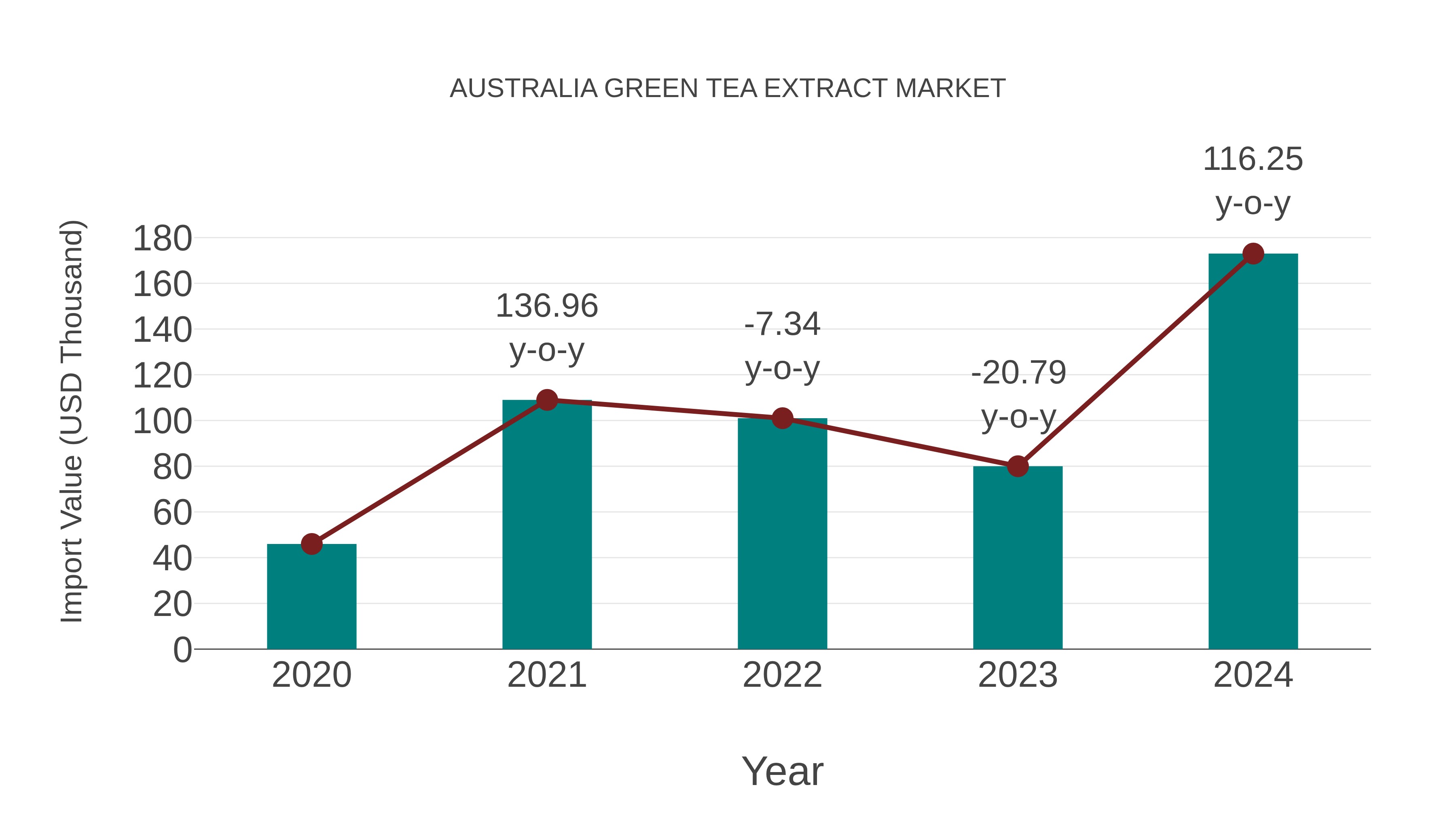
Australia`s import trend for green tea extract in 2024 exhibited significant growth, with a growth rate of 116.25% compared to the previous year. The compound annual growth rate (CAGR) for the period 2020-2024 stood at 39.26%. This surge in imports can be attributed to a notable shift in consumer preferences towards natural and health-focused products, driving demand for green tea extract in the Australian market.
Australia Green Tea Extract Market Market Overview
The Australia green tea extract market is experiencing steady growth due to increasing consumer awareness of its health benefits, such as weight management, improved heart health, and antioxidant properties. The market is driven by the rising demand for natural and organic products, as green tea extract is considered a healthy alternative to traditional supplements. Key players in the market are focusing on product innovation, such as introducing new flavors and formulations to cater to diverse consumer preferences. The market is also witnessing growth in the functional food and beverage sector, with green tea extract being incorporated into various products like energy drinks, snacks, and ready-to-drink beverages. Overall, the Australia green tea extract market is expected to continue its growth trajectory driven by consumer demand for natural and functional ingredients.
Australia Green Tea Extract Market Trends
In Australia, the green tea extract market is witnessing a growing trend towards health and wellness products, driving increased consumer interest in the benefits of green tea. Consumers are becoming more health-conscious and are seeking natural alternatives for various health concerns, including weight management, improved metabolism, and antioxidant properties. This trend is further fueled by the rising awareness of the potential health benefits of green tea extract, such as its high antioxidant content and potential role in supporting cardiovascular health. The market is also seeing a surge in demand for organic and sustainably sourced green tea extract products, reflecting a broader shift towards eco-friendly and ethical consumer choices. Overall, the Australian green tea extract market is poised for continued growth as consumers prioritize health and well-being in their purchasing decisions.
Australia Green Tea Extract Market Challenges
In the Australian green tea extract market, some challenges include limited consumer awareness about the health benefits of green tea extract, competition from other health supplements, and regulatory hurdles related to health claims and product labeling. Additionally, the market faces challenges related to sourcing high-quality green tea leaves, ensuring product authenticity and purity, and managing production costs. Moreover, fluctuations in raw material prices and the impact of global supply chain disruptions can also pose challenges for companies operating in the Australian green tea extract market. Overall, navigating these obstacles requires strategic marketing efforts, product differentiation, compliance with regulations, and building consumer trust through transparent sourcing and quality control measures.
Australia Green Tea Extract Market Investment Opportunities
The Australia green tea extract market presents promising investment opportunities due to the growing consumer demand for natural and health-focused products. With increasing awareness about the health benefits of green tea, such as its antioxidant properties and potential weight management benefits, the market is anticipated to experience significant growth. Investors can explore opportunities in partnering with local green tea extract manufacturers, investing in research and development for innovative product formulations, or establishing distribution channels to reach a wider consumer base. Additionally, focusing on sustainable and organic green tea extract products can cater to the growing trend of eco-conscious consumers. Overall, the Australia green tea extract market offers a favorable landscape for investment and growth potential in the health and wellness sector.
Australia Green Tea Extract Market Government Policy
In Australia, the green tea extract market is primarily regulated by the Australian Therapeutic Goods Administration (TGA). Green tea extract products are considered therapeutic goods and must comply with the regulations outlined in the Therapeutic Goods Act 1989 and Therapeutic Goods Regulations 1990. These regulations cover aspects such as product quality, safety, efficacy, and labeling requirements. Additionally, the Australian Competition and Consumer Commission (ACCC) oversees the marketing and advertising of green tea extract products to ensure compliance with consumer protection laws. Importers and manufacturers of green tea extract in Australia must also adhere to the country`s food safety standards set by Food Standards Australia New Zealand (FSANZ) to ensure the safety of these products for consumers.
Australia Green Tea Extract Market Future Outlook
The future outlook for the Australia green tea extract market looks promising, driven by increasing consumer awareness of the health benefits associated with green tea consumption. Factors such as growing interest in natural and organic products, rising disposable incomes, and a shift towards healthier lifestyles are expected to fuel the demand for green tea extract products in the country. Additionally, the rising prevalence of chronic diseases and the growing trend of weight management are likely to further boost the market growth. Manufacturers are focusing on product innovation, such as introducing new flavors and formulations, to cater to evolving consumer preferences. With a strong emphasis on health and wellness, the Australia green tea extract market is anticipated to witness steady growth in the coming years.
Key Highlights of the Report:
- Australia Green Tea Extract Market Outlook
- Market Size of Australia Green Tea Extract Market,2025
- Forecast of Australia Green Tea Extract Market, 2032
- Historical Data and Forecast of Australia Green Tea Extract Revenues & Volume for the Period 2022-2032F
- Australia Green Tea Extract Market Trend Evolution
- Australia Green Tea Extract Market Drivers and Challenges
- Australia Green Tea Extract Price Trends
- Australia Green Tea Extract Porter's Five Forces
- Australia Green Tea Extract Industry Life Cycle
- Historical Data and Forecast of Australia Green Tea Extract Market Revenues & Volume By Type for the Period 2022-2032F
- Historical Data and Forecast of Australia Green Tea Extract Market Revenues & Volume By Organic Extract for the Period 2022-2032F
- Historical Data and Forecast of Australia Green Tea Extract Market Revenues & Volume By Conventional Extract for the Period 2022-2032F
- Historical Data and Forecast of Australia Green Tea Extract Market Revenues & Volume By Decaffeinated Extract for the Period 2022-2032F
- Historical Data and Forecast of Australia Green Tea Extract Market Revenues & Volume By Form for the Period 2022-2032F
- Historical Data and Forecast of Australia Green Tea Extract Market Revenues & Volume By Powder for the Period 2022-2032F
- Historical Data and Forecast of Australia Green Tea Extract Market Revenues & Volume By Liquid for the Period 2022-2032F
- Historical Data and Forecast of Australia Green Tea Extract Market Revenues & Volume By Capsule for the Period 2022-2032F
- Historical Data and Forecast of Australia Green Tea Extract Market Revenues & Volume By Processing Method for the Period 2022-2032F
- Historical Data and Forecast of Australia Green Tea Extract Market Revenues & Volume By Steam Distillation for the Period 2022-2032F
- Historical Data and Forecast of Australia Green Tea Extract Market Revenues & Volume By Cold Pressing for the Period 2022-2032F
- Historical Data and Forecast of Australia Green Tea Extract Market Revenues & Volume By Solvent-Free for the Period 2022-2032F
- Historical Data and Forecast of Australia Green Tea Extract Market Revenues & Volume By Application for the Period 2022-2032F
- Historical Data and Forecast of Australia Green Tea Extract Market Revenues & Volume By Dietary Supplements for the Period 2022-2032F
- Historical Data and Forecast of Australia Green Tea Extract Market Revenues & Volume By Skincare for the Period 2022-2032F
- Historical Data and Forecast of Australia Green Tea Extract Market Revenues & Volume By Pharmaceuticals for the Period 2022-2032F
- Historical Data and Forecast of Australia Green Tea Extract Market Revenues & Volume By Distribution Channel for the Period 2022-2032F
- Historical Data and Forecast of Australia Green Tea Extract Market Revenues & Volume By Supers for the Period 2022-2032F
- Historical Data and Forecast of Australia Green Tea Extract Market Revenues & Volume By Online Retail for the Period 2022-2032F
- Historical Data and Forecast of Australia Green Tea Extract Market Revenues & Volume By Specialty Stores for the Period 2022-2032F
- Australia Green Tea Extract Import Export Trade Statistics
- Market Opportunity Assessment By Type
- Market Opportunity Assessment By Form
- Market Opportunity Assessment By Processing Method
- Market Opportunity Assessment By Application
- Market Opportunity Assessment By Distribution Channel
- Australia Green Tea Extract Top Companies Market Share
- Australia Green Tea Extract Competitive Benchmarking By Technical and Operational Parameters
- Australia Green Tea Extract Company Profiles
- Australia Green Tea Extract Key Strategic Recommendations






































