Australia High-temperature Sterilization Equipment Market: Import Trend Analysis
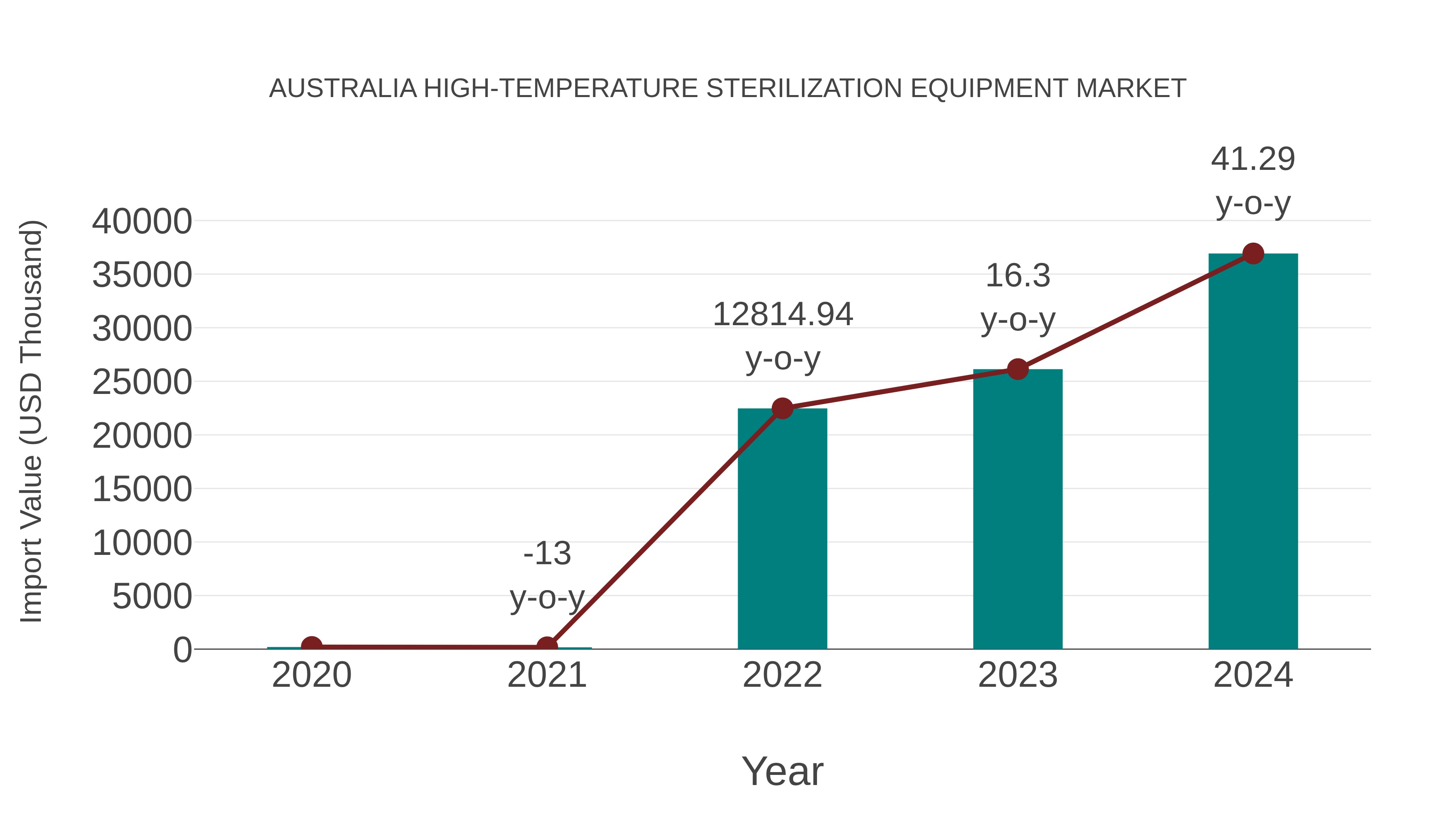
Australia`s import trend for high-temperature sterilization equipment in 2024 exhibited a notable growth rate of 41.29% compared to the previous year. The compound annual growth rate (CAGR) from 2020 to 2024 stood at an impressive 268.62%. This surge in imports can be attributed to an increasing demand for advanced sterilization solutions in various sectors, indicating a robust import momentum driven by evolving industry standards and technological advancements.
Australia High Temperature Sterilization Equipment Market Overview
The high temperature sterilization equipment market in Australia is driven by the need for advanced sterilization techniques across various industries, including healthcare, pharmaceuticals, and food processing. This market focuses on technologies that can withstand high-temperature environments while ensuring effective sterilization of equipment and materials. The demand is spurred by growing concerns over hygiene standards, stringent regulations in healthcare and food sectors, and the increasing adoption of automated sterilization systems.
Trends of the market
The Australian high-temperature thermoplastic market is seeing a shift towards materials capable of withstanding extreme conditions. High-temperature thermoplastics are in demand due to their excellent mechanical properties and resistance to high thermal and chemical stresses. Industries such as automotive, aerospace, and electronics are driving the market with the need for lightweight yet durable components. As technological innovation progresses, there`s a growing adoption of high-temperature thermoplastics to meet performance requirements in critical applications like under-the-hood automotive parts and electronic devices.
Challenges of the market
The high temperature sterilization equipment market in Australia faces significant challenges related to regulatory compliance and technological advancements. Manufacturers must adhere to stringent regulations imposed by health and safety authorities, ensuring that equipment is safe and effective in sterilizing medical instruments and other critical items. Additionally, the constant need for innovation to enhance the efficiency of sterilization processes, while reducing energy consumption and operational costs, remains a key challenge. This market is also impacted by the rising costs of raw materials and components, making it difficult for manufacturers to balance quality with affordability.
Investment opportunities in the Market
The high temperature sterilization equipment market in Australia presents robust investment opportunities due to increasing demand for advanced sterilization technologies in the healthcare and pharmaceutical sectors. As regulatory standards tighten for infection control and patient safety, hospitals and clinics are upgrading their sterilization infrastructure. The growth of biotechnology and medical device industries further enhances the potential for investing in innovative and energy-efficient sterilization solutions. Moreover, Australias commitment to healthcare modernization and research development strengthens the long-term outlook for this market.
Government Policy of the market
The Australian government enforces strict regulatory guidelines concerning medical devices, including sterilization equipment. The Therapeutic Goods Administration (TGA) ensures that all sterilization equipment adheres to the safety and efficacy standards set by the regulatory framework. Policies focus on the protection of public health and the prevention of contamination during medical procedures. The governments emphasis on hospital hygiene standards drives the demand for high-temperature sterilization technologies. Additionally, the adoption of sterilization equipment is influenced by government initiatives to improve healthcare infrastructure and quality.
Key Highlights of the Report:
- Australia High-Temperature Sterilization Equipment Market Outlook
- Market Size of Australia High-Temperature Sterilization Equipment Market, 2025
- Forecast of Australia High-Temperature Sterilization Equipment Market, 2032
- Historical Data and Forecast of Australia High-Temperature Sterilization Equipment Revenues & Volume for the Period 2022 - 2032F
- Australia High-Temperature Sterilization Equipment Market Trend Evolution
- Australia High-Temperature Sterilization Equipment Market Drivers and Challenges
- Australia High-Temperature Sterilization Equipment Price Trends
- Australia High-Temperature Sterilization Equipment Porter's Five Forces
- Australia High-Temperature Sterilization Equipment Industry Life Cycle
- Historical Data and Forecast of Australia High-Temperature Sterilization Equipment Market Revenues & Volume By Type for the Period 2022 - 2032F
- Historical Data and Forecast of Australia High-Temperature Sterilization Equipment Market Revenues & Volume By Steam Sterilization for the Period 2022 - 2032F
- Historical Data and Forecast of Australia High-Temperature Sterilization Equipment Market Revenues & Volume By Dry Sterilization for the Period 2022 - 2032F
- Historical Data and Forecast of Australia High-Temperature Sterilization Equipment Market Revenues & Volume By Others for the Period 2022 - 2032F
- Historical Data and Forecast of Australia High-Temperature Sterilization Equipment Market Revenues & Volume By Application for the Period 2022 - 2032F
- Historical Data and Forecast of Australia High-Temperature Sterilization Equipment Market Revenues & Volume By Hospitals and Clinics for the Period 2022 - 2032F
- Historical Data and Forecast of Australia High-Temperature Sterilization Equipment Market Revenues & Volume By Pharmaceutical for the Period 2022 - 2032F
- Historical Data and Forecast of Australia High-Temperature Sterilization Equipment Market Revenues & Volume By Others for the Period 2022 - 2032F
- Australia High-Temperature Sterilization Equipment Import Export Trade Statistics
- Market Opportunity Assessment By Type
- Market Opportunity Assessment By Application
- Australia High-Temperature Sterilization Equipment Top Companies Market Share
- Australia High-Temperature Sterilization Equipment Competitive Benchmarking By Technical and Operational Parameters
- Australia High-Temperature Sterilization Equipment Company Profiles
- Australia High-Temperature Sterilization Equipment Key Strategic Recommendations






































