Australia Maize Seed Market: Import Trend Analysis
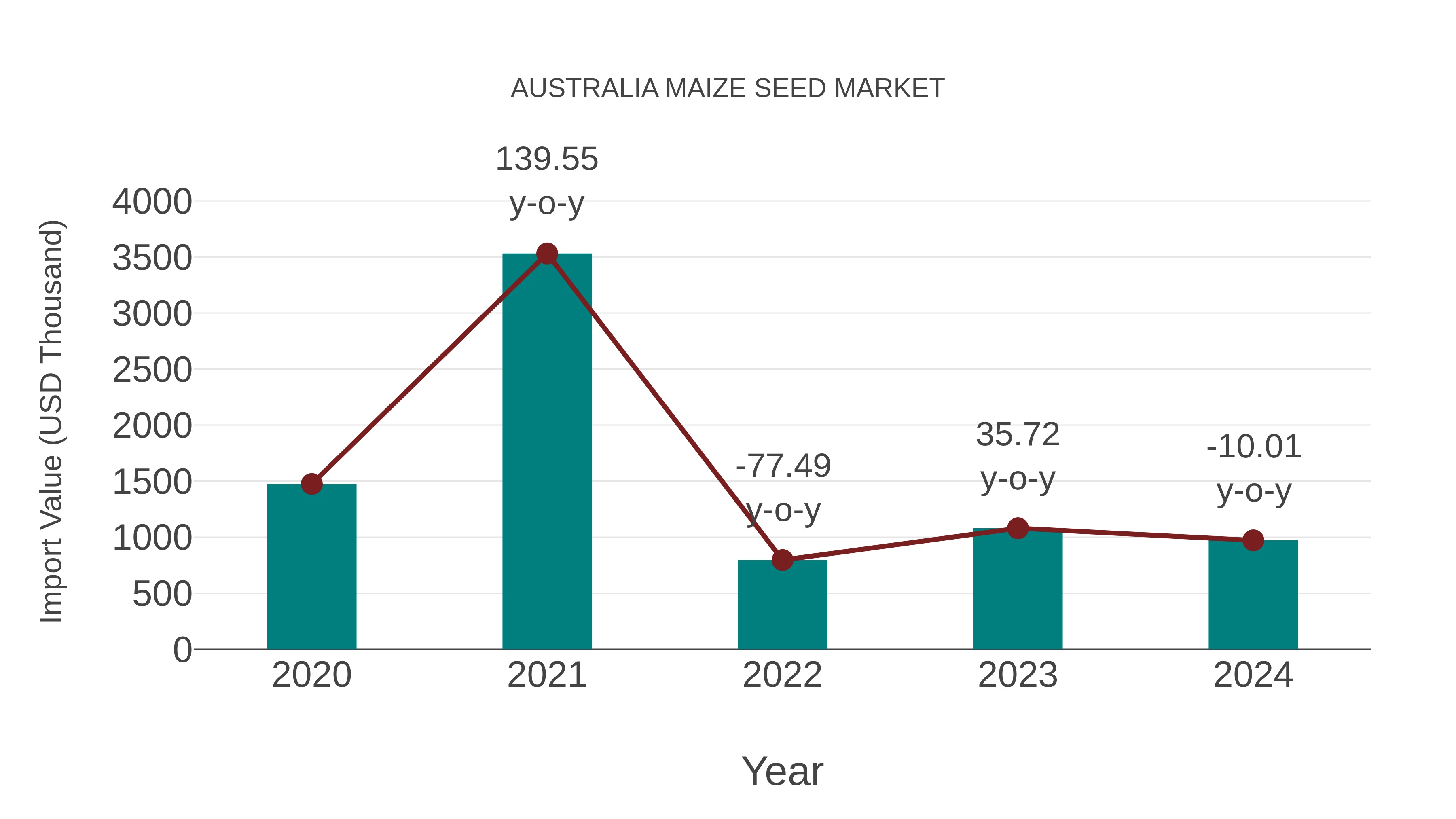
Australia`s import trend for maize seed in 2024 experienced a decline, with a growth rate of -10.01% compared to the previous year. The compound annual growth rate (CAGR) for the period 2020-2024 stood at -9.91%. This negative momentum could be attributed to shifting demand patterns or changes in trade policies impacting the market stability.
Australia Maize Seed Market Overview
The maize seed market in Australia is witnessing moderate growth, driven by advancements in seed genetics, climate-resilient varieties, and precision agriculture practices. Farmers are increasingly adopting hybrid and genetically modified (GM) seeds to enhance yield, pest resistance, and drought tolerance. Australia`s agricultural sector benefits from strong R&D support and collaborations with biotech firms to develop region-specific maize strains. However, changing climate patterns and water availability remain challenges affecting maize cultivation. Government support and agritech innovations are helping farmers optimize inputs and improve productivity. As demand for maize in food, animal feed, and biofuel applications rises, the seed market is expected to expand further.
Trends of the market
The maize seed market in Australia is witnessing steady demand, particularly from livestock feed producers and food processing industries. Drought-resistant and high-yield hybrid seeds are gaining popularity, especially in regions facing climate variability. Theres also a growing interest in genetically modified (GM) seeds for improved pest resistance and lower input costs. While adoption of GM technology is tightly regulated, advances in seed technology continue to push the boundaries of crop productivity. Precision farming tools are enhancing seed usage efficiency, optimizing planting density, and improving crop monitoring across maize farms. As Australia balances domestic food security with export ambitions, the maize seed market is expected to play a key role in the agricultural value chain.
Challenges of the market
The maize seed market in Australia is affected by fluctuating climate conditions, including droughts and floods, which impact crop yields and seed demand. Limited availability of high-quality hybrid and genetically modified seeds restricts productivity improvements. Farmers face challenges with pest resistance and soil degradation, demanding constant seed innovation. Import restrictions and quarantine measures on foreign seed varieties can delay access to better genetics. The maize market is highly competitive, making it difficult for new seed companies to establish a foothold. Additionally, fluctuating global corn prices influence farmers` willingness to invest in premium seeds.
Investment opportunities in the Market
Australias maize seed market is experiencing modest growth driven by increasing demand for animal feed, biofuel production, and food processing applications. Advances in seed technology, including drought-resistant and genetically modified variants, are enhancing yields and appealing to commercial growers. Government support for agricultural innovation and climate-resilient crops boosts investor confidence. The market also benefits from Australia`s export capabilities to Southeast Asian markets. Investment opportunities lie in seed R&D, local breeding programs, and strategic partnerships with agri-tech firms. As sustainable farming practices gain traction, companies offering high-efficiency and eco-friendly seed varieties are likely to attract favorable market attention.
Government Policy of the market
Agricultural policy in Australia supports the maize seed market through a combination of research funding, biosecurity controls, and seed certification regulations. The Department of Agriculture, Fisheries and Forestry (DAFF) regulates the import, export, and domestic distribution of seeds to prevent the spread of pests and diseases. Investments in genetically improved maize varieties are encouraged through partnerships with research institutes like CSIRO. Sustainability and drought resistance are key focus areas due to Australias variable climate. Government grants also assist farmers in adopting high-yield seed varieties and modern planting techniques. Policies favor private sector participation while ensuring compliance with biodiversity and environmental protection laws.
Key Highlights of the Report:
- Australia Maize Seed Market Outlook
- Market Size of Australia Maize Seed Market, 2025
- Forecast of Australia Maize Seed Market, 2032
- Historical Data and Forecast of Australia Maize Seed Revenues & Volume for the Period 2022 - 2032F
- Australia Maize Seed Market Trend Evolution
- Australia Maize Seed Market Drivers and Challenges
- Australia Maize Seed Price Trends
- Australia Maize Seed Porter's Five Forces
- Australia Maize Seed Industry Life Cycle
- Historical Data and Forecast of Australia Maize Seed Market Revenues & Volume By Breeding Technology for the Period 2022 - 2032F
- Historical Data and Forecast of Australia Maize Seed Market Revenues & Volume By Hybrids for the Period 2022 - 2032F
- Historical Data and Forecast of Australia Maize Seed Market Revenues & Volume By Open Pollinated Varities for the Period 2022 - 2032F
- Australia Maize Seed Import Export Trade Statistics
- Market Opportunity Assessment By Breeding Technology
- Australia Maize Seed Top Companies Market Share
- Australia Maize Seed Competitive Benchmarking By Technical and Operational Parameters
- Australia Maize Seed Company Profiles
- Australia Maize Seed Key Strategic Recommendations






































