Australia Medicinal Herbs Market: Import Trend Analysis
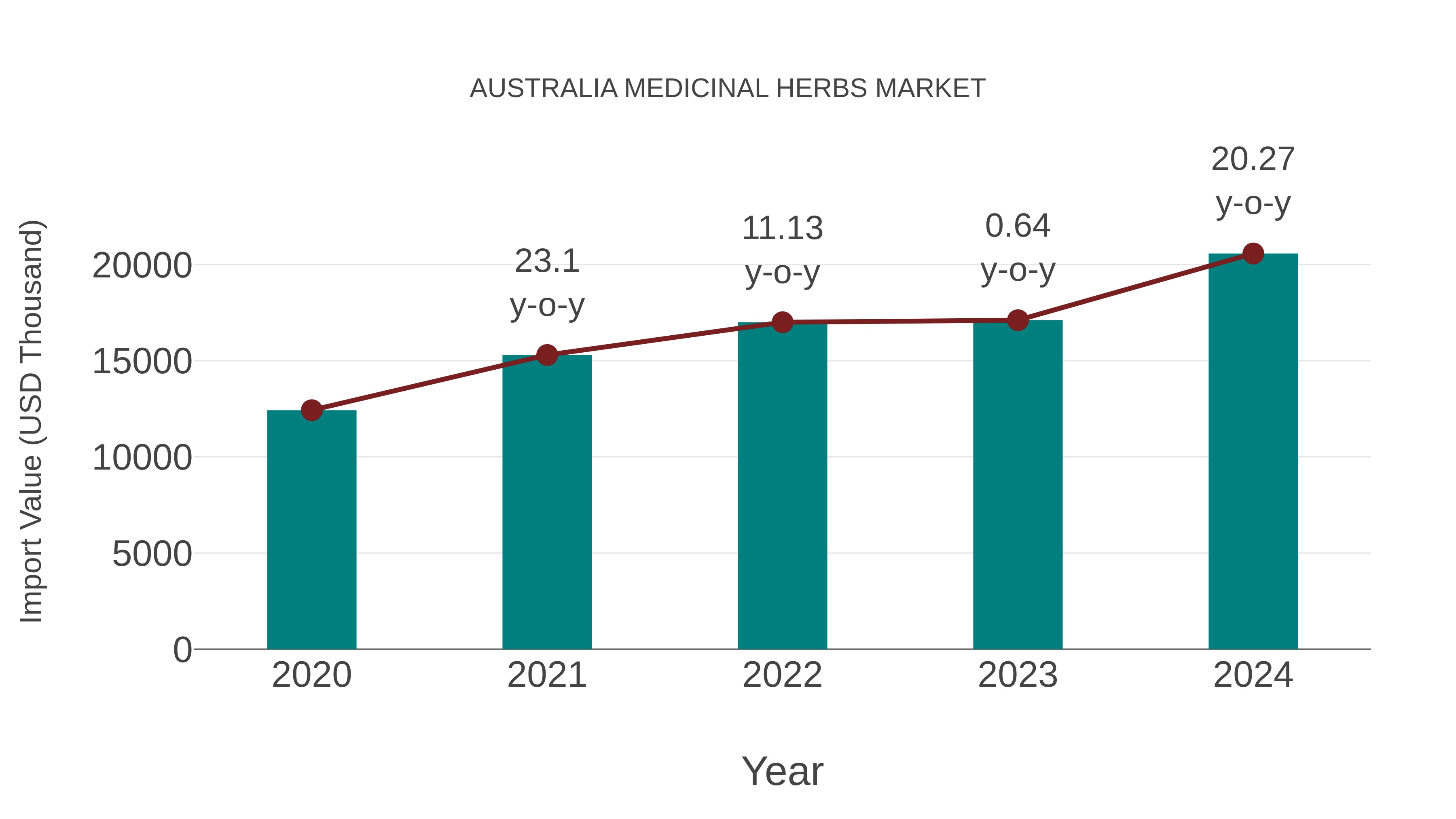
In the Australia medicinal herbs market, the import trend showed a notable growth rate of 20.27% from 2023 to 2024, with a compound annual growth rate (CAGR) of 13.44% for the period 2020-2024. This surge in imports can be attributed to an increasing demand for natural health remedies and a growing preference for herbal products over conventional pharmaceuticals.
Australia Medicinal Herbs Market Overview
Australia medicinal herbs market supplies botanical plants and herbs used in traditional and alternative medicine for their therapeutic properties. Medicinal herbs offer natural remedies for various health conditions, supporting holistic approaches to healthcare and wellness.
Drivers of the market
The medicinal herbs market in Australia is experiencing growth driven by several key factors. Firstly, the increasing consumer interest in natural remedies and alternative medicine fuels the demand for medicinal herbs used in traditional and herbal medicine practices. Additionally, the rising prevalence of chronic diseases and the aging population drive the demand for herbal supplements and botanical extracts with potential health benefits. Moreover, advancements in cultivation techniques, sustainable harvesting practices, and herbal product formulations contribute to market expansion.
Challenges of the market
The medicinal herbs market in Australia faces challenges related to cultivation practices, quality control, and market access. Growers and suppliers must adhere to Good Agricultural and Collection Practices (GACP) to ensure the safety, potency, and consistency of herbal products. Additionally, navigating market regulations, trade barriers, and competition from synthetic pharmaceuticals poses ongoing challenges in the market.
Government Policy of the market
The Australia government recognizes the importance of the medicinal herbs market in traditional and complementary medicine practices. Policies aim to ensure the safety, quality, and efficacy of herbal products while promoting sustainable harvesting and cultivation practices. Regulatory bodies such as the Therapeutic Goods Administration (TGA) and the Australia Register of Therapeutic Goods (ARTG) oversee the registration and regulation of herbal medicines. Government initiatives may include supporting research on the therapeutic properties of medicinal herbs, establishing standards for product quality and labeling, and promoting industry collaboration to develop evidence-based guidelines for herbal medicine use.
Key Highlights of the Report:
- Australia Medicinal Herbs Market Outlook
- Market Size of Australia Medicinal Herbs Market, 2025
- Forecast of Australia Medicinal Herbs Market, 2032
- Historical Data and Forecast of Australia Medicinal Herbs Revenues & Volume for the Period 2022-2032F
- Australia Medicinal Herbs Market Trend Evolution
- Australia Medicinal Herbs Market Drivers and Challenges
- Australia Medicinal Herbs Price Trends
- Australia Medicinal Herbs Porter's Five Forces
- Australia Medicinal Herbs Industry Life Cycle
- Historical Data and Forecast of Australia Medicinal Herbs Market Revenues & Volume By Type for the Period 2022-2032F
- Historical Data and Forecast of Australia Medicinal Herbs Market Revenues & Volume By Horsetail for the Period 2022-2032F
- Historical Data and Forecast of Australia Medicinal Herbs Market Revenues & Volume By Dandelion for the Period 2022-2032F
- Historical Data and Forecast of Australia Medicinal Herbs Market Revenues & Volume By Echinacea for the Period 2022-2032F
- Historical Data and Forecast of Australia Medicinal Herbs Market Revenues & Volume By Valerian for the Period 2022-2032F
- Historical Data and Forecast of Australia Medicinal Herbs Market Revenues & Volume By St. John??s Wort for the Period 2022-2032F
- Historical Data and Forecast of Australia Medicinal Herbs Market Revenues & Volume By Lemon Balm for the Period 2022-2032F
- Historical Data and Forecast of Australia Medicinal Herbs Market Revenues & Volume By Yarrow for the Period 2022-2032F
- Historical Data and Forecast of Australia Horsetail Medicinal Herbs Market Revenues & Volume By Calendula for the Period 2022-2032F
- Historical Data and Forecast of Australia Medicinal Herbs Market Revenues & Volume By Nature for the Period 2022-2032F
- Historical Data and Forecast of Australia Medicinal Herbs Market Revenues & Volume By Organic for the Period 2022-2032F
- Historical Data and Forecast of Australia Medicinal Herbs Market Revenues & Volume By Conventional for the Period 2022-2032F
- Historical Data and Forecast of Australia Medicinal Herbs Market Revenues & Volume By Form for the Period 2022-2032F
- Historical Data and Forecast of Australia Medicinal Herbs Market Revenues & Volume By Whole for the Period 2022-2032F
- Historical Data and Forecast of Australia Medicinal Herbs Market Revenues & Volume By Powder for the Period 2022-2032F
- Historical Data and Forecast of Australia Medicinal Herbs Market Revenues & Volume By Liquid for the Period 2022-2032F
- Historical Data and Forecast of Australia Medicinal Herbs Market Revenues & Volume By End-Use for the Period 2022-2032F
- Historical Data and Forecast of Australia Medicinal Herbs Market Revenues & Volume By Medicinal Tea for the Period 2022-2032F
- Historical Data and Forecast of Australia Medicinal Herbs Market Revenues & Volume By Health Supplement for the Period 2022-2032F
- Historical Data and Forecast of Australia Medicinal Herbs Market Revenues & Volume By Nutritive Jams for the Period 2022-2032F
- Historical Data and Forecast of Australia Medicinal Herbs Market Revenues & Volume By Herbal Medicines for the Period 2022-2032F
- Historical Data and Forecast of Australia Medicinal Herbs Market Revenues & Volume By Cosmeceuticals for the Period 2022-2032F
- Historical Data and Forecast of Australia Medicinal Herbs Market Revenues & Volume By Other Uses for the Period 2022-2032F
- Australia Medicinal Herbs Import Export Trade Statistics
- Market Opportunity Assessment By Type
- Market Opportunity Assessment By Nature
- Market Opportunity Assessment By Form
- Market Opportunity Assessment By End-Use
- Australia Medicinal Herbs Top Companies Market Share
- Australia Medicinal Herbs Competitive Benchmarking By Technical and Operational Parameters
- Australia Medicinal Herbs Company Profiles
- Australia Medicinal Herbs Key Strategic Recommendations






































