Australia Personal Luxury Goods Market: Import Trend Analysis
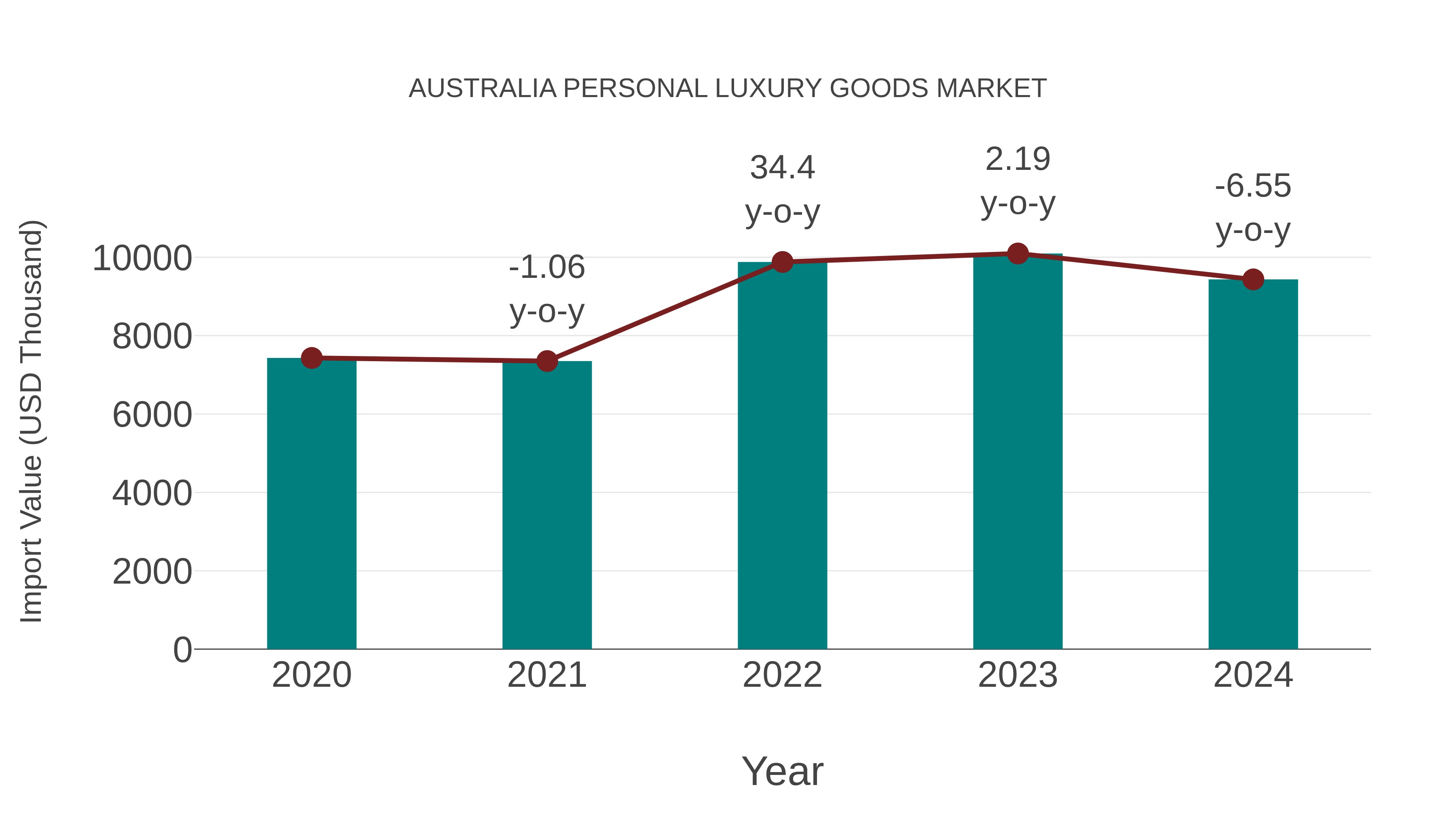
In the Australia personal luxury goods market, the import trend showed a decline in growth from 2023 to 2024, with a rate of -6.55%, contrasting with the 6.15% compound annual growth rate (CAGR) recorded from 2020 to 2024. This shift in import momentum could be attributed to evolving consumer preferences or changes in global trade dynamics.
Australia Personal Luxury Goods Market Synopsis
The Australia Personal Luxury Goods Market is a dynamic and growing sector characterized by a strong demand for luxury products across various categories such as fashion, accessories, beauty, and jewelry. Key factors driving this market include a growing affluent population, increasing disposable income, and a strong preference for luxury brands. Australian consumers are increasingly seeking unique and high-quality luxury products, leading to a rise in luxury retail outlets and online platforms catering to this demand. Major global luxury brands have a significant presence in the Australian market, further fueling competition and innovation. The market is expected to continue its growth trajectory, driven by evolving consumer preferences, digital advancements, and changing shopping behaviors.
Australia Personal Luxury Goods Market Trends
The Australia Personal Luxury Goods Market is experiencing several key trends, including a growing demand for sustainable and ethically sourced luxury products. Consumers are increasingly seeking products that are environmentally friendly and socially responsible. Another trend is the rise of online luxury shopping, as more consumers are turning to digital platforms to purchase high-end goods. Personalization and customization are also gaining popularity, with consumers seeking unique and exclusive luxury items tailored to their preferences. Additionally, there is a shift towards experiential luxury, with consumers valuing experiences such as luxury travel, fine dining, and cultural events. Overall, the Australia Personal Luxury Goods Market is evolving to meet the changing preferences and values of consumers in the country.
Australia Personal Luxury Goods Market Challenges
In the Australia Personal Luxury Goods Market, several challenges exist, including economic uncertainties affecting consumer confidence, high import taxes and duties leading to increased prices for luxury goods, and stiff competition from both domestic and international luxury brands. Additionally, the shift towards online shopping and digital marketing poses a challenge for brick-and-mortar luxury retailers to adapt and enhance their omnichannel strategies to meet changing consumer preferences. Rising operating costs, such as rent and labor expenses, further impact profit margins for luxury retailers in Australia. Overall, navigating these challenges requires a deep understanding of consumer behavior, innovative marketing tactics, strategic pricing strategies, and a strong focus on delivering exceptional customer experiences to remain competitive in the Australian luxury goods market.
Australia Personal Luxury Goods Market Investment Opportunities
The Australia Personal Luxury Goods Market presents various investment opportunities across sectors such as fashion, accessories, beauty, and lifestyle products. With the increasing disposable income and evolving consumer preferences in Australia, luxury goods brands have the potential for growth and profitability. Investing in established luxury brands with a strong presence in the Australian market or exploring opportunities in emerging luxury segments like sustainable luxury or experiential luxury could be lucrative strategies. Additionally, tapping into the growing trend of online luxury shopping and leveraging digital marketing strategies can also offer investment prospects in the Australian Personal Luxury Goods Market. Overall, the market presents a diverse range of opportunities for investors looking to capitalize on the demand for premium and high-end products in Australia.
Jordan Agar Market Government Policies
The Australian government has implemented various policies impacting the Personal Luxury Goods Market, including the Goods and Services Tax (GST) which applies to luxury items, import duties on certain luxury goods, and regulations on counterfeit products to protect consumers and businesses. Additionally, the Australian Competition and Consumer Commission (ACCC) enforces competition and consumer laws to prevent anti-competitive behavior in the luxury goods sector. The government also promotes sustainable practices in the industry through initiatives such as the Ethical Clothing Australia accreditation scheme. Overall, government policies in Australia aim to regulate the Personal Luxury Goods Market, ensure fair competition, protect consumers from counterfeit products, and promote sustainability within the industry.
Australia Personal Luxury Goods Market Future Outlook
The Australia Personal Luxury Goods Market is expected to continue its growth trajectory in the coming years, driven by strong consumer demand for premium and luxury products. Factors such as rising disposable incomes, increasing tourism, and a growing appreciation for high-end fashion and accessories are contributing to this positive outlook. The market is also benefiting from the expanding presence of luxury brands, both physical stores and online platforms, catering to the preferences of affluent consumers. With a focus on exclusivity, quality, and unique experiences, the personal luxury goods market in Australia is poised for further expansion, offering opportunities for luxury retailers and brands to capitalize on the evolving tastes and preferences of the discerning Australian consumer.
Key Highlights of the Report:
- Australia Personal Luxury Goods Market Outlook
- Market Size of Australia Personal Luxury Goods Market, 2025
- Forecast of Australia Personal Luxury Goods Market, 2032
- Historical Data and Forecast of Australia Personal Luxury Goods Revenues & Volume for the Period 2022 - 2032F
- Australia Personal Luxury Goods Market Trend Evolution
- Australia Personal Luxury Goods Market Drivers and Challenges
- Australia Personal Luxury Goods Price Trends
- Australia Personal Luxury Goods Porter's Five Forces
- Australia Personal Luxury Goods Industry Life Cycle
- Historical Data and Forecast of Australia Personal Luxury Goods Market Revenues & Volume By Distribution Channel for the Period 2022 - 2032F
- Historical Data and Forecast of Australia Personal Luxury Goods Market Revenues & Volume By Offline for the Period 2022 - 2032F
- Historical Data and Forecast of Australia Personal Luxury Goods Market Revenues & Volume By Online for the Period 2022 - 2032F
- Historical Data and Forecast of Australia Personal Luxury Goods Market Revenues & Volume By Product for the Period 2022 - 2032F
- Historical Data and Forecast of Australia Personal Luxury Goods Market Revenues & Volume By Hard luxury for the Period 2022 - 2032F
- Historical Data and Forecast of Australia Personal Luxury Goods Market Revenues & Volume By Apparel for the Period 2022 - 2032F
- Historical Data and Forecast of Australia Personal Luxury Goods Market Revenues & Volume By Cosmetics and perfumes for the Period 2022 - 2032F
- Historical Data and Forecast of Australia Personal Luxury Goods Market Revenues & Volume By Accessories for the Period 2022 - 2032F
- Historical Data and Forecast of Australia Personal Luxury Goods Market Revenues & Volume By Others for the Period 2022 - 2032F
- Australia Personal Luxury Goods Import Export Trade Statistics
- Market Opportunity Assessment By Distribution Channel
- Market Opportunity Assessment By Product
- Australia Personal Luxury Goods Top Companies Market Share
- Australia Personal Luxury Goods Competitive Benchmarking By Technical and Operational Parameters
- Australia Personal Luxury Goods Company Profiles
- Australia Personal Luxury Goods Key Strategic Recommendations






































