Australia Piano Market Size Growth Rate
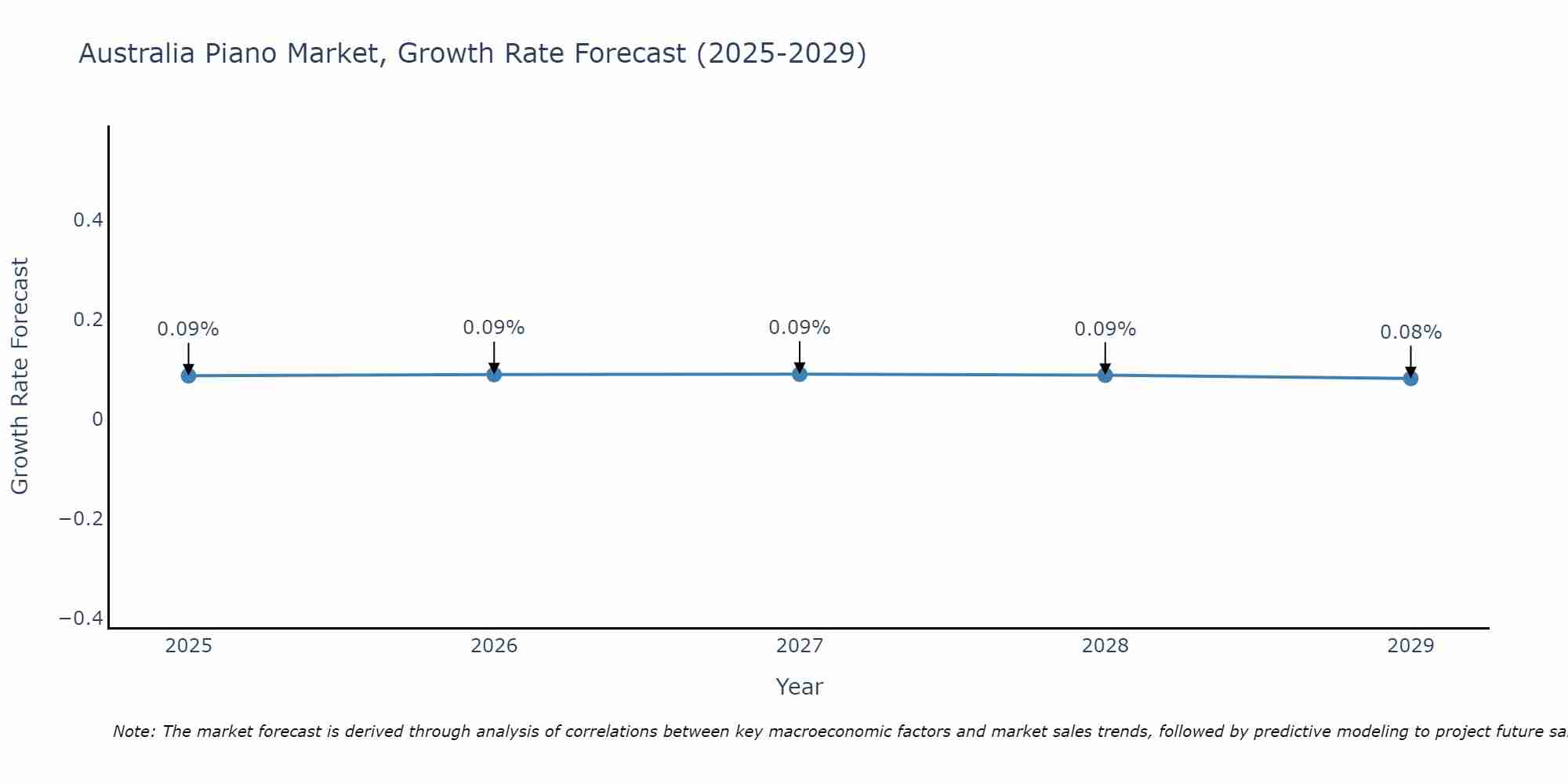
The Australia Piano Market is projected to witness mixed growth rate patterns during 2025 to 2029. Growth accelerates to 0.09% in 2027, following an initial rate of 0.09%, before easing to 0.08% at the end of the period.
Australia Piano Market Synopsis
The piano market in Australia is driven by a combination of cultural appreciation for music, increasing interest in musical education, and growing disposable incomes that allow for investment in high-quality instruments. The market includes a range of products such as acoustic pianos, digital pianos, and hybrid models, catering to different consumer needs, from professional musicians and educational institutions to hobbyists and beginners. Leading global brands dominate the market, but there is also a demand for second-hand and refurbished pianos, which offer affordability without compromising quality.
Drivers of the market
The rising demand for pianos in educational institutions, concert halls, and private households has fueled market growth in Australia. The increasing trend of children learning musical instruments and the resurgence of classical music appreciation have contributed to steady sales. Additionally, digital pianos and hybrid models with advanced technology have expanded the market by appealing to modern musicians.
Challenges of the market
The Australian piano market is declining due to reduced interest in learning the instrument and high maintenance costs. Digital pianos and keyboards offer more affordable and space-saving alternatives, further affecting the demand for traditional acoustic pianos. Import costs and availability of second-hand pianos also impact new sales.
Investment opportunities in the Market
The demand for acoustic and digital pianos in Australia offers investment potential in premium piano brands, music education partnerships, and online sales of digital keyboards. There is also scope for refurbished and second-hand pianos, catering to budget-conscious consumers.
Government Policy of the market
The piano market in Australia is governed by consumer product regulations and import policies. Pianos must comply with safety and labeling requirements to ensure their quality and durability. Import duties and tariffs may apply to pianos brought into Australia, depending on trade agreements with exporting countries. Music education policies also support the piano market by promoting musical instrument accessibility in schools and communities.
Key Highlights of the Report:
- Australia Piano Market Outlook
- Market Size of Australia Piano Market, 2024
- Forecast of Australia Piano Market, 2031
- Historical Data and Forecast of Australia Piano Revenues & Volume for the Period 2021-2031
- Australia Piano Market Trend Evolution
- Australia Piano Market Drivers and Challenges
- Australia Piano Price Trends
- Australia Piano Porter's Five Forces
- Australia Piano Industry Life Cycle
- Historical Data and Forecast of Australia Piano Market Revenues & Volume By Type for the Period 2021-2031
- Historical Data and Forecast of Australia Piano Market Revenues & Volume By Grand Piano for the Period 2021-2031
- Historical Data and Forecast of Australia Piano Market Revenues & Volume By Upright Piano for the Period 2021-2031
- Historical Data and Forecast of Australia Piano Market Revenues & Volume By Application for the Period 2021-2031
- Historical Data and Forecast of Australia Piano Market Revenues & Volume By Learning and Teaching for the Period 2021-2031
- Historical Data and Forecast of Australia Piano Market Revenues & Volume By Entertainment for the Period 2021-2031
- Historical Data and Forecast of Australia Piano Market Revenues & Volume By Other for the Period 2021-2031
- Australia Piano Import Export Trade Statistics
- Market Opportunity Assessment By Type
- Market Opportunity Assessment By Application
- Australia Piano Top Companies Market Share
- Australia Piano Competitive Benchmarking By Technical and Operational Parameters
- Australia Piano Company Profiles
- Australia Piano Key Strategic Recommendations






































