Australia Soybean Oil Market: Import Trend Analysis
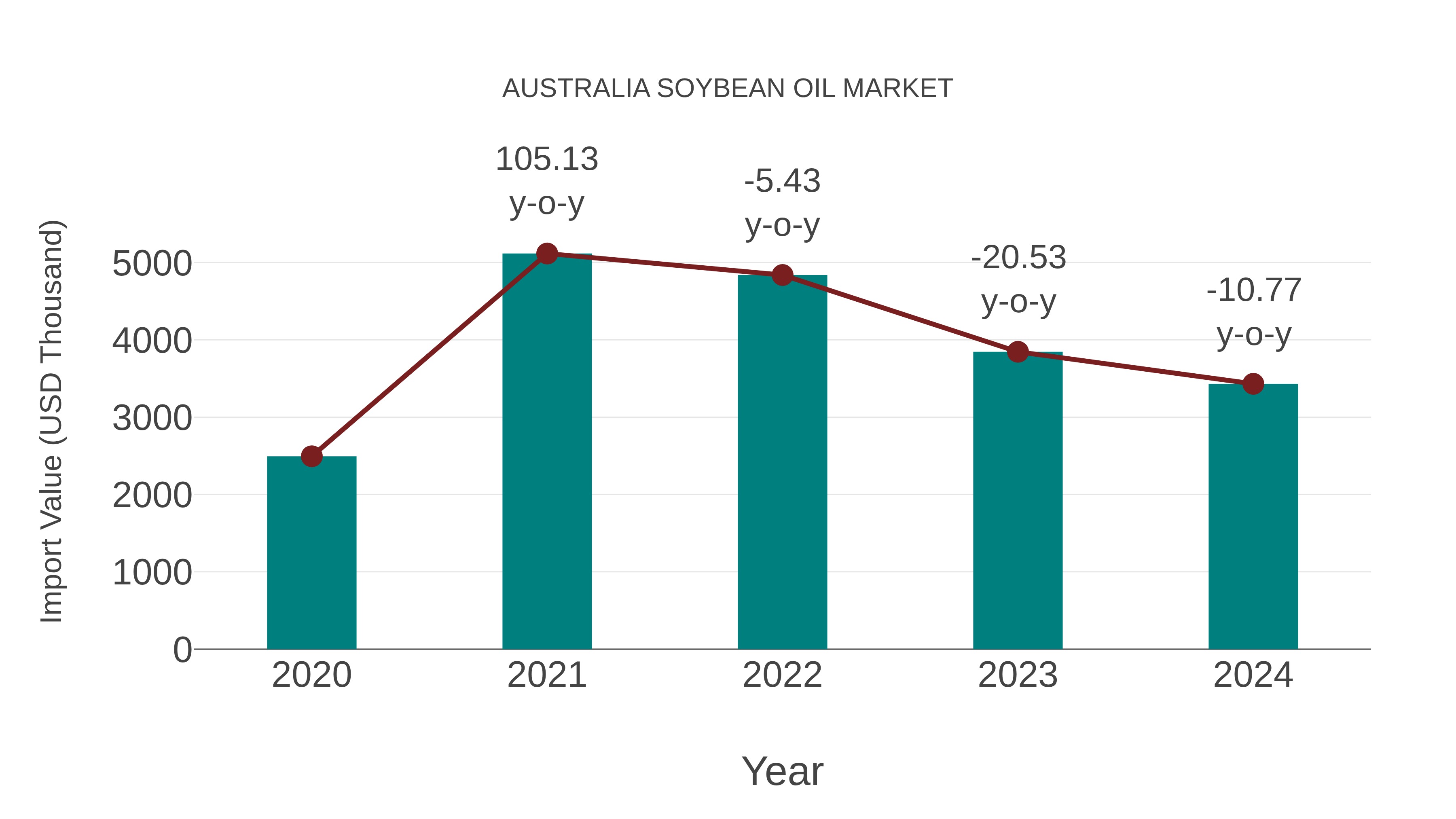
In the Australia soybean oil market, the import trend showed a decline in growth from 2023 to 2024, with a rate of -10.77%. However, the compound annual growth rate (CAGR) for the period 2020-2024 remained positive at 8.3%. This shift in import momentum could be attributed to changes in consumer preferences, supply chain disruptions, or evolving trade policies impacting market stability.
Australia Soybean Oil Market Overview
Soybean oil is widely used in cooking and food processing industries in Australia. The market for soybean oil is characterized by the presence of both domestic production and imports to meet the growing demand from consumers and food manufacturers.
Drivers of the market
The Australia soybean oil market is experiencing growth due to several driving factors. Firstly, there is a growing demand for edible oils, driven by population growth, urbanization, and changing dietary habits. Soybean oil is one of the most widely consumed vegetable oils globally, valued for its neutral flavor, versatility, and nutritional benefits. Additionally, the expanding food processing and foodservice industries are driving demand for soybean oil as a cooking oil and ingredient in a wide range of food products, including snacks, baked goods, and processed foods. Moreover, the increasing awareness of the health benefits associated with unsaturated fats and omega-3 fatty acids found in soybean oil is driving consumer preference for soy-based cooking oils over traditional options.
Challenges of the market
The Australia soybean oil market encounters challenges related to consumer preferences, competition, and market dynamics. While soybean oil is a widely used cooking oil due to its versatility and health benefits, it faces competition from other vegetable oils, such as canola and sunflower oil. Convincing consumers to choose soybean oil over alternative options can be challenging, especially with changing dietary trends and preferences. Moreover, fluctuations in soybean prices and global market dynamics can impact the cost and availability of soybean oil, affecting both producers and consumers in the Australia market.
Government Policy of the market
In the soybean oil market, government policies emphasize food safety regulations and sustainability initiatives. Quality standards are enforced throughout the production process to ensure the purity and safety of soybean oil products. Moreover, environmental regulations and incentives promote sustainable practices in soybean cultivation and oil extraction to minimize environmental impact and conserve natural resources.
Key Highlights of the Report:
- Australia Soybean Oil Market Outlook
- Market Size of Australia Soybean Oil Market, 2024
- Forecast of Australia Soybean Oil Market, 2031
- Historical Data and Forecast of Australia Soybean Oil Revenues & Volume for the Period 2018 - 2031
- Australia Soybean Oil Market Trend Evolution
- Australia Soybean Oil Market Drivers and Challenges
- Australia Soybean Oil Price Trends
- Australia Soybean Oil Porter's Five Forces
- Australia Soybean Oil Industry Life Cycle
- Historical Data and Forecast of Australia Soybean Oil Market Revenues & Volume By End-Use for the Period 2018 - 2031
- Historical Data and Forecast of Australia Soybean Oil Market Revenues & Volume By Food for the Period 2018 - 2031
- Historical Data and Forecast of Australia Soybean Oil Market Revenues & Volume By Feed for the Period 2018 - 2031
- Historical Data and Forecast of Australia Soybean Oil Market Revenues & Volume By Industrial for the Period 2018 - 2031
- Australia Soybean Oil Import Export Trade Statistics
- Market Opportunity Assessment By End-Use
- Australia Soybean Oil Top Companies Market Share
- Australia Soybean Oil Competitive Benchmarking By Technical and Operational Parameters
- Australia Soybean Oil Company Profiles
- Australia Soybean Oil Key Strategic Recommendations






































