Australia Spices and Seasonings in Meat Market: Import Trend Analysis
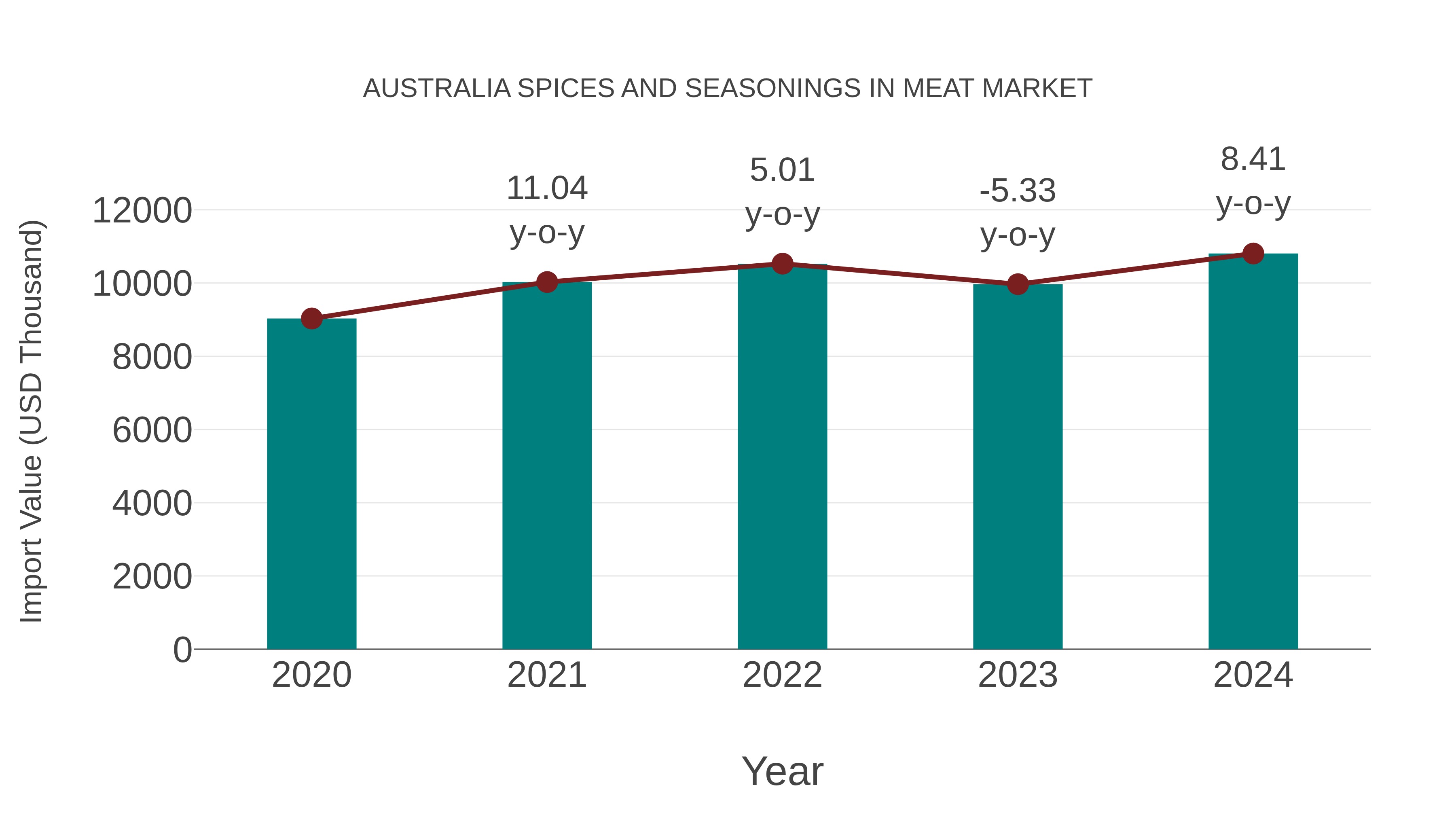
Australia`s import trend for spices and seasonings in the meat market showed a growth rate of 8.41% from 2023 to 2024, with a compound annual growth rate (CAGR) of 4.59% from 2020 to 2024. This increase can be attributed to a shift in consumer preferences towards more diverse and exotic flavors, driving import momentum in the spices and seasonings sector.
Australia Spices And Seasonings In Meat Market Overview
The market for spices and seasonings in meat processing is propelled by consumer demand for flavorful and convenient meat products. Increasing meat consumption, adoption of ready-to-eat meals, and innovation in seasoning blends contribute to expansion. Meat processors focus on spices that enhance taste while maintaining product quality and safety.
Trends of the market
The incorporation of spices and seasonings in meat products in Australia is growing in response to consumer demand for flavor variety and healthier options. Trends include the use of natural preservatives, reduced sodium blends, and spice formulations enhancing taste while improving shelf life. Ethnic flavors and gourmet seasoning profiles are increasingly popular in processed meats. The market also reflects a shift toward clean-label and additive-free seasoning solutions to meet regulatory and consumer expectations.
Challenges of the market
This niche market is impacted by strict food safety regulations that require rigorous testing and certification, increasing compliance costs. Consumer trends toward natural and additive-free meat products pose formulation challenges. Supply chain disruptions and price volatility of spices also affect profitability. Additionally, competition from imported seasoning blends and changing consumer taste preferences require ongoing product innovation.
Investment opportunities in the Market
Investment in the spices and seasonings in meat market in Australia is promising due to rising consumer preference for flavored and convenient meat products. There is growing demand for clean-label, natural seasoning blends tailored for various meat types including beef, poultry, and seafood. Innovation in spice marinades, rubs, and ready-to-use blends that enhance taste and shelf life will drive market expansion. Collaborations with meat processors and retailers for co-branded products can create competitive advantages.
Government Policy of the market
Government policies regulating the use of spices and seasonings in meat products focus on food safety, quality standards, and labeling requirements enforced by FSANZ. The use of additives and preservatives is strictly controlled to ensure consumer health protection. Agricultural policies supporting meat production and spice cultivation indirectly impact this market segment. Additionally, export regulations affect the international trade of seasoned meat products, influencing market growth opportunities.
Key Highlights of the Report:
- Australia Spices and Seasonings in Meat Market Outlook
- Market Size of Australia Spices and Seasonings in Meat Market, 2025
- Forecast of Australia Spices and Seasonings in Meat Market, 2032
- Historical Data and Forecast of Australia Spices and Seasonings in Meat Revenues & Volume for the Period 2022 - 2032F
- Australia Spices and Seasonings in Meat Market Trend Evolution
- Australia Spices and Seasonings in Meat Market Drivers and Challenges
- Australia Spices and Seasonings in Meat Price Trends
- Australia Spices and Seasonings in Meat Porter's Five Forces
- Australia Spices and Seasonings in Meat Industry Life Cycle
- Historical Data and Forecast of Australia Spices and Seasonings in Meat Market Revenues & Volume By Product for the Period 2022 - 2032F
- Historical Data and Forecast of Australia Spices and Seasonings in Meat Market Revenues & Volume By Herbs for the Period 2022 - 2032F
- Historical Data and Forecast of Australia Spices and Seasonings in Meat Market Revenues & Volume By Salt & Salts Substitutes for the Period 2022 - 2032F
- Historical Data and Forecast of Australia Spices and Seasonings in Meat Market Revenues & Volume By Spices for the Period 2022 - 2032F
- Historical Data and Forecast of Australia Spices and Seasonings in Meat Market Revenues & Volume By Application for the Period 2022 - 2032F
- Historical Data and Forecast of Australia Spices and Seasonings in Meat Market Revenues & Volume By Bakery & Confectionery Products for the Period 2022 - 2032F
- Historical Data and Forecast of Australia Spices and Seasonings in Meat Market Revenues & Volume By Frozen Food for the Period 2022 - 2032F
- Historical Data and Forecast of Australia Spices and Seasonings in Meat Market Revenues & Volume By Soups for the Period 2022 - 2032F
- Historical Data and Forecast of Australia Spices and Seasonings in Meat Market Revenues & Volume By Sauces & Dressings for the Period 2022 - 2032F
- Historical Data and Forecast of Australia Spices and Seasonings in Meat Market Revenues & Volume By Beverages for the Period 2022 - 2032F
- Historical Data and Forecast of Australia Spices and Seasonings in Meat Market Revenues & Volume By Others for the Period 2022 - 2032F
- Australia Spices and Seasonings in Meat Import Export Trade Statistics
- Market Opportunity Assessment By Product
- Market Opportunity Assessment By Application
- Australia Spices and Seasonings in Meat Top Companies Market Share
- Australia Spices and Seasonings in Meat Competitive Benchmarking By Technical and Operational Parameters
- Australia Spices and Seasonings in Meat Company Profiles
- Australia Spices and Seasonings in Meat Key Strategic Recommendations






































