Austria Polyphenol Market Size Growth Rate
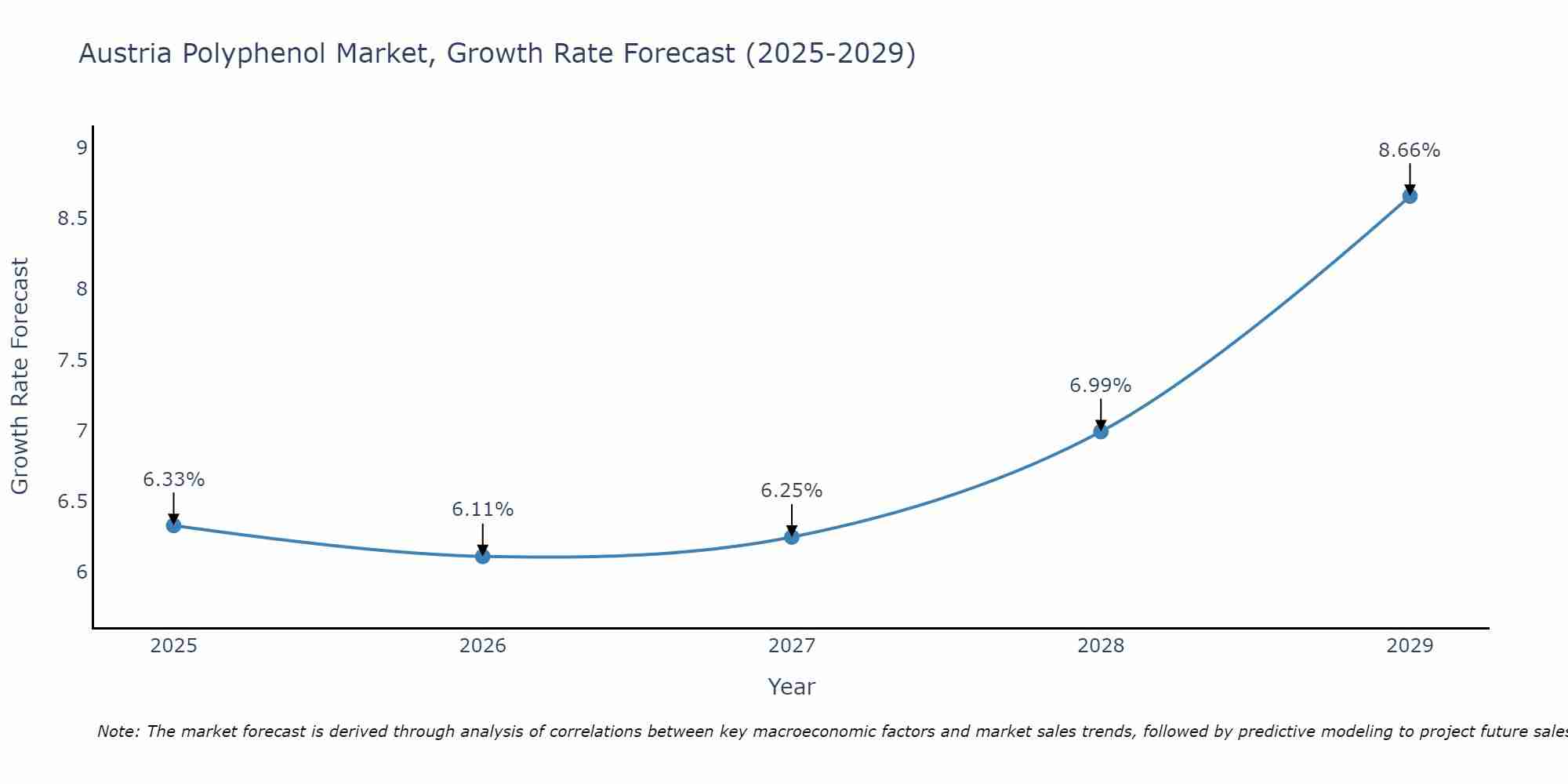
The Austria Polyphenol Market is projected to witness mixed growth rate patterns during 2025 to 2029. The growth rate starts at 6.33% in 2025 and reaches 8.66% by 2029.
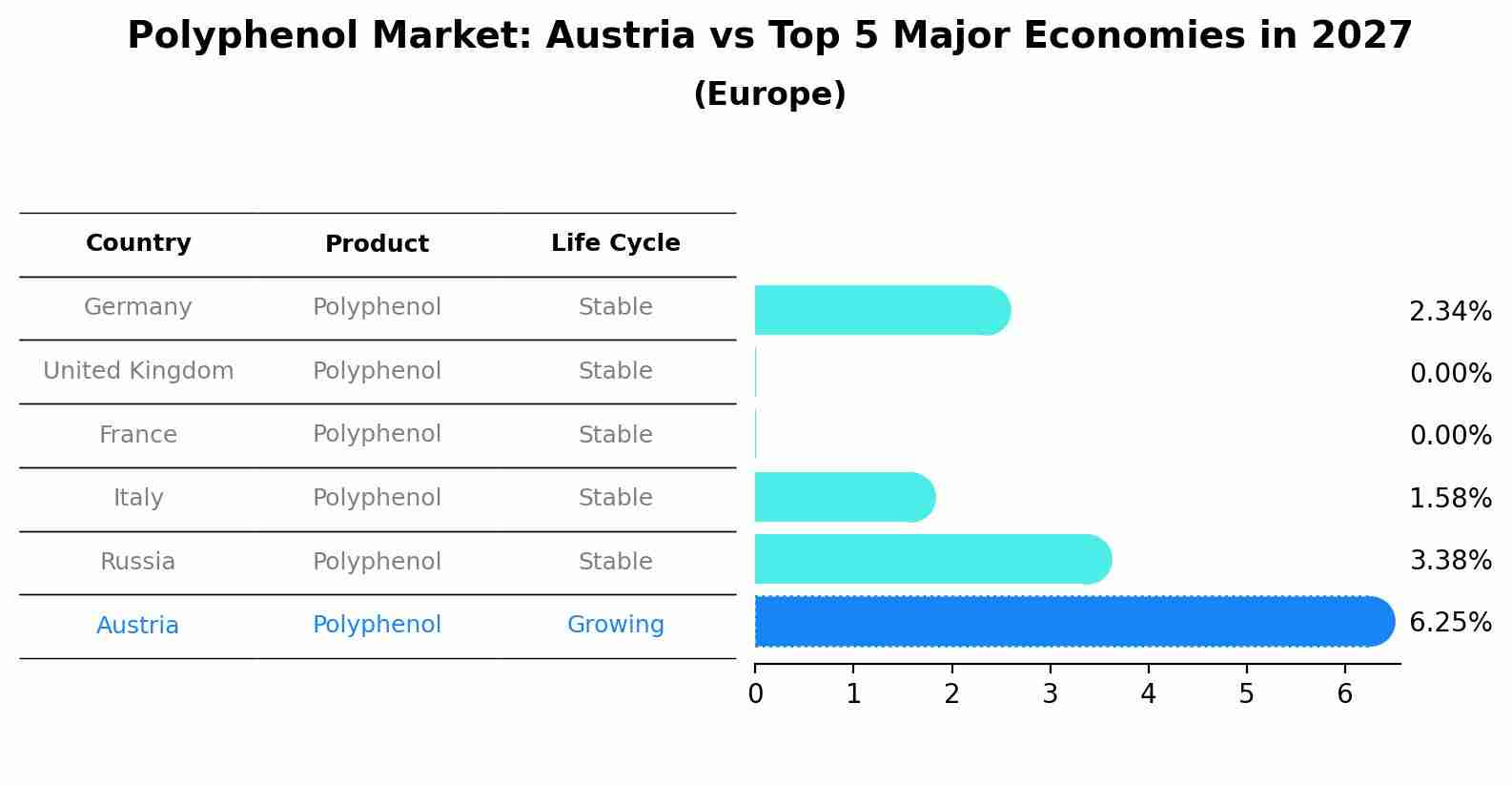
Polyphenol Market: Austria vs Top 5 Major Economies in 2027 (Europe)
The Polyphenol market in Austria is projected to grow at a growing growth rate of 6.25% by 2027, within the Europe region led by Germany, along with other countries like United Kingdom, France, Italy and Russia, collectively shaping a dynamic and evolving market environment driven by innovation and increasing adoption of emerging technologies.
Austria Polyphenol Market Overview
The Polyphenol market in Austria involves the extraction and production of polyphenolic compounds used in food and beverage, pharmaceuticals, and cosmetics. These compounds are known for their antioxidant properties and health benefits. Austrian producers focus on sourcing high-quality raw materials and employing advanced extraction techniques to ensure the purity and potency of polyphenols. The market is driven by the rising consumer awareness about health and wellness and the demand for natural and functional ingredients in various products.
Drivers of the market
The polyphenol market in Austria is driven by the increasing awareness of the health benefits of polyphenols, found in foods, beverages, and dietary supplements. The demand for antioxidant-rich products and natural ingredients in the food and beverage industry supports market growth. Research into new sources and applications of polyphenols also propels the market.
Challenges of the market
The polyphenol market in Austria faces challenges related to sourcing raw materials sustainably and ensuring product quality and efficacy. There is a need to develop innovative extraction and production methods to meet the growing demand in the food, beverage, and pharmaceutical industries. Regulatory compliance, particularly regarding health claims and safety standards, also poses significant challenges.
Government Policy of the market
The Austrian government supports the polyphenol market by promoting sustainable agriculture and food processing practices. Financial incentives and grants are available for companies producing high-quality polyphenol extracts. Regulatory frameworks ensure the safety, purity, and efficacy of polyphenol products, fostering consumer confidence and market expansion.
Key Highlights of the Report:
- Austria Polyphenol Market Outlook
- Market Size of Austria Polyphenol Market, 2024
- Forecast of Austria Polyphenol Market, 2031
- Historical Data and Forecast of Austria Polyphenol Revenues & Volume for the Period 2021-2031
- Austria Polyphenol Market Trend Evolution
- Austria Polyphenol Market Drivers and Challenges
- Austria Polyphenol Price Trends
- Austria Polyphenol Porter`s Five Forces
- Austria Polyphenol Industry Life Cycle
- Historical Data and Forecast of Austria Polyphenol Market Revenues & Volume By Product Type for the Period 2021-2031
- Historical Data and Forecast of Austria Polyphenol Market Revenues & Volume By Apple for the Period 2021-2031
- Historical Data and Forecast of Austria Polyphenol Market Revenues & Volume By Green Tea for the Period 2021-2031
- Historical Data and Forecast of Austria Polyphenol Market Revenues & Volume By Grape Seeds for the Period 2021-2031
- Historical Data and Forecast of Austria Polyphenol Market Revenues & Volume By Others for the Period 2021-2031
- Historical Data and Forecast of Austria Polyphenol Market Revenues & Volume By Type for the Period 2021-2031
- Historical Data and Forecast of Austria Polyphenol Market Revenues & Volume By Flavonoid for the Period 2021-2031
- Historical Data and Forecast of Austria Polyphenol Market Revenues & Volume By Resveratrol for the Period 2021-2031
- Historical Data and Forecast of Austria Polyphenol Market Revenues & Volume By Phenolic Acid for the Period 2021-2031
- Historical Data and Forecast of Austria Polyphenol Market Revenues & Volume By Lignin for the Period 2021-2031
- Historical Data and Forecast of Austria Polyphenol Market Revenues & Volume By Application for the Period 2021-2031
- Historical Data and Forecast of Austria Polyphenol Market Revenues & Volume By Functional Beverages for the Period 2021-2031
- Historical Data and Forecast of Austria Polyphenol Market Revenues & Volume By Functional Foods for the Period 2021-2031
- Historical Data and Forecast of Austria Polyphenol Market Revenues & Volume By Dietary Supplements for the Period 2021-2031
- Historical Data and Forecast of Austria Polyphenol Market Revenues & Volume By Others for the Period 2021-2031
- Austria Polyphenol Import Export Trade Statistics
- Market Opportunity Assessment By Product Type
- Market Opportunity Assessment By Type
- Market Opportunity Assessment By Application
- Austria Polyphenol Top Companies Market Share
- Austria Polyphenol Competitive Benchmarking By Technical and Operational Parameters
- Austria Polyphenol Company Profiles
- Austria Polyphenol Key Strategic Recommendations






































