Austria Propylene Glycol Market: Import Trend Analysis
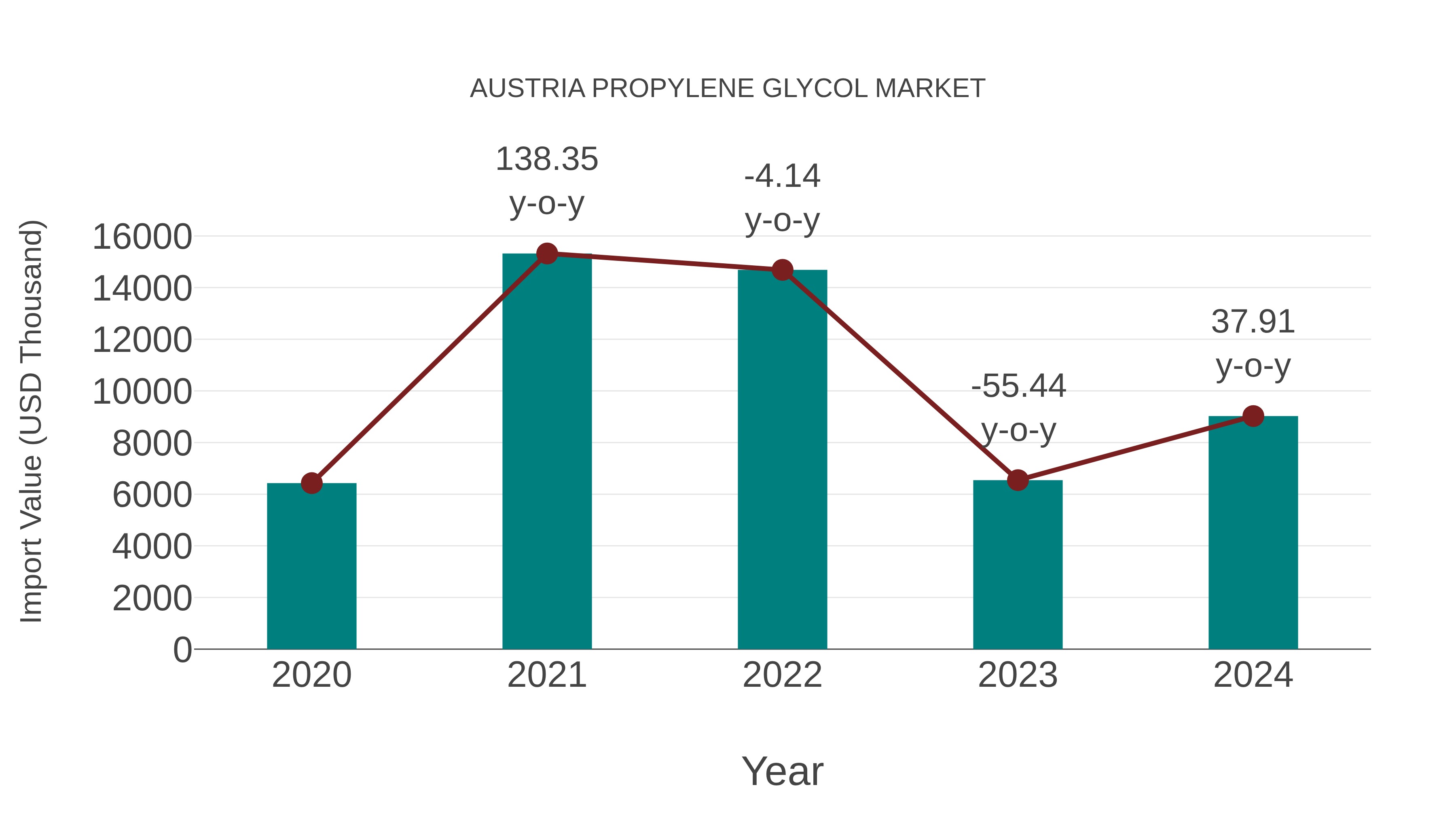
In 2024, Austria`s propylene glycol market saw a consistent upward trend in imports. The country experienced a notable increase in the volume of propylene glycol imported, reflecting a growing demand for the product within the Austrian market.
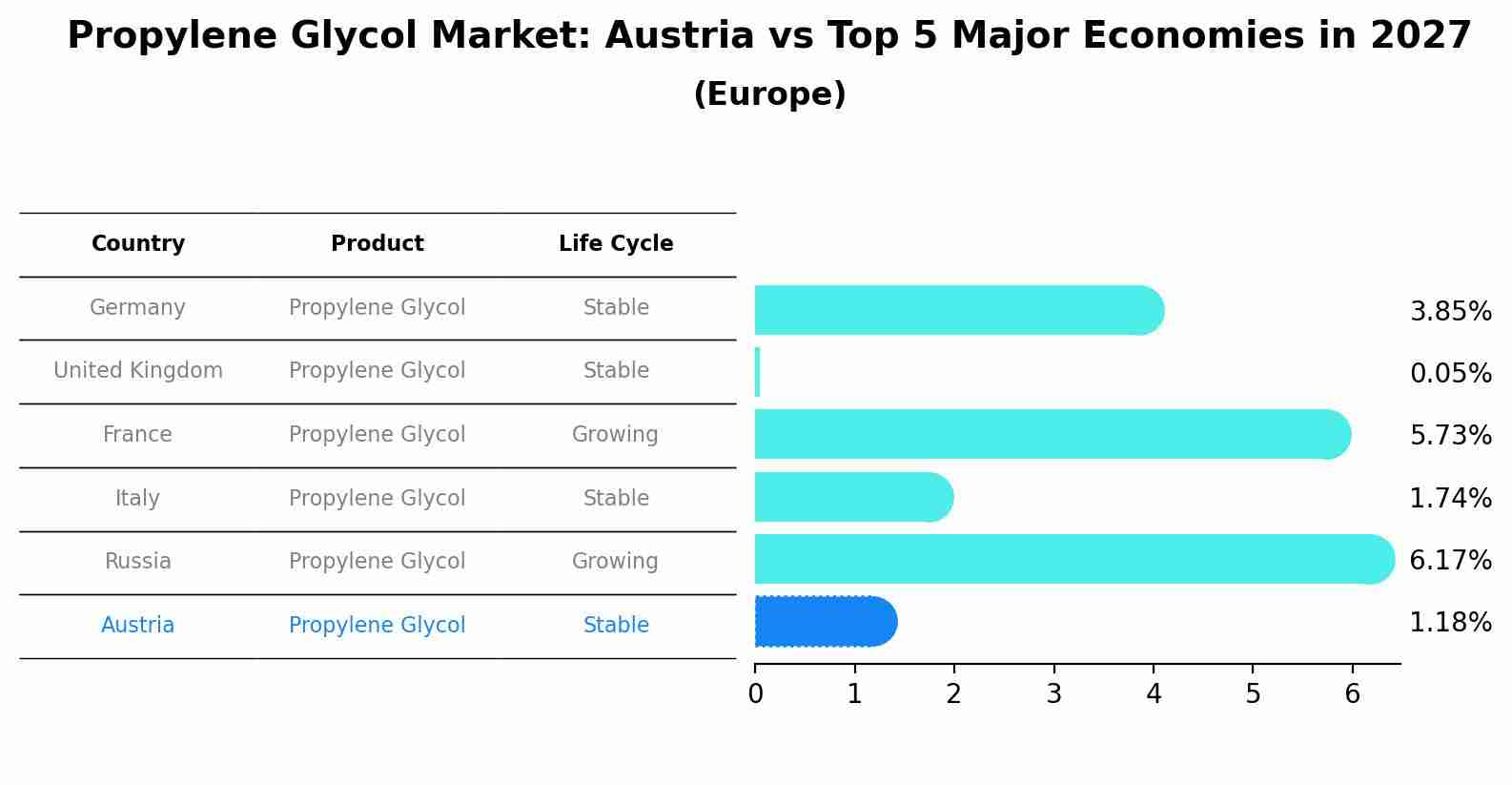
Propylene Glycol Market: Austria vs Top 5 Major Economies in 2027 (Europe)
The Propylene Glycol market in Austria is projected to grow at a stable growth rate of 1.18% by 2027, within the Europe region led by Germany, along with other countries like United Kingdom, France, Italy and Russia, collectively shaping a dynamic and evolving market environment driven by innovation and increasing adoption of emerging technologies.
Austria Propylene Glycol Market Overview
Austria`s propylene glycol market is characterized by its applications in pharmaceuticals, food and beverages, cosmetics, and industrial sectors. Propylene glycol is used as a solvent, antifreeze, and in the manufacture of polyester resins. The market is supported by the chemical industry`s focus on producing high-quality and safe products that comply with EU standards. Growth in end-use industries, particularly pharmaceuticals and cosmetics, is driving demand for propylene glycol.
Drivers of the market
The propylene glycol market in Austria is driven by its wide range of applications in the food, pharmaceutical, and cosmetics industries. As a versatile chemical, propylene glycol is used as a solvent, humectant, and preservative, making it essential in various formulations. The growing demand for processed food products, pharmaceuticals, and personal care products drives the market. Additionally, the increasing adoption of propylene glycol in the production of antifreeze and de-icing solutions for the automotive and aviation sectors further propels market growth.
Challenges of the market
The propylene glycol market in Austria faces challenges related to raw material price volatility and environmental regulations. The primary raw material for propylene glycol production is propylene oxide, whose price fluctuations directly impact production costs. Environmental regulations concerning the production and disposal of chemical products also add to the operational complexities, necessitating substantial investments in compliance. Moreover, competition from bio-based alternatives and the need for sustainable production processes pose additional challenges for traditional propylene glycol manufacturers.
Government Policy of the market
The propylene glycol market in Austria is subject to regulations under REACH and other EU chemical safety guidelines. These policies necessitate thorough safety evaluations and compliance with environmental standards, impacting production processes and market entry. Additionally, the government`s emphasis on reducing carbon footprints and promoting green chemistry drives innovation towards more sustainable and eco-friendly production methods for propylene glycol.
Key Highlights of the Report:
- Austria Propylene Glycol Market Outlook
- Market Size of Austria Propylene Glycol Market, 2025
- Forecast of Austria Propylene Glycol Market, 2032
- Historical Data and Forecast of Austria Propylene Glycol Revenues & Volume for the Period 2022-2032F
- Austria Propylene Glycol Market Trend Evolution
- Austria Propylene Glycol Market Drivers and Challenges
- Austria Propylene Glycol Price Trends
- Austria Propylene Glycol Porter`s Five Forces
- Austria Propylene Glycol Industry Life Cycle
- Historical Data and Forecast of Austria Propylene Glycol Market Revenues & Volume By Application for the Period 2022-2032F
- Historical Data and Forecast of Austria Propylene Glycol Market Revenues & Volume By Unsaturated Polyester Resins,Functional Fluids,Food, Drug, and Cosmetics,Liquid Detergent,Paints and Coating,Others for the Period 2022-2032F
- Austria Propylene Glycol Import Export Trade Statistics
- Market Opportunity Assessment By Application
- Austria Propylene Glycol Top Companies Market Share
- Austria Propylene Glycol Competitive Benchmarking By Technical and Operational Parameters
- Austria Propylene Glycol Company Profiles
- Austria Propylene Glycol Key Strategic Recommendations






































