Azerbaijan Cat Food Market Size, Share & Growth Rate
The Azerbaijan Cat Food Market was estimated at USD 1216 Million in 2025 and is projected to reach USD 2165 Million by 2032, growing at a CAGR of 8.6% from 2026 to 2032. This robust growth trajectory can be attributed to rising pet ownership rates and an increasing consumer shift toward premium and specialized cat food products. Furthermore, as urbanization continues, the demand for convenient and high-quality pet food options is expected to further drive this market's expansion.
Azerbaijan Cat Food Market Year-wise Growth Rate and Key Drivers
This graph highlights how the Azerbaijan Cat Food Market has steadily grown over the years, supported by major growth factors.
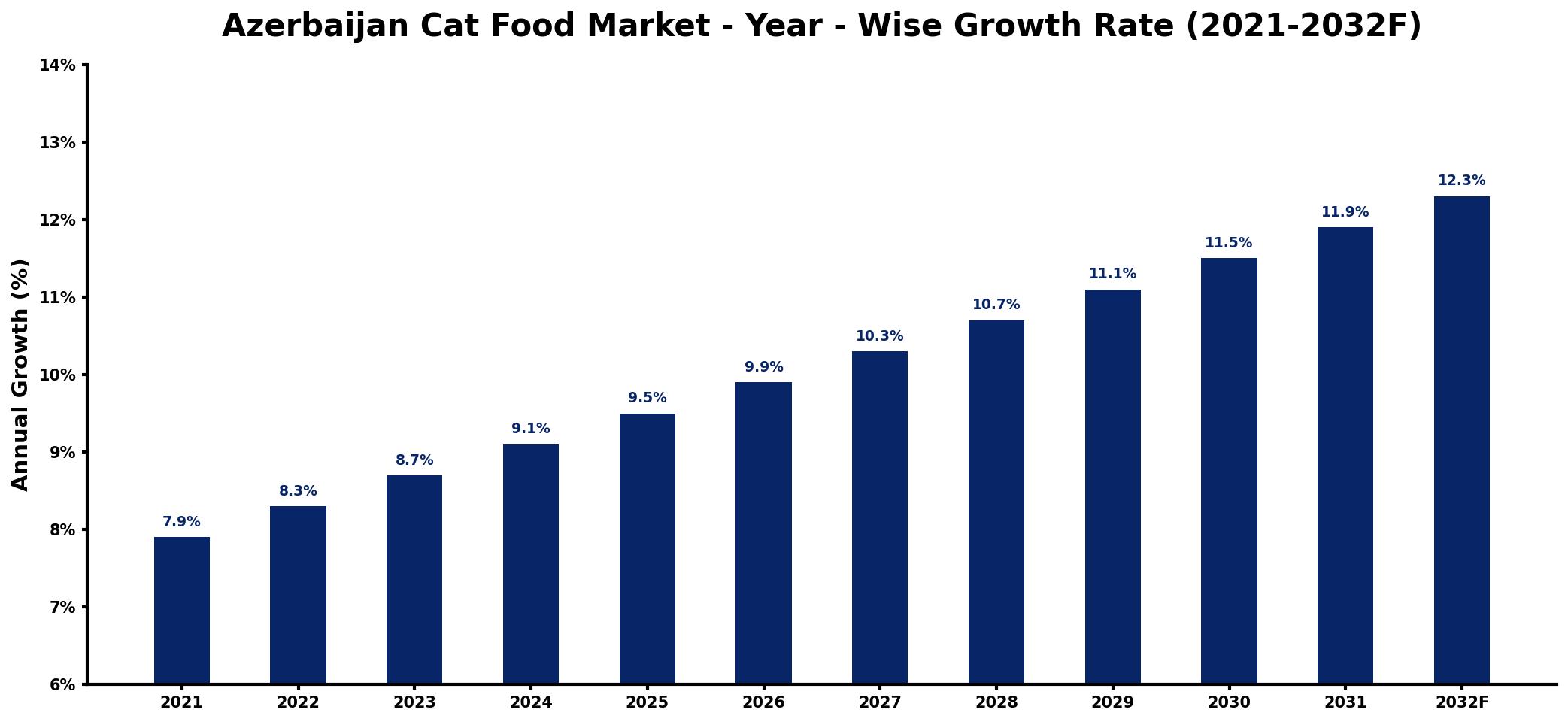
The table below presents the year‑wise growth rates along with the key drivers influencing the market
| Year | Growth Rate | Major Drivers |
| 2021 | 7.9% | Rising pet ownership trends |
| 2022 | 8.3% | Growing premium product offerings |
| 2023 | 8.7% | Increased health consciousness among consumers |
| 2024 | 9.1% | Expansion of retail distribution channels |
| 2025 | 9.5% | Innovations in pet nutrition technology |
| 2026 | 9.9% | Higher disposable income levels |
| 2027 | 10.3% | Strong online shopping growth |
| 2028 | 10.7% | Increased awareness of sustainability |
| 2029 | 11.1% | Growth in pet services industry |
| 2030 | 11.5% | Emerging trends in pet wellness |
| 2031 | 11.9% | Enhanced marketing and branding efforts |
| 2032 | 12.3% | Rising demand for convenience products |
Note: Market size estimations and growth projections presented in this report are based on 6Wresearch's proprietary forecasting methodology, utilizing the latest available industry data, government publications, and primary research inputs.
Azerbaijan Cat Food Market Synopsis
The most influential force currently shaping the Azerbaijan Cat Food Market is the humanization of pets, leading to heightened awareness about their health and nutritional needs. This trend is pushing consumers towards more sophisticated and nutrient-rich cat food options, ranging from dry kibble to gourmet wet food.
As urban living becomes more prevalent, households are increasingly inclined to adopt pets, resulting in a steady rise in the demand for cat food. The market is also seeing an influx of innovative product formulations that cater to specific dietary requirements, further elevating the standards for pet nutrition.
Azerbaijan Cat Food Market Key Takeaways
- Premiumization is driving demand as consumers are willing to pay more for high-quality cat food.
- Urbanization leads to more pet ownership, with many households now viewing pets as family members.
- There is a growing need for education about feline nutrition, creating opportunities for manufacturers to engage consumers.
- Innovation in packaging and distribution methods enhances accessibility and convenience for cat food buyers.
- Regulatory frameworks are evolving to ensure product safety and nutritional quality, boosting consumer confidence.
Evaluation of Restraints in Azerbaijan Cat Food Market
Despite the promising growth potential, several restraints continue to challenge the Azerbaijan Cat Food Market. Price sensitivity among consumers remains a significant concern, as many pet owners seek affordable options without compromising quality. Additionally, the sourcing of high-quality ingredients can pose logistical challenges, particularly in regions where reliable suppliers are scarce. Educating consumers about the importance of proper nutrition for their cats also represents a hurdle, as awareness levels vary widely across different demographics. Manufacturers must navigate these challenges while ensuring that their products meet the increasing standards expected by health-conscious consumers.
Azerbaijan Cat Food Market Trends
The market is witnessing a shift towards specialized diets, including grain-free, organic, and natural ingredients that cater to specific health needs of cats. Additionally, the demand for convenience is fostering growth in online retail channels, allowing consumers to access a wider variety of products with ease. Premium packaging that emphasizes sustainability is also emerging as a key trend, reflecting consumers' desire for eco-friendly options. As manufacturers innovate, they are also exploring new flavors and formulations to entice picky eaters, creating a diverse range of choices for cat owners.
Azerbaijan Cat Food Market Opportunities
Significant opportunities for growth lie in the development of tailored nutrition products for specific breeds and age groups, addressing the unique health requirements of cats. Expanding educational initiatives aimed at informing consumers about feline dietary needs can foster loyalty and trust. Moreover, partnerships with local veterinarians can enhance product credibility and encourage higher purchasing rates. The rising trend of e-commerce offers an avenue for market penetration, providing a platform for brands to showcase their diverse product ranges and engage with consumers directly.
Government Initiatives in the Azerbaijan Cat Food Market
The government of Azerbaijan is working to enhance the regulatory landscape for the pet food industry. Policies aimed at promoting safe manufacturing practices and ensuring compliance with nutritional standards are being implemented. Additionally, public initiatives that advocate for responsible pet ownership and education on proper pet care further support the market's development. By aligning local regulations with international standards for animal feed, the government aims to improve consumer trust and product safety in the cat food sector.
Future Insights of the Azerbaijan Cat Food Market
Looking ahead to 2026-2032, the Azerbaijan Cat Food Market is poised for dynamic growth. An increasing number of households will likely adopt cats, fueling demand for diverse and specialized food options. Continuous innovation in product offerings, coupled with a commitment to quality and nutritional value, will remain central to attracting discerning consumers. As pet humanization trends deepen, market players are expected to invest heavily in research and development to create advanced nutritional products, enhancing the overall pet ownership experience in Azerbaijan.
Azerbaijan Cat Food Market Latest Developments (2025 - 2026)
Recent developments in the Azerbaijan Cat Food Market indicate a surge in product launches focused on health benefits, such as formulations enriched with omega fatty acids and probiotics. New marketing campaigns aimed at pet owners emphasize the importance of nutrition for longevity and health in cats. Additionally, manufacturers are exploring partnerships with local influencers to effectively reach a broader audience, thereby amplifying brand visibility in a competitive landscape.
Azerbaijan Cat Food Market - Key Attractiveness of the Report
- 10 Years of Market Numbers
- Historical Data Starting from 2022 to 2025
- Base Year: 2025
- Forecast Data until 2032
- Key Performance Indicators Impacting the Market
- Major Upcoming Developments and Projects
Key Highlights of the Report:
- Azerbaijan Cat Food Market Outlook
- Market Size of Azerbaijan Cat Food Market, 2025
- Forecast of Azerbaijan Cat Food Market, 2032
- Historical Data and Forecast of Azerbaijan Cat Food Revenues & Volume for the Period 2022-2032F
- Azerbaijan Cat Food Market Trend Evolution
- Azerbaijan Cat Food Market Drivers and Challenges
- Azerbaijan Cat Food Price Trends
- Azerbaijan Cat Food Porter's Five Forces
- Azerbaijan Cat Food Industry Life Cycle
- Historical Data and Forecast of Azerbaijan Cat Food Market Revenues & Volume By Nature for the Period 2022-2032F
- Historical Data and Forecast of Azerbaijan Cat Food Market Revenues & Volume By Organic for the Period 2022-2032F
- Historical Data and Forecast of Azerbaijan Cat Food Market Revenues & Volume By Monoprotein for the Period 2022-2032F
- Historical Data and Forecast of Azerbaijan Cat Food Market Revenues & Volume By Conventional for the Period 2022-2032F
- Historical Data and Forecast of Azerbaijan Cat Food Market Revenues & Volume By Source for the Period 2022-2032F
- Historical Data and Forecast of Azerbaijan Cat Food Market Revenues & Volume By Animal Derived for the Period 2022-2032F
- Historical Data and Forecast of Azerbaijan Cat Food Market Revenues & Volume By Plant-derived for the Period 2022-2032F
- Historical Data and Forecast of Azerbaijan Cat Food Market Revenues & Volume By Insect- Derived for the Period 2022-2032F
- Historical Data and Forecast of Azerbaijan Cat Food Market Revenues & Volume By Product Type for the Period 2022-2032F
- Historical Data and Forecast of Azerbaijan Cat Food Market Revenues & Volume By Kibble/dry for the Period 2022-2032F
- Historical Data and Forecast of Azerbaijan Cat Food Market Revenues & Volume By Treats And Chews for the Period 2022-2032F
- Historical Data and Forecast of Azerbaijan Cat Food Market Revenues & Volume By Dehydrated Food for the Period 2022-2032F
- Historical Data and Forecast of Azerbaijan Cat Food Market Revenues & Volume By Freeze Dried Food for the Period 2022-2032F
- Historical Data and Forecast of Azerbaijan Cat Food Market Revenues & Volume By Freeze-dried Raw for the Period 2022-2032F
- Historical Data and Forecast of Azerbaijan Cat Food Market Revenues & Volume By Wet Food for the Period 2022-2032F
- Historical Data and Forecast of Azerbaijan Cat Food Market Revenues & Volume By Frozen for the Period 2022-2032F
- Historical Data and Forecast of Azerbaijan Cat Food Market Revenues & Volume By Powder for the Period 2022-2032F
- Historical Data and Forecast of Azerbaijan Cat Food Market Revenues & Volume By Pet Type for the Period 2022-2032F
- Historical Data and Forecast of Azerbaijan Cat Food Market Revenues & Volume By Kitten for the Period 2022-2032F
- Historical Data and Forecast of Azerbaijan Cat Food Market Revenues & Volume By Senior for the Period 2022-2032F
- Historical Data and Forecast of Azerbaijan Cat Food Market Revenues & Volume By Packaging Type for the Period 2022-2032F
- Historical Data and Forecast of Azerbaijan Cat Food Market Revenues & Volume By Pouches for the Period 2022-2032F
- Historical Data and Forecast of Azerbaijan Cat Food Market Revenues & Volume By Bags for the Period 2022-2032F
- Historical Data and Forecast of Azerbaijan Cat Food Market Revenues & Volume By Folding Cartons for the Period 2022-2032F
- Historical Data and Forecast of Azerbaijan Cat Food Market Revenues & Volume By Tubs & Cups for the Period 2022-2032F
- Historical Data and Forecast of Azerbaijan Cat Food Market Revenues & Volume By Can for the Period 2022-2032F
- Historical Data and Forecast of Azerbaijan Cat Food Market Revenues & Volume By Bottles & Jars for the Period 2022-2032F
- Historical Data and Forecast of Azerbaijan Cat Food Market Revenues & Volume By Distribution Channel for the Period 2022-2032F
- Historical Data and Forecast of Azerbaijan Cat Food Market Revenues & Volume By Store-based Retailing for the Period 2022-2032F
- Historical Data and Forecast of Azerbaijan Cat Food Market Revenues & Volume By Online Retailers for the Period 2022-2032F
- Azerbaijan Cat Food Import Export Trade Statistics
- Market Opportunity Assessment By Nature
- Market Opportunity Assessment By Source
- Market Opportunity Assessment By Product Type
- Market Opportunity Assessment By Pet Type
- Market Opportunity Assessment By Packaging Type
- Market Opportunity Assessment By Distribution Channel
- Azerbaijan Cat Food Top Companies Market Share
- Azerbaijan Cat Food Competitive Benchmarking By Technical and Operational Parameters
- Azerbaijan Cat Food Company Profiles
- Azerbaijan Cat Food Key Strategic Recommendations






































