Azerbaijan Television Market Summary
The azerbaijan television market was estimated at USD 1093 Million in 2025 and is projected to reach USD 2033 Million by 2032, growing at a CAGR of 10.7% from 2026 to 2032.
Azerbaijan Television Market Year-wise Growth Rate and Key Drivers
This graph highlights how the Azerbaijan Television Market has steadily grown over the past five years, supported by major growth factors.
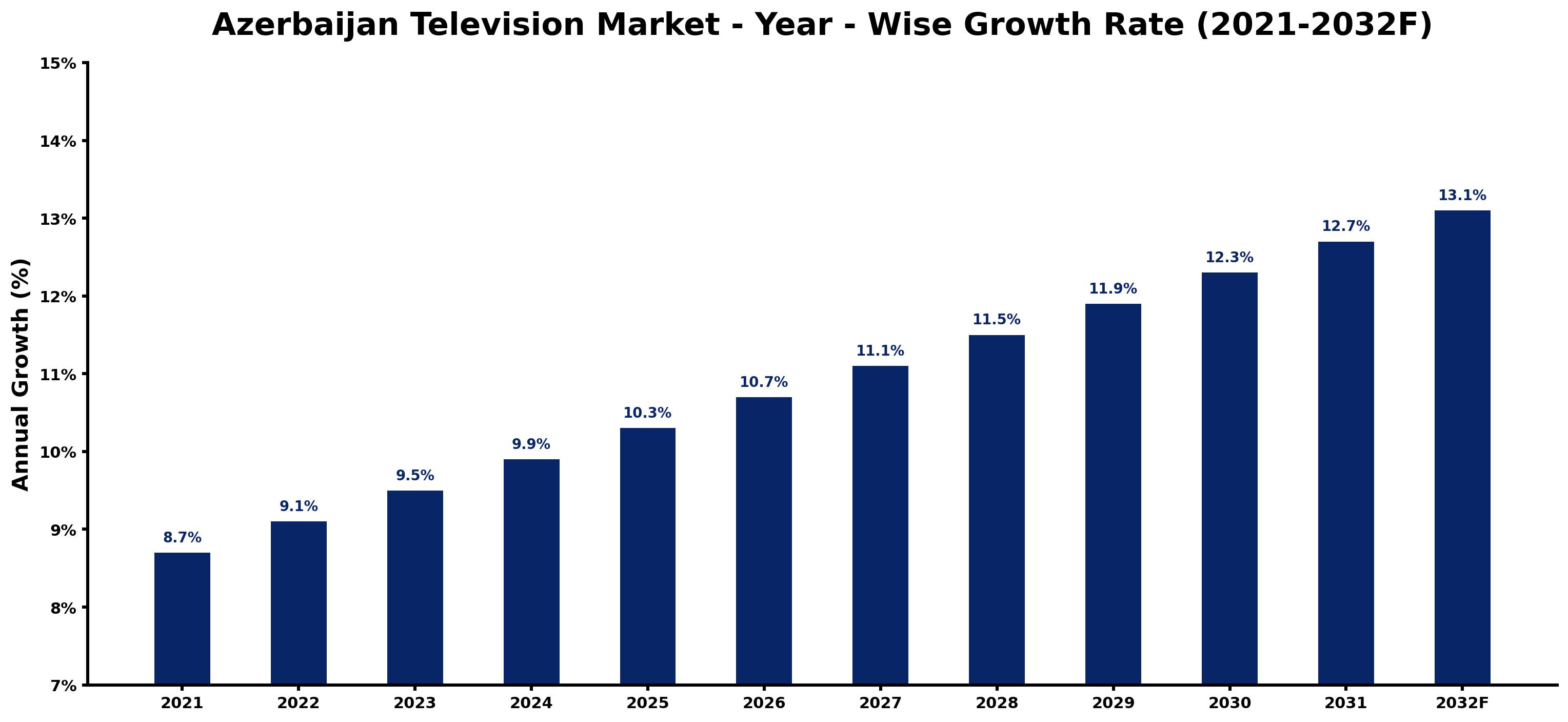
The table below presents the year wise growth rates along with the key drivers influencing the market
| Year | Growth Rate | Major Drivers |
| 2021 | 8.7% | Viewership patterns shift towards online streaming and on-demand content options. |
| 2022 | 9.1% | Traditional cable subscriptions decline as audiences embrace flexible viewing habits. |
| 2023 | 9.5% | Local production of Azerbaijani content gains popularity, attracting diverse demographics. |
| 2024 | 9.9% | Investment in technology enhances broadcast quality and expands digital platforms significantly. |
| 2025 | 10.3% | Partnerships between global networks and local channels promote content sharing and collaboration. |
| 2026 | 10.7% | Emerging talent from Azerbaijan begins to influence television programming and formats. |
| 2027 | 11.1% | Advertising revenues grow as brands target increasingly niche audience segments effectively. |
| 2028 | 11.5% | International content acquisitions broaden programming diversity, appealing to younger viewers. |
| 2029 | 11.9% | Increased smartphone penetration elevates mobile viewing, reshaping audience engagement strategies. |
| 2030 | 12.3% | Regulatory frameworks evolve, fostering a more competitive landscape among television providers. |
| 2031 | 12.7% | Sustainability concerns drive content related to environmental issues, attracting socially conscious viewers. |
| 2032 | 13.1% | Cultural exchanges enrich programming, leading to greater regional and international collaboration. |
Note - Market size estimations and growth projections presented in this report are based on 6Wresearch's advanced forecasting approach, validated with industry datasets as of June 2026.
Azerbaijan Television Market Synopsis
The Azerbaijan Television Market is projected to reach 10.7% and witness significant growth during the forecast period (2026-2032). This dynamic segment of the media landscape is characterized by an intricate balance between public and private broadcasters, with a diverse array of channels catering to varying viewer preferences. The public broadcaster, AzTV, faces competition from a vibrant mix of private channels, including Space TV, ITV, and CBC TV. As households increasingly adopt digital television platforms, the market is transitioning towards a more competitive and technologically advanced landscape.
Azerbaijan Television Market Trends and Opportunities
The Azerbaijan Television Market is experiencing a pronounced shift toward digital and high-definition content delivery. The demand for streaming services and on-demand content is reshaping viewer behavior, which has led to the emergence and growth of over-the-top (OTT) platforms. Notably, smart TVs are gaining traction throughout the region, enabling audiences to seamlessly access a wide range of online content directly from their televisions.
- Local broadcasters are increasingly investing in original programming to differentiate themselves from international content and to capture the local audience's interest.
- The competition among broadcasters is spurring innovations in technology and programming, enhancing the consumer viewing experience.
- As consumers prioritize quality content, there is a growing emphasis on high-definition and interactive viewing options that appeal to a tech-savvy audience.
- New entrants in the market are diversifying content offerings and introducing various platforms, thereby enriching the overall media ecosystem.
- The alignment of regulatory policies with technological advancements is facilitating an environment conducive to market growth and innovation.
Azerbaijan Television Market Challenges and Restraints
Despite the opportunities, the Azerbaijan Television Market faces significant challenges that could impede its growth trajectory. One major hurdle is the dominant position of the state-run broadcaster, AzTV, which commands a substantial share of the market. This monopoly poses constraints on content diversity and innovation among private broadcasters.
- The relatively small size of the market presents difficulties for new entrants seeking to establish a foothold and achieve sustainable growth.
- Technological advancements in online streaming services threaten traditional television models, compelling broadcasters to adapt hastily to evolving consumer preferences.
- Compliance with regulatory requirements, coupled with the need to maintain profitability, creates additional pressure on companies operating within this sector.
- Limited access to funding for content creation further restricts the ability of smaller broadcasters to compete on a larger scale.
- Shifts in viewer consumption habits toward digital platforms require substantial investment in infrastructure and content delivery systems.
Azerbaijan Television Market Investment Opportunities
The Azerbaijan Television Market presents myriad investment opportunities, particularly as the industry transitions from analog to digital broadcasting. The ongoing demand for digital television services opens avenues for investments in infrastructure development, including set-top boxes and high-definition channels.
- Local content production is gaining momentum, presenting opportunities for collaboration with regional production companies and investments in generating original programming.
- The increasing preference for high-quality content positions the market favorably for investments aimed at improving production standards and technological capabilities.
- Expanding satellite television services and pay-TV platforms represents a viable avenue for investors looking to tap into diverse consumer interests.
- Furthermore, as audience preferences shift, opportunities to invest in personalized streaming services are likely to proliferate.
- The combination of increased disposable income and a growing appetite for varied programming further enriches the investment landscape.
Azerbaijan Television Market Government Investment and Initiatives
The Azerbaijani government has recognized the importance of a vibrant television market and has implemented several policies aimed at fostering growth and innovation. Key initiatives include promoting local content production to ensure a diverse media landscape that reflects the culture and interests of the populace.
- Government regulations are designed to maintain fair competition within the industry, effectively curtailing monopolistic practices that may hinder content diversity.
- Investment incentives have been established to encourage technological advancements, thereby improving the overall quality of programming available to consumers.
- Efforts to protect consumer rights underscore the government's commitment to promoting media literacy and enhancing the viewing experience for all citizens.
- Collaboration with industry stakeholders is encouraged to drive forward-looking developments that align with global media trends.
- The government's proactive stance aims to create a robust foundation for the television sector, contributing to a more competitive market environment.
Azerbaijan Television Market Latest Developments (May 2025 - June 2026)
Recent developments within the Azerbaijan Television Market from May 2025 to June 2026 indicate a continued push towards digital transformation. Broadcasters have increasingly focused on enhancing viewer engagement through innovative content delivery methods and interactive programming options. Moreover, collaborations between public and private entities have gained traction in efforts to improve content quality and attract a wider audience.
- Significant strides have been made in upgrading broadcasting technology to support high-definition and streaming services.
- Various new content initiatives have been launched, aimed at catering to the diverse preferences of the local audience.
- The market has witnessed an upsurge in partnerships focused on local production, fostering a sense of community and cultural representation in programming.
- As consumer preferences lean towards personalized content offerings, broadcasters are exploring tailored viewing experiences through data analytics.
- Continued government support for technological investments is expected to bolster infrastructure development and market competitiveness.
Azerbaijan Television Market - Key Attractiveness of the Report
- 10 Years of Market Numbers
- Historical Data Starting from 2022 to 2025
- Base Year: 2025
- Forecast Data until 2032
- Key Performance Indicators Impacting the Market
- Major Upcoming Developments and Projects
Key Highlights of the Report:
- Azerbaijan Television Market Outlook
- Market Size of Azerbaijan Television Market, 2025
- Forecast of Azerbaijan Television Market, 2032F
- Historical Data and Forecast of Azerbaijan Television Revenues & Volume for the Period 2022-2032F
- Azerbaijan Television Market Trend Evolution
- Azerbaijan Television Market Drivers and Challenges
- Azerbaijan Television Price Trends
- Azerbaijan Television Porter's Five Forces
- Azerbaijan Television Industry Life Cycle
- Historical Data and Forecast of Azerbaijan Television Market Revenues & Volume By Resolution for the Period 2022-2032F
- Historical Data and Forecast of Azerbaijan Television Market Revenues & Volume By LCD TVs for the Period 2022-2032F
- Historical Data and Forecast of Azerbaijan Television Market Revenues & Volume By OLED TVs for the Period 2022-2032F
- Historical Data and Forecast of Azerbaijan Television Market Revenues & Volume By Types for the Period 2022-2032F
- Historical Data and Forecast of Azerbaijan Television Market Revenues & Volume By 2D TVs for the Period 2022-2032F
- Historical Data and Forecast of Azerbaijan Television Market Revenues & Volume By 3D TVs for the Period 2022-2032F
- Azerbaijan Television Import Export Trade Statistics
- Market Opportunity Assessment By Resolution
- Market Opportunity Assessment By Types
- Azerbaijan Television Top Companies Market Share
- Azerbaijan Television Competitive Benchmarking By Technical and Operational Parameters
- Azerbaijan Television Company Profiles
- Azerbaijan Television Key Strategic Recommendations






































