Azerbaijan Vetiver Oil Market Size, Share & Growth Rate
The Azerbaijan Vetiver Oil Market was estimated at USD 650 Million in 2025 and is projected to reach USD 1090 Million by 2032, growing at a CAGR of 7.7% from 2026 to 2032. This growth trajectory is largely driven by increasing consumer preference for natural ingredients in the fragrance and cosmetics sectors, as well as a burgeoning interest in aromatherapy. The shift towards sustainable and eco-friendly products is also catalyzing demand, highlighting the vetiver oil's multifaceted appeal as a premium ingredient.
Azerbaijan Vetiver Oil Market Year-wise Growth Rate and Key Drivers
This graph highlights how the Azerbaijan Vetiver Oil Market has steadily grown over the years, supported by major growth factors.
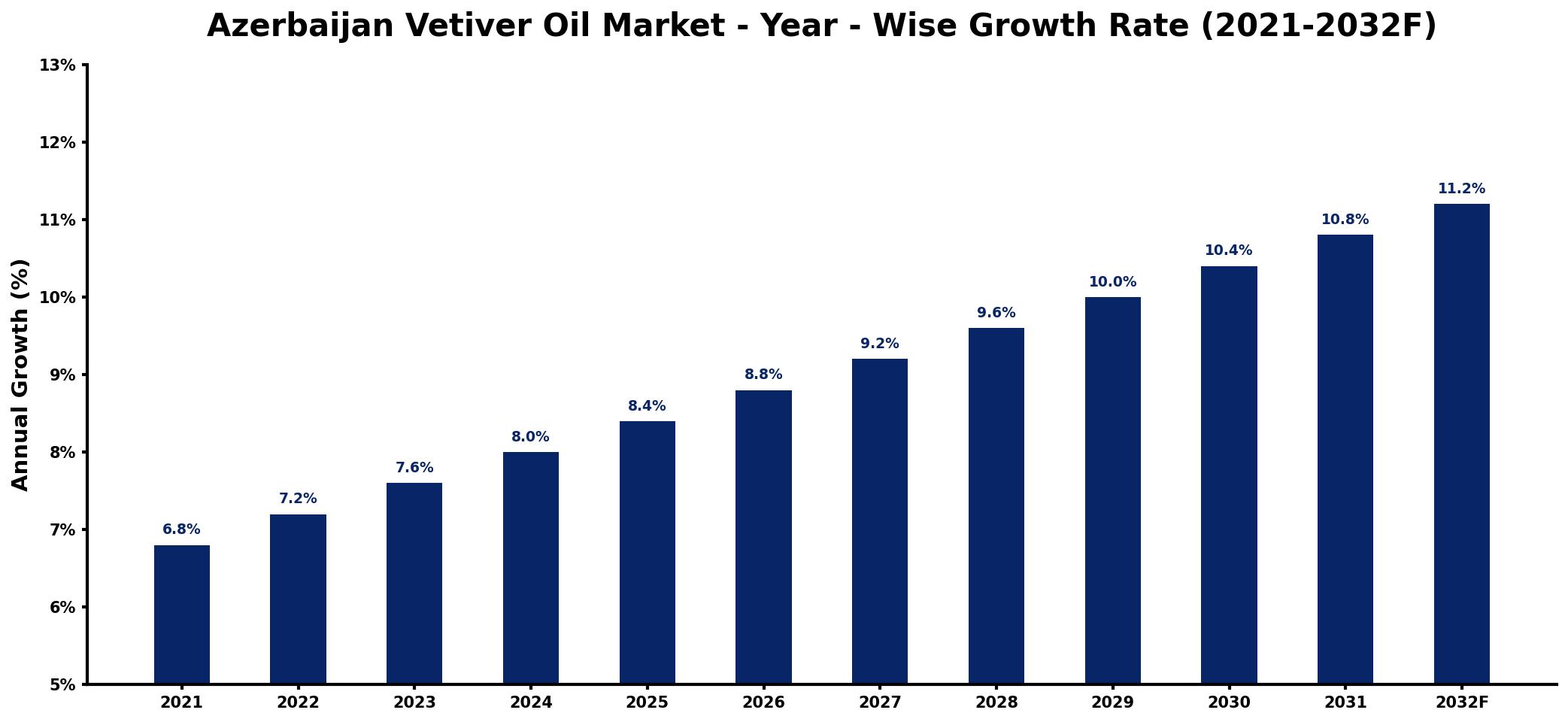
The table below presents the year‑wise growth rates along with the key drivers influencing the market
| Year | Growth Rate | Major Drivers |
| 2021 | 6.8% | increased demand for natural fragrances |
| 2022 | 7.2% | growing popularity in aromatherapy |
| 2023 | 7.6% | rising interest in organic products |
| 2024 | 8.0% | expansion of wellness industry initiatives |
| 2025 | 8.4% | increased investments in natural ingredients |
| 2026 | 8.8% | growth in personal care applications |
| 2027 | 9.2% | surge in home fragrance products |
| 2028 | 9.6% | increased exports to global markets |
| 2029 | 10.0% | rising consumer awareness of sustainability |
| 2030 | 10.4% | enhanced product quality standards |
| 2031 | 10.8% | expanding manufacturing base activity |
| 2032 | 11.2% | increased incorporation in health products |
Note: Market size estimations and growth projections presented in this report are based on 6Wresearch's proprietary forecasting methodology, utilizing the latest available industry data, government publications, and primary research inputs.
Azerbaijan Vetiver Oil Market Synopsis
In recent years, the Azerbaijan vetiver oil market has gained momentum, spurred by an expanding beauty and wellness industry that values natural solutions. However, as market dynamics evolve, producers are now focusing on sustainability and quality enhancement to meet rising consumer expectations and international standards.
As the market progresses, the demand for vetiver oil is anticipated to diversify beyond traditional applications in perfumery and aromatherapy. Emerging sectors, including food and beverage flavorings, are likely to play a significant role in shaping the market's future landscape, further reinforcing the versatility of vetiver oil in Azerbaijan.
Azerbaijan Vetiver Oil Market Key Takeaways
- The market is witnessing a strong shift towards natural and sustainable products, reflecting consumer trends in health and wellness.
- Aromatherapy practices are gaining traction, contributing significantly to the increasing demand for vetiver oil.
- Quality assurance and sustainable agricultural practices are becoming imperative for market players to maintain competitive advantage.
- Government policies are increasingly supporting vetiver oil production, aligning with global sustainability initiatives.
- The market is positioned for robust growth, driven by both domestic use and export potential.
Evaluation of Restraints in Azerbaijan Vetiver Oil Market
Despite the optimistic outlook, the Azerbaijan vetiver oil market is not without its challenges. A primary concern is the sustainability of cultivation practices. Many farmers face difficulties in maintaining quality, which can directly affect marketability. Additionally, fluctuations in global demand and pricing volatility for essential oils remain pressing issues for producers. There is also a notable gap in awareness about the benefits of vetiver oil, which can restrict its adoption among potential users. Expanding market access, particularly to international buyers, requires comprehensive marketing strategies and education efforts.
Azerbaijan Vetiver Oil Market Trends
Currently, there is a discernible trend towards organic and ethically sourced vetiver oil. This is particularly appealing to younger consumers who prioritize transparency in ingredient sourcing. Additionally, innovations in extraction technology are improving the efficiency and quality of vetiver oil production. Online retail channels are also becoming increasingly popular, enabling easier access for consumers and fostering greater market penetration.
Azerbaijan Vetiver Oil Market Opportunities
The Azerbaijan vetiver oil market is rich in growth opportunities, particularly within the aromatherapy sector, where demand for therapeutic oils is on the rise. There is also substantial potential in expanding applications in the food and beverage industry, as vetiver oil's flavor profile becomes more recognized. Furthermore, investment in sustainable farming techniques and quality certifications can open new international markets, making Azerbaijani vetiver oil more competitive globally.
Government Initiatives in the Azerbaijan Vetiver Oil Market
The Azerbaijani government recognizes the potential of the vetiver oil market and has rolled out several initiatives to support its growth. Policies aimed at promoting sustainable agricultural practices and establishing quality standards are paramount. Moreover, government support through agricultural extension services helps educate farmers on best practices and encourages compliance with international regulations. These initiatives are instrumental in fostering a robust vetiver oil industry in Azerbaijan.
Future Insights of the Azerbaijan Vetiver Oil Market
Looking ahead to 2026-2032, the Azerbaijan vetiver oil market is poised for significant advancements. As consumers continue to gravitate towards natural products, the demand for vetiver oil is likely to expand into new applications, particularly within the health and wellness industries. Innovations in cultivation and production methods will play a pivotal role in ensuring quality and sustainability, aligning with both consumer expectations and environmental standards.
Azerbaijan Vetiver Oil Market Latest Developments (2025 - 2026)
Recent developments in the Azerbaijan vetiver oil market indicate a growing collaboration between local producers and international buyers, enhancing export opportunities. Additionally, there is increased investment in research and development to refine extraction technologies. This momentum signifies a positive shift towards positioning Azerbaijan as a key player in the global vetiver oil landscape, with a focus on quality and sustainability.
Azerbaijan Vetiver Oil Market - Key Attractiveness of the Report
- 10 Years of Market Numbers
- Historical Data Starting from 2022 to 2025
- Base Year: 2025
- Forecast Data until 2032
- Key Performance Indicators Impacting the Market
- Major Upcoming Developments and Projects
Key Highlights of the Report:
- Azerbaijan Vetiver Oil Market Outlook
- Market Size of Azerbaijan Vetiver Oil Market, 2025
- Forecast of Azerbaijan Vetiver Oil Market, 2032
- Historical Data and Forecast of Azerbaijan Vetiver Oil Revenues & Volume for the Period 2022-2032F
- Azerbaijan Vetiver Oil Market Trend Evolution
- Azerbaijan Vetiver Oil Market Drivers and Challenges
- Azerbaijan Vetiver Oil Price Trends
- Azerbaijan Vetiver Oil Porter's Five Forces
- Azerbaijan Vetiver Oil Industry Life Cycle
- Historical Data and Forecast of Azerbaijan Vetiver Oil Market Revenues & Volume By Application for the Period 2022-2032F
- Historical Data and Forecast of Azerbaijan Vetiver Oil Market Revenues & Volume By Medical for the Period 2022-2032F
- Historical Data and Forecast of Azerbaijan Vetiver Oil Market Revenues & Volume By Food & Beverage for the Period 2022-2032F
- Historical Data and Forecast of Azerbaijan Vetiver Oil Market Revenues & Volume By Spa & Relaxation for the Period 2022-2032F
- Azerbaijan Vetiver Oil Import Export Trade Statistics
- Market Opportunity Assessment By Application
- Azerbaijan Vetiver Oil Top Companies Market Share
- Azerbaijan Vetiver Oil Competitive Benchmarking By Technical and Operational Parameters
- Azerbaijan Vetiver Oil Company Profiles
- Azerbaijan Vetiver Oil Key Strategic Recommendations






































