Bahrain Aerosol Cans Market: Import Trend Analysis
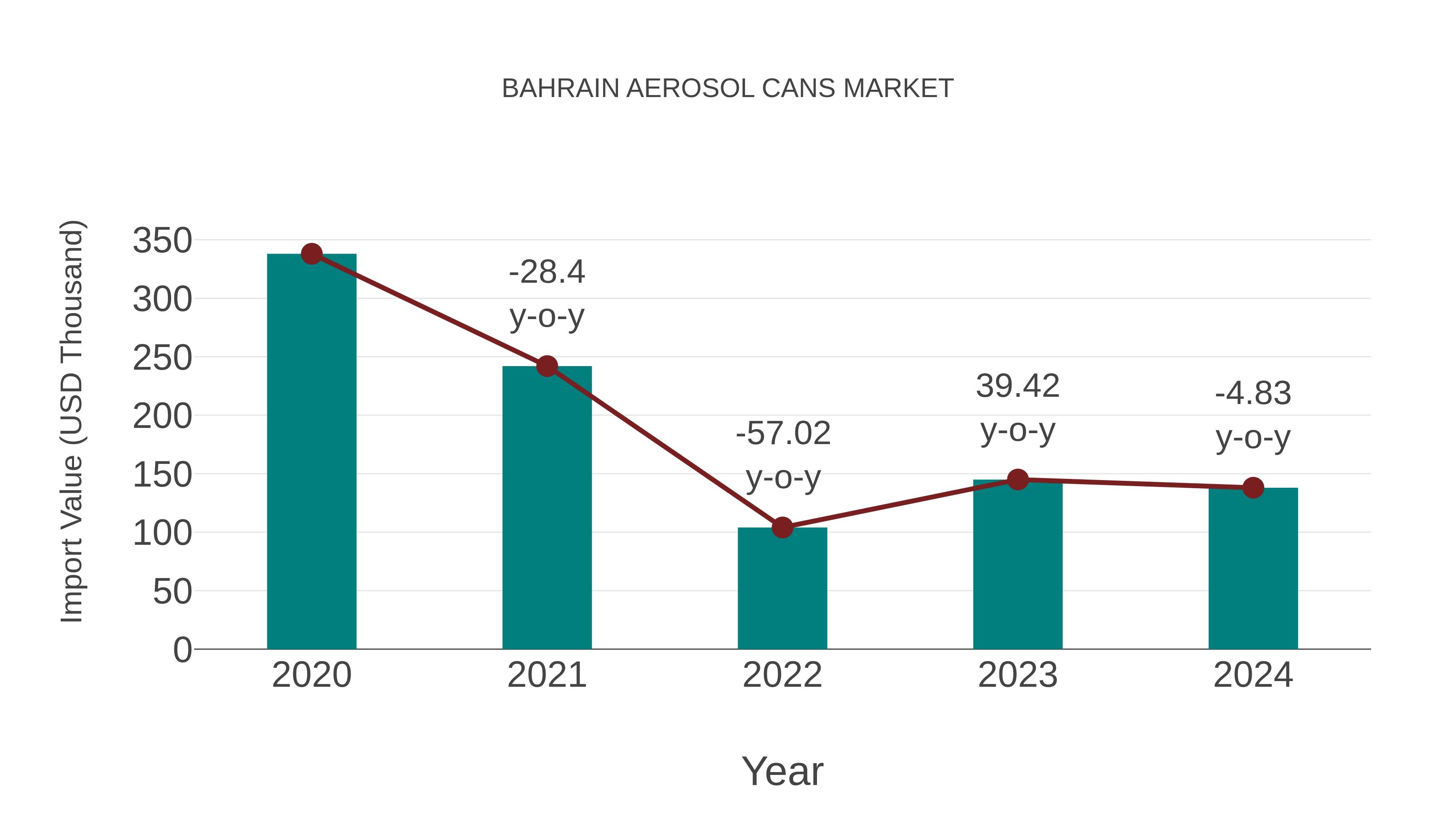
Bahrain import trend for aerosol cans in 2023-2024 experienced a decline with a growth rate of -4.83%, while the compound annual growth rate (CAGR) from 2020-2024 stood at -20.06%. This negative momentum can be attributed to shifting consumer preferences towards more sustainable packaging options, impacting the demand for traditional aerosol cans in the market.
Aerosol Cans Market: Bahrain vs Top 5 Major Economies in 2027 (Middle East)
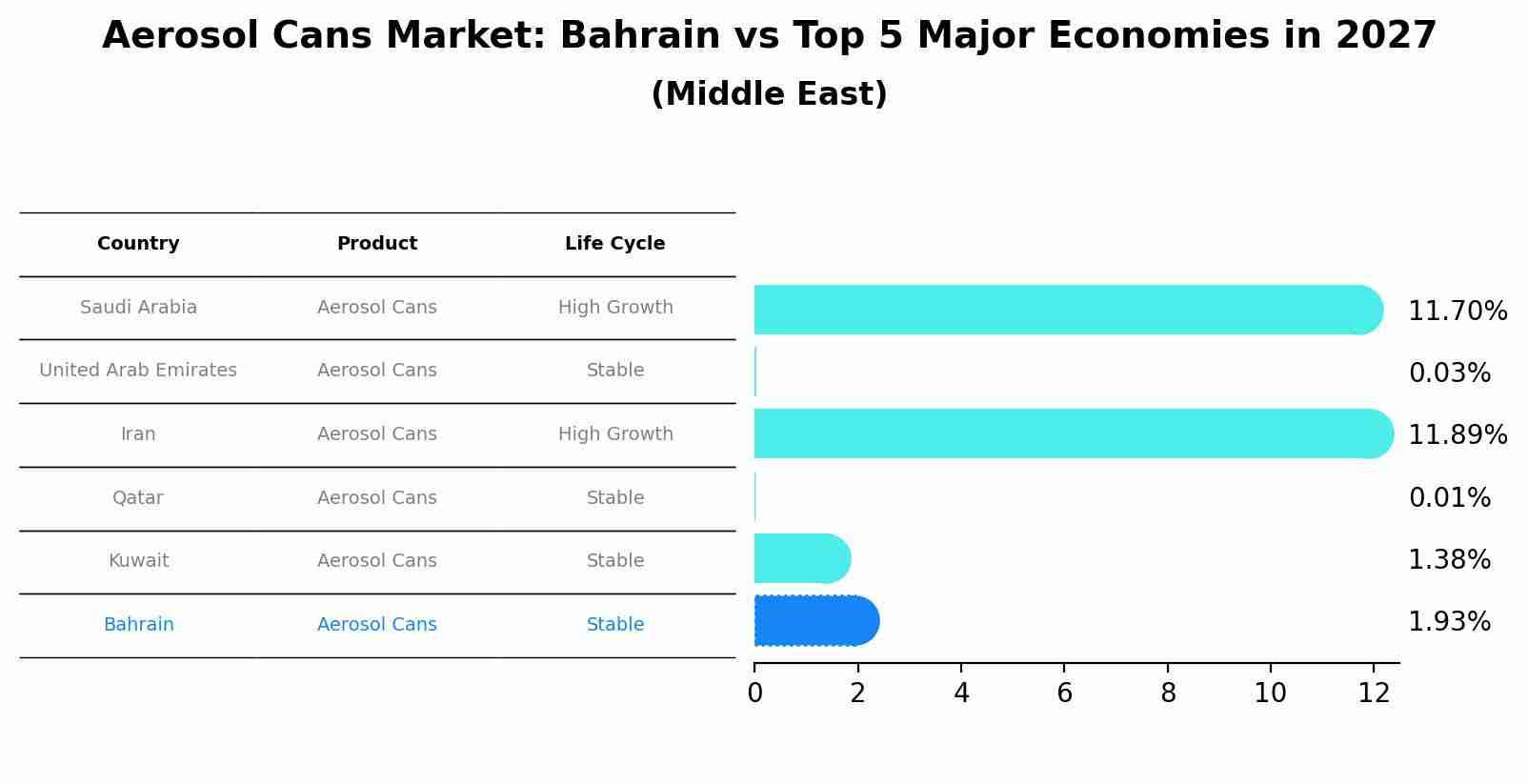
In the Middle East region, the Aerosol Cans market in Bahrain is projected to expand at a stable growth rate of 1.93% by 2027. The largest economy is Saudi Arabia, followed by United Arab Emirates, Iran, Qatar and Kuwait.
Bahrain Aerosol Cans Market Synopsis
The aerosol cans market in Bahrain is expanding with increased usage in personal care, household cleaning, automotive, and industrial products. Aluminum and steel aerosol containers are preferred for their lightweight and recyclable nature. Market growth is also influenced by advancements in valve technologies and demand for portable, easy-to-use packaging.
Trends of the market
The aerosol cans market in Bahrain is witnessing growth, particularly in sectors like personal care, automotive, cleaning products, and pharmaceuticals. Consumers favor the convenience and hygiene of aerosol delivery, while industries appreciate its long shelf life and controlled dispensing. Innovations in eco-friendly propellants and recyclable materials are influencing product development as environmental regulations become stricter. Branding and design continue to play a key role in product differentiation.
Challenges of the market
The Aerosol Cans Market in Bahrain serves personal care, household cleaning, automotive, and industrial products. With urban lifestyles and product convenience gaining traction, aerosol-based packaging is witnessing growing popularity. Despite this, the market is challenged by concerns over the environmental impact of propellants, recycling difficulties due to mixed materials, and strict regulations on pressurized containers. The cost of aluminum and steel, coupled with the need for specialized manufacturing equipment, adds further pressure on margins.
Investment opportunities in the Market
The aerosol cans market in Bahrain presents opportunities in several industries, including personal care, household products, automotive, and healthcare. Aerosol cans are widely used for products like deodorants, air fresheners, cleaning agents, and paints. Investors can focus on offering high-quality, leak-resistant aerosol cans made from materials such as aluminum and steel. With an increasing focus on sustainable packaging, offering eco-friendly, recyclable, and biodegradable aerosol cans could help investors gain market share in a rapidly growing segment.
Government Policy of the market
The aerosol cans market in Bahrain is growing, driven by demand from industries such as personal care, household products, and automotive care. Aerosol cans are widely used for products like deodorants, cleaning supplies, and paints. However, the market faces challenges such as concerns over the environmental impact of propellants used in these cans and the increasing competition from alternative packaging materials, such as pump sprays or non-aerosol containers. Additionally, regulatory pressures surrounding the disposal and recycling of aerosol cans pose long-term challenges for the market.
Key Highlights of the Report:
- Bahrain Aerosol Cans Market Outlook
- Market Size of Bahrain Aerosol Cans Market, 2021
- Forecast of Bahrain Aerosol Cans Market, 2031
- Historical Data and Forecast of Bahrain Aerosol Cans Revenues & Volume for the Period 2018 - 2031
- Bahrain Aerosol Cans Market Trend Evolution
- Bahrain Aerosol Cans Market Drivers and Challenges
- Bahrain Aerosol Cans Price Trends
- Bahrain Aerosol Cans Porter's Five Forces
- Bahrain Aerosol Cans Industry Life Cycle
- Historical Data and Forecast of Bahrain Aerosol Cans Market Revenues & Volume By Material for the Period 2018 - 2031
- Historical Data and Forecast of Bahrain Aerosol Cans Market Revenues & Volume By Aluminium for the Period 2018 - 2031
- Historical Data and Forecast of Bahrain Aerosol Cans Market Revenues & Volume By Steel-Tinplate for the Period 2018 - 2031
- Historical Data and Forecast of Bahrain Aerosol Cans Market Revenues & Volume By Other Materials for the Period 2018 - 2031
- Historical Data and Forecast of Bahrain Aerosol Cans Market Revenues & Volume By End-user Vertical for the Period 2018 - 2031
- Historical Data and Forecast of Bahrain Aerosol Cans Market Revenues & Volume By Cosmetic and Personal Care for the Period 2018 - 2031
- Historical Data and Forecast of Bahrain Aerosol Cans Market Revenues & Volume By Household for the Period 2018 - 2031
- Historical Data and Forecast of Bahrain Aerosol Cans Market Revenues & Volume By Pharmaceutical/Veterinary for the Period 2018 - 2031
- Historical Data and Forecast of Bahrain Aerosol Cans Market Revenues & Volume By Paints & Varnishes for the Period 2018 - 2031
- Historical Data and Forecast of Bahrain Aerosol Cans Market Revenues & Volume By Automotive/Industrial for the Period 2018 - 2031
- Historical Data and Forecast of Bahrain Aerosol Cans Market Revenues & Volume By Other End-user Industries for the Period 2018 - 2031
- Bahrain Aerosol Cans Import Export Trade Statistics
- Market Opportunity Assessment By Material
- Market Opportunity Assessment By End-user Vertical
- Bahrain Aerosol Cans Top Companies Market Share
- Bahrain Aerosol Cans Competitive Benchmarking By Technical and Operational Parameters
- Bahrain Aerosol Cans Company Profiles
- Bahrain Aerosol Cans Key Strategic Recommendations






































