Bahrain Bisphenol A Market Size Growth Rate
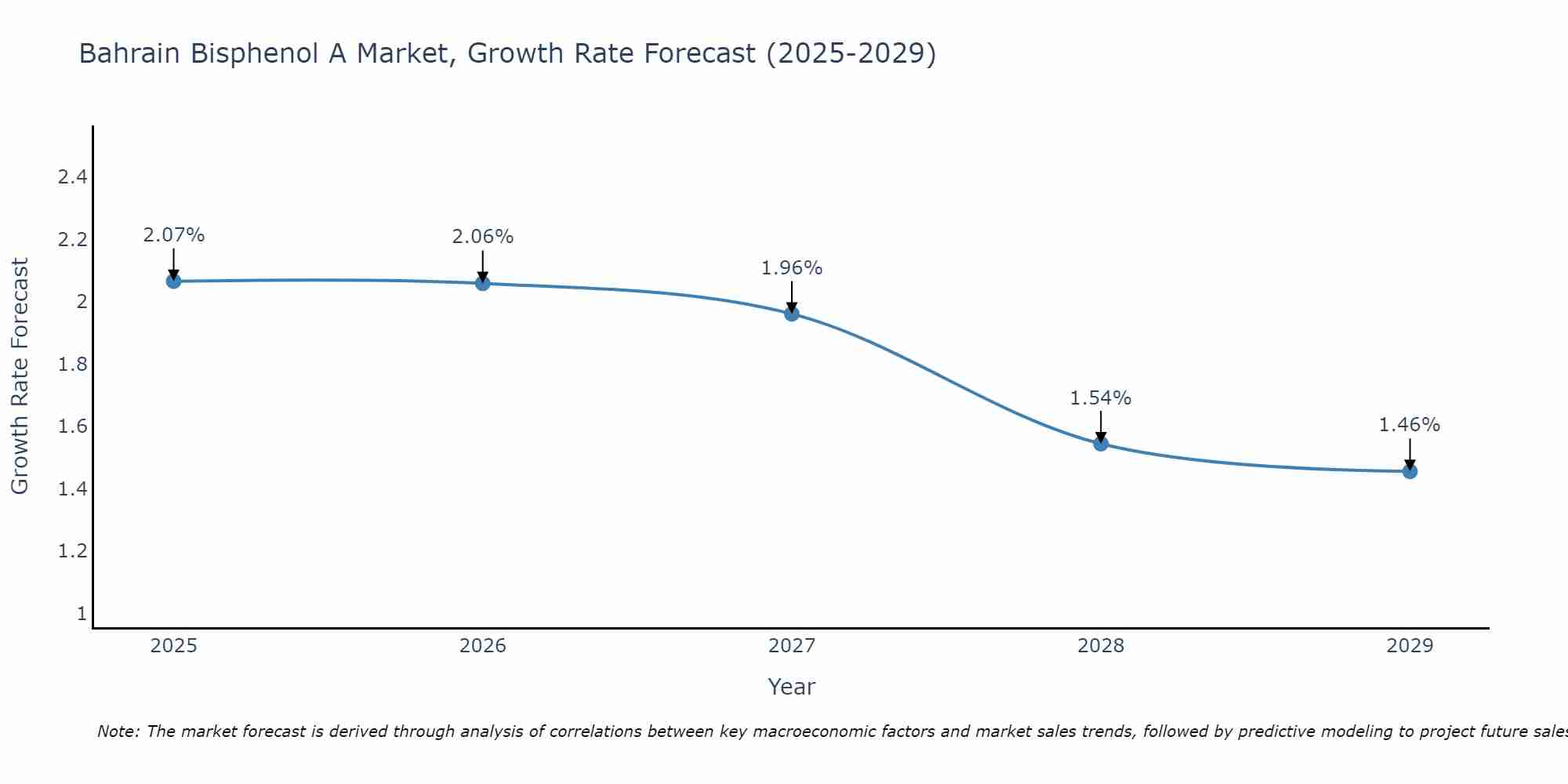
The Bahrain Bisphenol A Market may undergo a gradual slowdown in growth rates between 2025 and 2029. Beginning strongly at 2.07% in 2025, growth softens to 1.46% in 2029.
Bisphenol A Market: Bahrain vs Top 5 Major Economies in 2027 (Middle East)
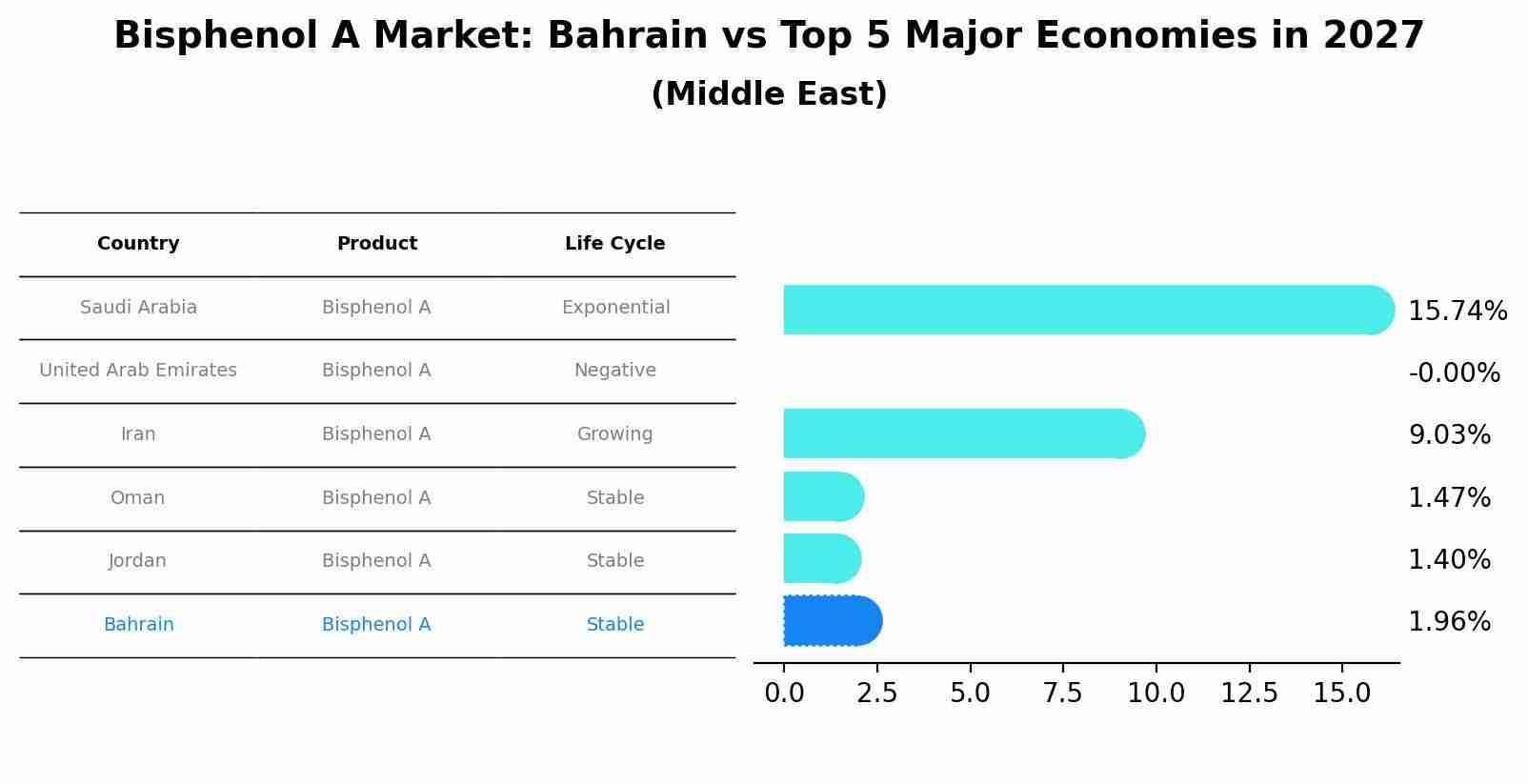
The Bisphenol A market in Bahrain is projected to grow at a stable growth rate of 1.96% by 2027, within the Middle East region led by Saudi Arabia, along with other countries like United Arab Emirates, Iran, Oman and Jordan, collectively shaping a dynamic and evolving market environment driven by innovation and increasing adoption of emerging technologies.
Bahrain Bisphenol A Market Overview
The Bisphenol A (BPA) market in Bahrain is witnessing growth due to its widespread use in the production of polycarbonate plastics and epoxy resins. BPA is a key component in manufacturing plastic products such as water bottles, food containers, and industrial coatings. As demand for durable and lightweight materials continues to rise in Bahrain`s manufacturing sector, the market for BPA is expected to grow, driven by its applications in various industries.
Drivers of the market
The Bahrain Bisphenol A (BPA) market is primarily driven by its use in the production of polycarbonate plastics and epoxy resins. BPA is a key raw material in the manufacturing of lightweight, durable, and transparent plastics, which are used in industries such as automotive, electronics, and consumer goods. The growing demand for polycarbonate-based products, including safety glasses, electronics, and automotive parts, is fueling the need for BPA in Bahrain. Additionally, the expanding construction sector in Bahrain, where epoxy resins are used in coatings and adhesives, is further boosting market growth. Despite environmental concerns, BPA continues to play a vital role in various industrial applications in the country.
Challenges of the market
The Bisphenol A (BPA) market in Bahrain faces growing challenges due to increasing concerns over the health risks associated with BPA, which is commonly used in the production of plastics and resins. Consumer demand for BPA-free products is rising, particularly in sectors such as food packaging and consumer goods, leading to reduced demand for BPA-based products. Additionally, stringent regulatory measures on BPA usage and the environmental concerns related to its disposal present further obstacles. The market is also impacted by the availability of alternative chemicals that can replace BPA in various applications, intensifying competition.
Investment opportunities in the Market
Bisphenol A (BPA) is a key raw material for the production of polycarbonates and epoxy resins. The growing manufacturing and construction sectors in Bahrain offer opportunities in the BPA market. Investors can focus on supplying BPA to local manufacturers of plastics and resins used in various industries, including automotive, construction, and packaging.
Government Policy of the market
The bisphenol A (BPA) market in Bahrain is influenced by demand from the plastics and packaging industries, where BPA is used in the production of polycarbonate plastics and epoxy resins. Government policies promoting industrial diversification and supporting the local plastics industry have contributed to market growth. Regulatory frameworks ensure the safe use of BPA, particularly in applications with potential health risks, such as food packaging. The governments focus on expanding the manufacturing sector and attracting investment in chemicals and materials industries further supports the bisphenol A market.
Key Highlights of the Report:
- Bahrain Bisphenol A Market Outlook
- Market Size of Bahrain Bisphenol A Market, 2021
- Forecast of Bahrain Bisphenol A Market, 2031
- Historical Data and Forecast of Bahrain Bisphenol A Revenues & Volume for the Period 2021 - 2031
- Bahrain Bisphenol A Market Trend Evolution
- Bahrain Bisphenol A Market Drivers and Challenges
- Bahrain Bisphenol A Price Trends
- Bahrain Bisphenol A Porter's Five Forces
- Bahrain Bisphenol A Industry Life Cycle
- Historical Data and Forecast of Bahrain Bisphenol A Market Revenues & Volume By Application for the Period 2021 - 2031
- Historical Data and Forecast of Bahrain Bisphenol A Market Revenues & Volume By Polycarbonate Resin for the Period 2021 - 2031
- Historical Data and Forecast of Bahrain Bisphenol A Market Revenues & Volume By Epoxy Resin for the Period 2021 - 2031
- Historical Data and Forecast of Bahrain Bisphenol A Market Revenues & Volume By Unsaturated Polyester Resins for the Period 2021 - 2031
- Historical Data and Forecast of Bahrain Bisphenol A Market Revenues & Volume By Flame Retardants for the Period 2021 - 2031
- Historical Data and Forecast of Bahrain Bisphenol A Market Revenues & Volume By Others for the Period 2021 - 2031
- Historical Data and Forecast of Bahrain Bisphenol A Market Revenues & Volume By End-use for the Period 2021 - 2031
- Historical Data and Forecast of Bahrain Bisphenol A Market Revenues & Volume By Eye wear for the Period 2021 - 2031
- Historical Data and Forecast of Bahrain Bisphenol A Market Revenues & Volume By Automotive component for the Period 2021 - 2031
- Historical Data and Forecast of Bahrain Bisphenol A Market Revenues & Volume By Electronics for the Period 2021 - 2031
- Historical Data and Forecast of Bahrain Bisphenol A Market Revenues & Volume By Wind Energy Composites for the Period 2021 - 2031
- Historical Data and Forecast of Bahrain Bisphenol A Market Revenues & Volume By Paint and Coating for the Period 2021 - 2031
- Historical Data and Forecast of Bahrain Bisphenol A Market Revenues & Volume By Green House for the Period 2021 - 2031
- Historical Data and Forecast of Bahrain Bisphenol A Market Revenues & Volume By Others for the Period 2021 - 2031
- Bahrain Bisphenol A Import Export Trade Statistics
- Market Opportunity Assessment By Application
- Market Opportunity Assessment By End-use
- Bahrain Bisphenol A Top Companies Market Share
- Bahrain Bisphenol A Competitive Benchmarking By Technical and Operational Parameters
- Bahrain Bisphenol A Company Profiles
- Bahrain Bisphenol A Key Strategic Recommendations






































