Bahrain Pressed & Blown Glass Market: Import Trend Analysis
In 2024, Bahrain pressed and blown glass market experienced a steady increase in imports. This trend reflected the growing demand for glass products within the country, indicating a positive market outlook for the industry.
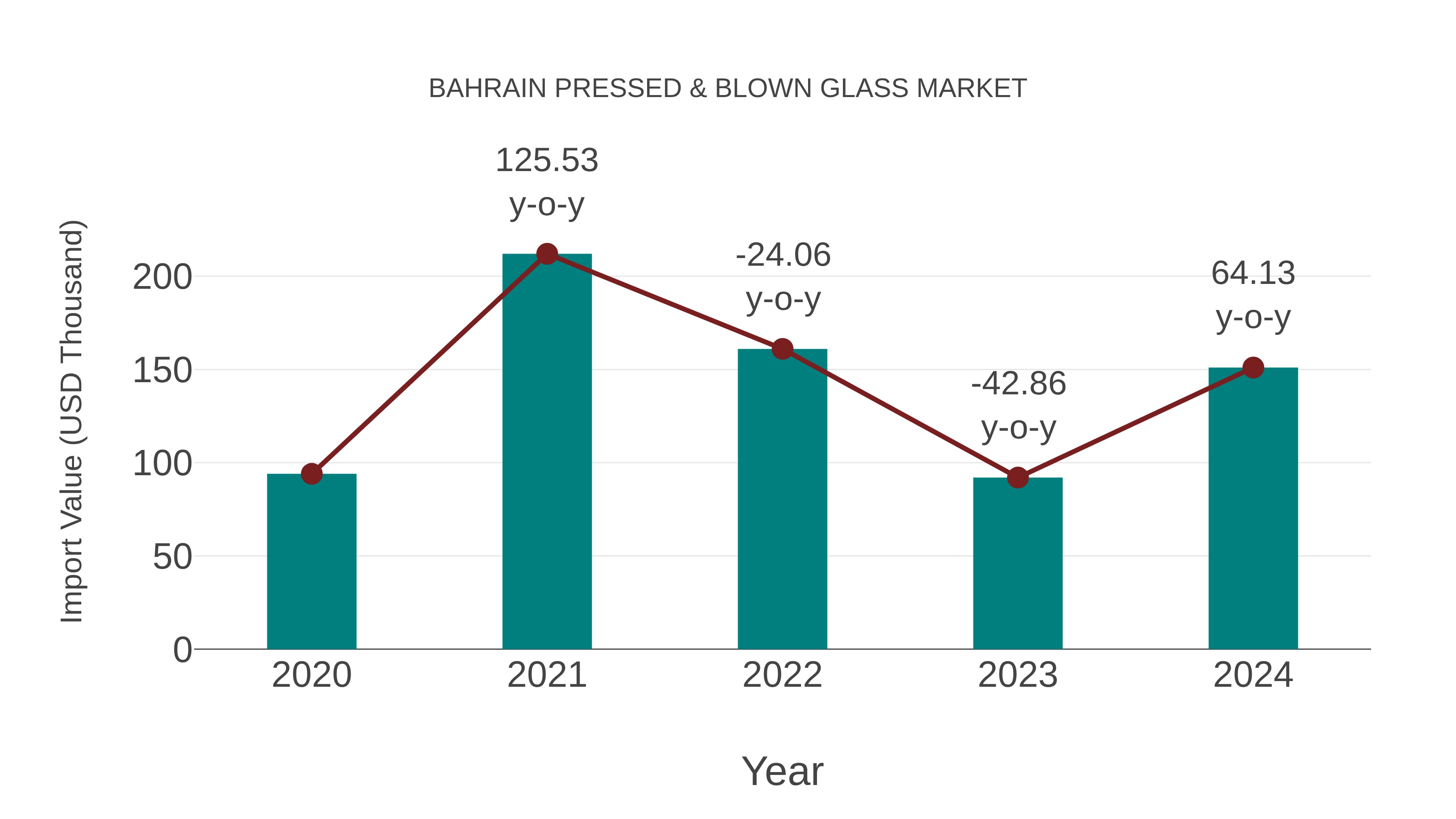
Bahrain Pressed & Blown Glass Market Synopsis
Bahrains pressed and blown glass market supports both functional and decorative glassware needs. This includes tableware, lighting fixtures, and architectural elements. Imports dominate the market, though local demand for customized and artistic glass products remains consistent, particularly in the hospitality and real estate sectors.
Trends of the market
Bahrains pressed and blown glass market serves a combination of decorative, architectural, and utility functions across residential and commercial sectors. Glassware such as vases, lamps, and custom installations are in demand among interior designers and upscale consumers. Imports primarily drive the market, with Italy, India, and Turkey supplying ornate blown glass items, while pressed glass is more commonly sourced from China and Eastern Europe. Local artisans are few, but niche studios occasionally produce limited editions or bespoke pieces. Market growth is influenced by hospitality and real estate development projects seeking high-end design features. Sustainability trends are also encouraging the use of recycled glass in certain applications.
Challenges of the market
This market in Bahrain faces difficulties due to high energy costs associated with glass production and the absence of raw material reserves. Most products are imported, limiting local value addition. Competition from cheaper alternatives like plastic also affects demand. Environmental concerns about emissions and recycling responsibilities pose additional challenges. Furthermore, the artisanal and decorative glass segment is niche, with limited export potential.
Investment opportunities in the Market
The Pressed & Blown Glass market in Bahrain offers potential in both industrial and decorative applications. With increasing demand from the construction, hospitality, and home décor sectors, theres room for premium glassware, lighting fixtures, and customized architectural glass. Investors can explore local production units, art glass studios, or import-distribution models. Sustainable glass products and energy-efficient designs are gaining traction. Partnerships with interior designers and luxury developers can further enhance market penetration.
Government Policy of the market
The pressed and blown glass market in Bahrain is part of the country`s craft and industrial material sectors. Government policies support this niche through cultural preservation initiatives and artisanal promotion programs, especially in the context of traditional crafts. For industrial glass applications, the Ministry of Industry and Commerce mandates safety and material quality standards, particularly for glass used in construction, automotive, and packaging. Environmental regulations by the Supreme Council for Environment govern the recycling and safe disposal of glass waste. Importers of machinery and raw materials for glass manufacturing benefit from duty exemptions and fast-tracked customs clearance under industry development programs. Bahrain also promotes this sector through design competitions and export-oriented exhibitions for glassware.
Key Highlights of the Report:
- Bahrain Pressed & Blown Glass Market Outlook
- Market Size of Bahrain Pressed & Blown Glass Market, 2025
- Forecast of Bahrain Pressed & Blown Glass Market, 2032
- Historical Data and Forecast of Bahrain Pressed & Blown Glass Revenues & Volume for the Period 2022 - 2032F
- Bahrain Pressed & Blown Glass Market Trend Evolution
- Bahrain Pressed & Blown Glass Market Drivers and Challenges
- Bahrain Pressed & Blown Glass Price Trends
- Bahrain Pressed & Blown Glass Porter's Five Forces
- Bahrain Pressed & Blown Glass Industry Life Cycle
- Historical Data and Forecast of Bahrain Pressed & Blown Glass Market Revenues & Volume By Type for the Period 2022 - 2032F
- Historical Data and Forecast of Bahrain Pressed & Blown Glass Market Revenues & Volume By Mold-blown for the Period 2022 - 2032F
- Historical Data and Forecast of Bahrain Pressed & Blown Glass Market Revenues & Volume By Pressed for the Period 2022 - 2032F
- Historical Data and Forecast of Bahrain Pressed & Blown Glass Market Revenues & Volume By Glass for the Period 2022 - 2032F
- Historical Data and Forecast of Bahrain Pressed & Blown Glass Market Revenues & Volume By Glassblowing for the Period 2022 - 2032F
- Historical Data and Forecast of Bahrain Pressed & Blown Glass Market Revenues & Volume By Molten for the Period 2022 - 2032F
- Bahrain Pressed & Blown Glass Import Export Trade Statistics
- Market Opportunity Assessment By Type
- Bahrain Pressed & Blown Glass Top Companies Market Share
- Bahrain Pressed & Blown Glass Competitive Benchmarking By Technical and Operational Parameters
- Bahrain Pressed & Blown Glass Company Profiles
- Bahrain Pressed & Blown Glass Key Strategic Recommendations






































