Bahrain Wooden Packaging Market Size, Share & Growth Rate
The Bahrain Wooden Packaging Market was estimated at USD 1443 Million in 2025 and is projected to reach USD 2501 Million by 2032, growing at a CAGR of 8.2% from 2026 to 2032. This robust growth trajectory is primarily fueled by Bahrain's strategic position as a trade and logistics hub, coupled with the escalating demand from various sectors such as food, chemicals, and manufacturing. Additionally, a rising preference for eco-friendly and sustainable packaging solutions amplifies the market's appeal among consumers and businesses alike.
Bahrain Wooden Packaging Market Year-wise Growth Rate and Key Drivers
This graph highlights how the Bahrain Wooden Packaging Market has steadily grown over the years, supported by major growth factors.
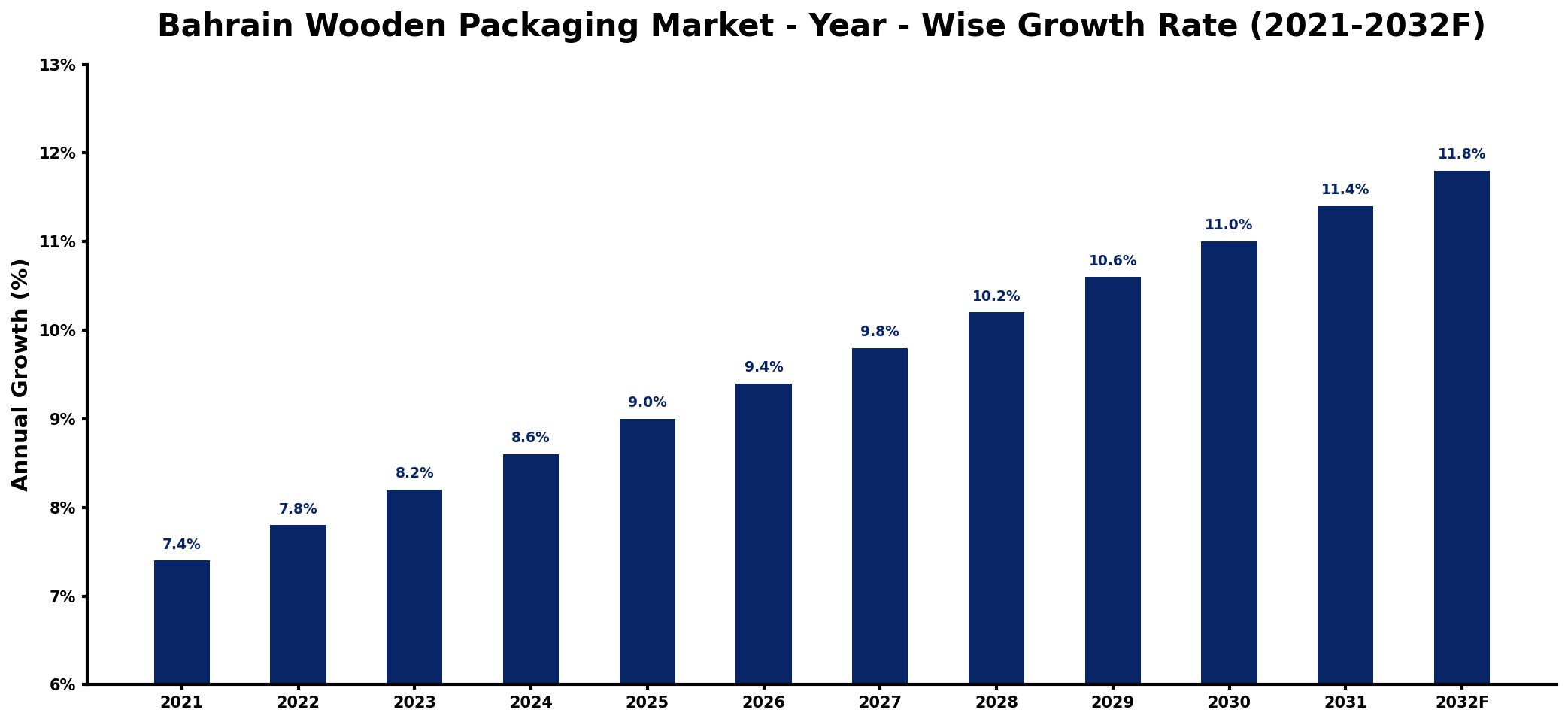
The table below presents the year‑wise growth rates along with the key drivers influencing the market
| Year | Growth Rate | Major Drivers |
| 2021 | 7.4% | Rising demand from agriculture sector |
| 2022 | 7.8% | Increased exports to regional markets |
| 2023 | 8.2% | Growth in e-commerce logistics needs |
| 2024 | 8.6% | Expansion of local manufacturing facilities |
| 2025 | 9.0% | Surge in retail sector requirements |
| 2026 | 9.4% | Higher investments in sustainable solutions |
| 2027 | 9.8% | growing regional consumption patterns |
| 2028 | 10.2% | Development of new construction projects |
| 2029 | 10.6% | expanding manufacturing base activity |
| 2030 | 11.0% | Growing focus on eco-friendly initiatives |
| 2031 | 11.4% | Strengthening of trade agreements internationally |
| 2032 | 11.8% | Rising consumer preference for sustainability |
Note: Market size estimations and growth projections presented in this report are based on 6Wresearch's proprietary forecasting methodology, utilizing the latest available industry data, government publications, and primary research inputs.
Bahrain Wooden Packaging Market Synopsis
In Bahrain, the wooden packaging market is significantly driven by the need for durable and sustainable packaging solutions, particularly in the logistics and export sectors. The increasing focus on reusable and recyclable materials has spurred interest in wooden crates and pallets, which are integral to the country's manufacturing and distribution operations.
Moreover, compliance with international ISPM-15 standards for phytosanitary treatment is becoming critical for local businesses engaged in global trade. As Bahrain's economy diversifies, the demand for tailored wooden packaging options that cater to specific industry needs, such as lightweight and modular designs, is also on the rise.
Bahrain Wooden Packaging Market Key Takeaways
- The market is experiencing strong growth due to Bahrain's strategic trade position and rising demand for sustainable solutions.
- Wooden packaging's reusability and strength are key selling points, particularly in logistics and export sectors.
- Compliance with ISPM-15 standards presents both a regulatory framework and an opportunity for market differentiation.
- Local manufacturers are increasingly seeking custom-designed wooden packaging to enhance competitiveness.
- Investors are encouraged to explore innovative wooden packaging solutions targeting various industries, especially consumer goods and retail.
Evaluation of Restraints in Bahrain Wooden Packaging Market
Despite the growth prospects, the Bahrain wooden packaging market faces notable restraints. A significant challenge stems from the rising preference for lighter and often more cost-effective materials such as cardboard and plastic, which can offer greater convenience for many manufacturers. Additionally, the high cost of imported wood, coupled with environmental concerns surrounding deforestation, limits the widespread adoption of wooden packaging solutions. Furthermore, stringent phytosanitary regulations for international shipping complicate logistics and compliance, making it essential for local producers to navigate these challenges effectively.
Bahrain Wooden Packaging Market Trends
The Bahrain wooden packaging market is currently witnessing several transformative trends. A growing consumer inclination towards sustainable products has heightened demand for eco-friendly packaging options across various sectors. The market is also embracing innovations in packaging design, with a focus on lightweight, modular, and custom solutions. The export of industrial goods and perishables is increasingly driving the need for specialized wooden packaging that meets specific durability and strength requirements, all while adhering to international standards.
Bahrain Wooden Packaging Market Opportunities
Investment opportunities abound within the Bahrain wooden packaging market as industries shift towards sustainable practices. There is a burgeoning demand for wooden crates, boxes, and pallets that provide not only functional benefits but also align with eco-friendly initiatives. Entrepreneurs and investors can capitalize on this shift by focusing on customized solutions that cater to niche markets such as luxury retail packaging and unique designs for consumer goods. This presents an avenue for growth, especially as sustainability continues to influence purchasing decisions.
Government Initiatives in the Bahrain Wooden Packaging Market
The Bahraini government plays an essential role in shaping the wooden packaging landscape through regulations and initiatives aimed at promoting sustainable practices. Compliance with international ISPM-15 standards is enforced to safeguard against pest infestations in exported wooden packaging. The Ministry of Industry and Commerce collaborates closely with customs and port authorities to ensure adherence to these regulations while fostering clean logistics practices. These efforts reflect a commitment to enhancing the countrys trade capabilities and environmental stewardship.
Future Insights of the Bahrain Wooden Packaging Market
Looking ahead to 2026-2032, the Bahrain wooden packaging market is poised for continued growth driven by sustainability trends and technological advancements in packaging solutions. As industries increasingly prioritize eco-friendly materials, wooden packaging stands to benefit from its inherent durability and recyclability. Furthermore, evolving consumer preferences for personalized packaging designs will likely propel demand for customized wooden solutions. Investments in innovation and compliance with international standards will be vital for capturing emerging opportunities in this dynamic market.
Bahrain Wooden Packaging Market Latest Developments (2025 - 2026)
Recent developments in the Bahrain wooden packaging market indicate a growing emphasis on innovation and sustainability. Companies are actively exploring new materials and manufacturing processes to enhance the eco-friendliness of their packaging solutions. Additionally, collaborations between local businesses and international organizations are becoming more common, focusing on compliance and best practices in packaging standards. This trend signifies an industry readiness to adapt and thrive in a competitive global market.
Bahrain Wooden Packaging Market - Key Attractiveness of the Report
- 10 Years of Market Numbers
- Historical Data Starting from 2022 to 2025
- Base Year: 2025
- Forecast Data until 2032
- Key Performance Indicators Impacting the Market
- Major Upcoming Developments and Projects
Key Highlights of the Report:
- Bahrain Wooden Packaging Market Outlook
- Market Size of Bahrain Wooden Packaging Market, 2025
- Forecast of Bahrain Wooden Packaging Market, 2032
- Historical Data and Forecast of Bahrain Wooden Packaging Revenues & Volume for the Period 2022-2032F
- Bahrain Wooden Packaging Market Trend Evolution
- Bahrain Wooden Packaging Market Drivers and Challenges
- Bahrain Wooden Packaging Price Trends
- Bahrain Wooden Packaging Porter's Five Forces
- Bahrain Wooden Packaging Industry Life Cycle
- Historical Data and Forecast of Bahrain Wooden Packaging Market Revenues & Volume By Type for the Period 2022-2032F
- Historical Data and Forecast of Bahrain Wooden Packaging Market Revenues & Volume By Pallets for the Period 2022-2032F
- Historical Data and Forecast of Bahrain Wooden Packaging Market Revenues & Volume By Boxes and Bins for the Period 2022-2032F
- Historical Data and Forecast of Bahrain Wooden Packaging Market Revenues & Volume By Crates and Cases for the Period 2022-2032F
- Historical Data and Forecast of Bahrain Wooden Packaging Market Revenues & Volume By Spools for the Period 2022-2032F
- Historical Data and Forecast of Bahrain Wooden Packaging Market Revenues & Volume By Dunnage for the Period 2022-2032F
- Historical Data and Forecast of Bahrain Wooden Packaging Market Revenues & Volume By Others for the Period 2022-2032F
- Historical Data and Forecast of Bahrain Wooden Packaging Market Revenues & Volume By Application for the Period 2022-2032F
- Historical Data and Forecast of Bahrain Wooden Packaging Market Revenues & Volume By Food & Beverages Storage for the Period 2022-2032F
- Historical Data and Forecast of Bahrain Wooden Packaging Market Revenues & Volume By Transportation for the Period 2022-2032F
- Historical Data and Forecast of Bahrain Wooden Packaging Market Revenues & Volume By Industrial for the Period 2022-2032F
- Historical Data and Forecast of Bahrain Wooden Packaging Market Revenues & Volume By Shipping for the Period 2022-2032F
- Historical Data and Forecast of Bahrain Wooden Packaging Market Revenues & Volume By Others for the Period 2022-2032F
- Bahrain Wooden Packaging Import Export Trade Statistics
- Market Opportunity Assessment By Type
- Market Opportunity Assessment By Application
- Bahrain Wooden Packaging Top Companies Market Share
- Bahrain Wooden Packaging Competitive Benchmarking By Technical and Operational Parameters
- Bahrain Wooden Packaging Company Profiles
- Bahrain Wooden Packaging Key Strategic Recommendations






































