Bangladesh Bathroom Linen Market Size, Share & Growth Rate
The Bangladesh Bathroom Linen Market was estimated at USD 1290 Million in 2025 and is projected to reach USD 1875 Million by 2032, growing at a CAGR of 5.5% from 2026 to 2032. This robust growth is being driven by a confluence of rising disposable incomes and an expanding middle-class population that increasingly values hygiene and aesthetics in home environments. Moreover, heightened consumer awareness regarding eco-friendly products and sustainable living is paving the way for a shift in preferences towards premium bathroom linen options.
Bangladesh Bathroom Linen Market Year-wise Growth Rate and Key Drivers
This graph highlights how the Bangladesh Bathroom Linen Market has steadily grown over the years, supported by major growth factors.
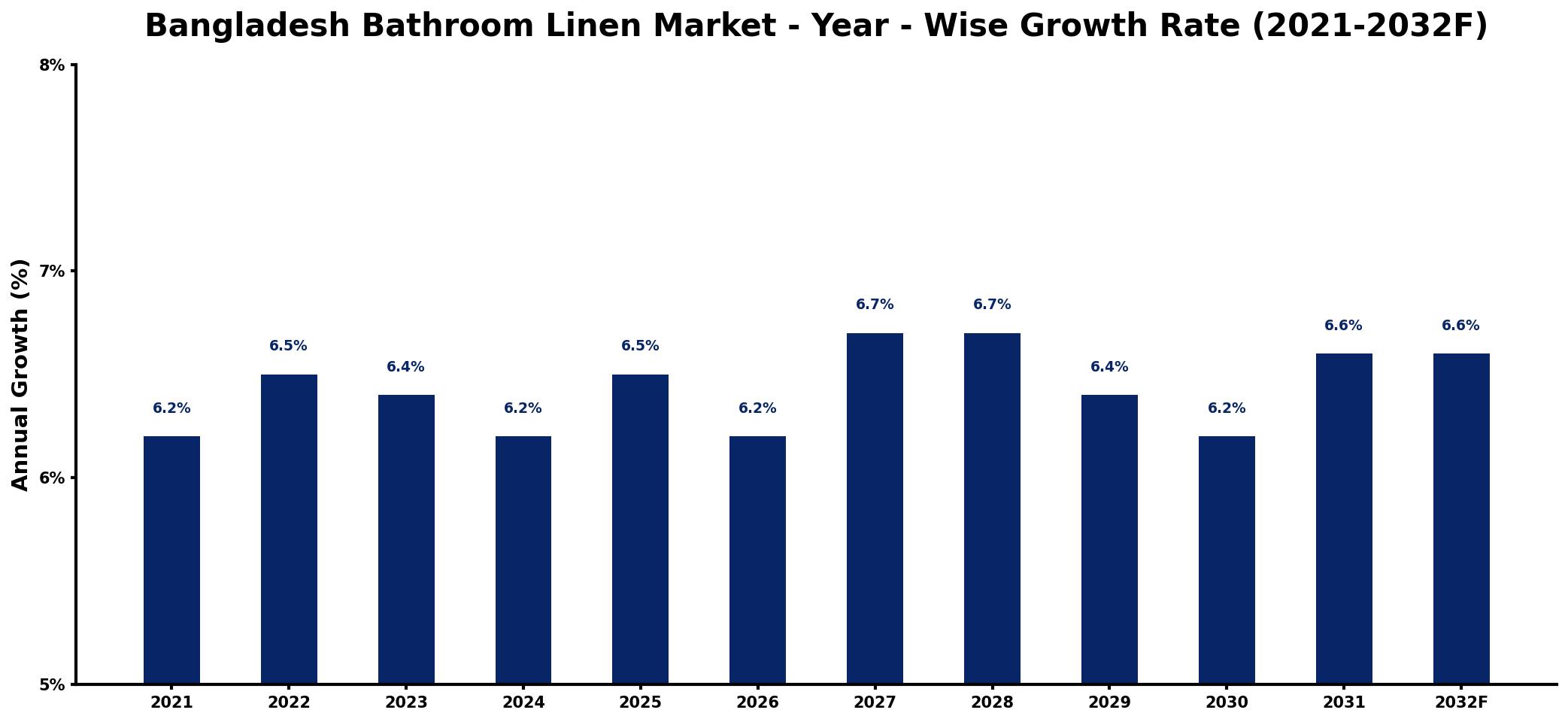
The table below presents the year‑wise growth rates along with the key drivers influencing the market
| Year | Growth Rate | Major Drivers |
| 2021 | 6.2% | rising disposable income levels |
| 2022 | 6.5% | increased urbanization trends observed |
| 2023 | 6.4% | growing hospitality sector expansion |
| 2024 | 6.2% | surge in e-commerce platforms |
| 2025 | 6.5% | enhanced consumer awareness initiatives |
| 2026 | 6.2% | development of sustainable materials |
| 2027 | 6.7% | increased tourism industry growth |
| 2028 | 6.7% | rising health and hygiene focus |
| 2029 | 6.4% | growing online shopping preferences |
| 2030 | 6.2% | expansion of home improvement projects |
| 2031 | 6.6% | increased demand for luxury products |
| 2032 | 6.6% | growth in rental property market |
Note: Market size estimations and growth projections presented in this report are based on 6Wresearch's proprietary forecasting methodology, utilizing the latest available industry data, government publications, and primary research inputs.
Bangladesh Bathroom Linen Market Synopsis
The strongest force shaping the Bangladesh Bathroom Linen Market is the heightened consumer demand for hygiene and quality in bathroom textiles. With more households adopting modern decor, products such as plush towels and chic bath mats are becoming essential to home styling.
Additionally, the growing focus on eco-conscious materials is steering the market towards organic and sustainable bathroom linen products. This trend is not just a response to consumer preference but also reflects broader environmental concerns, making it a pivotal driver of innovation and design in the industry.
Bangladesh Bathroom Linen Market Key Takeaways
- Rising disposable income is boosting consumer investment in high-quality bathroom linen products.
- The market is increasingly leaning towards eco-friendly and sustainable materials.
- Online retail channels are becoming vital for consumer access and engagement.
- Modern and vibrant designs are capturing the attention of contemporary consumers.
- Opportunities for innovation abound as consumers seek both style and comfort.
Evaluation of Restraints in Bangladesh Bathroom Linen Market
Despite its growth potential, the Bangladesh Bathroom Linen Market faces several restraints that hinder its overall progress. Intense competition from both local and international brands complicates market positioning, while fluctuating raw material prices can squeeze profit margins. Moreover, infrastructure challenges—such as inadequate distribution networks and storage facilities—add further complexity to operational efficiency. The presence of counterfeit products also undermines brand integrity and consumer trust, making it crucial for companies to navigate these hurdles with strategic foresight.
Bangladesh Bathroom Linen Market Trends
Current trends in the Bangladesh Bathroom Linen Market indicate a rising demand for premium, stylish, and eco-friendly products. Consumers are increasingly prioritizing quality and design, often opting for organic cotton and vibrant prints that complement modern bathrooms. The expansion of online shopping is facilitating this demand, as more consumers seek convenience and accessibility when purchasing bathroom linen. As these trends continue to evolve, manufacturers are being pushed to innovate and create products that meet the discerning tastes of today's consumers.
Bangladesh Bathroom Linen Market Opportunities
There are significant growth opportunities within the Bangladesh Bathroom Linen Market, primarily driven by the ongoing trend of home renovation and aesthetic upgrades. Investors can tap into the demand for unique and high-quality bathroom linen products, catering to various consumer preferences for design, material, and price. Furthermore, the burgeoning e-commerce landscape presents a platform for reaching a wider audience, allowing brands to promote innovative and eco-friendly solutions that resonate with modern consumers.
Government Initiatives in the Bangladesh Bathroom Linen Market
While there are no specific government policies targeting the Bathroom Linen Market, the Bangladeshi government supports the broader textile industry through various initiatives. These include incentives for export-oriented businesses and improvements in infrastructure aimed at enhancing operational capabilities. Compliance with international labor standards and environmental regulations further strengthens the sector's reputation as a reliable sourcing destination, indirectly benefiting the bathroom linen market.
Future Insights of the Bangladesh Bathroom Linen Market
Looking ahead to 2026-2032, the Bangladesh Bathroom Linen Market is poised for steady growth, driven by urbanization and a rising focus on home decor. As consumer preferences shift toward high-quality, stylish products, the market will likely see increased demand for innovative designs. The growing influence of e-commerce will continue to shape purchasing behaviors, allowing consumers to explore diverse options easily. Overall, this market is well-positioned to cater to evolving consumer needs while capitalizing on the momentum of premium and sustainable product offerings.
Bangladesh Bathroom Linen Market Latest Developments (2025 - 2026)
Recent developments in the Bangladesh Bathroom Linen Market highlight a strategic push towards sustainable production methods and design innovations. Industry players are increasingly investing in eco-friendly materials and practices to align with consumer expectations for sustainability. Additionally, enhanced online retail platforms are being developed to offer a more seamless shopping experience, allowing brands to connect with customers more effectively. These trends signal an adaptive and forward-thinking market that is continuously evolving to meet consumer demands.
Bangladesh Bathroom Linen Market - Key Attractiveness of the Report
- 10 Years of Market Numbers
- Historical Data Starting from 2022 to 2025
- Base Year: 2025
- Forecast Data until 2032
- Key Performance Indicators Impacting the Market
- Major Upcoming Developments and Projects
Key Highlights of the Report:
- Bangladesh Bathroom Linen Market Outlook
- Market Size of Bangladesh Bathroom Linen Market, 2025
- Forecast of Bangladesh Bathroom Linen Market, 2032
- Historical Data and Forecast of Bangladesh Bathroom Linen Revenues & Volume for the Period 2022-2032F
- Bangladesh Bathroom Linen Market Trend Evolution
- Bangladesh Bathroom Linen Market Drivers and Challenges
- Bangladesh Bathroom Linen Price Trends
- Bangladesh Bathroom Linen Porter's Five Forces
- Bangladesh Bathroom Linen Industry Life Cycle
- Historical Data and Forecast of Bangladesh Bathroom Linen Market Revenues & Volume By Product for the Period 2022-2032F
- Historical Data and Forecast of Bangladesh Bathroom Linen Market Revenues & Volume By Bath Towels for the Period 2022-2032F
- Historical Data and Forecast of Bangladesh Bathroom Linen Market Revenues & Volume By Bathrobes for the Period 2022-2032F
- Historical Data and Forecast of Bangladesh Bathroom Linen Market Revenues & Volume By Others for the Period 2022-2032F
- Bangladesh Bathroom Linen Import Export Trade Statistics
- Market Opportunity Assessment By Product
- Bangladesh Bathroom Linen Top Companies Market Share
- Bangladesh Bathroom Linen Competitive Benchmarking By Technical and Operational Parameters
- Bangladesh Bathroom Linen Company Profiles
- Bangladesh Bathroom Linen Key Strategic Recommendations






































