Bangladesh Enterprise Data Management Market Size & Growth Rate (2026-2032)
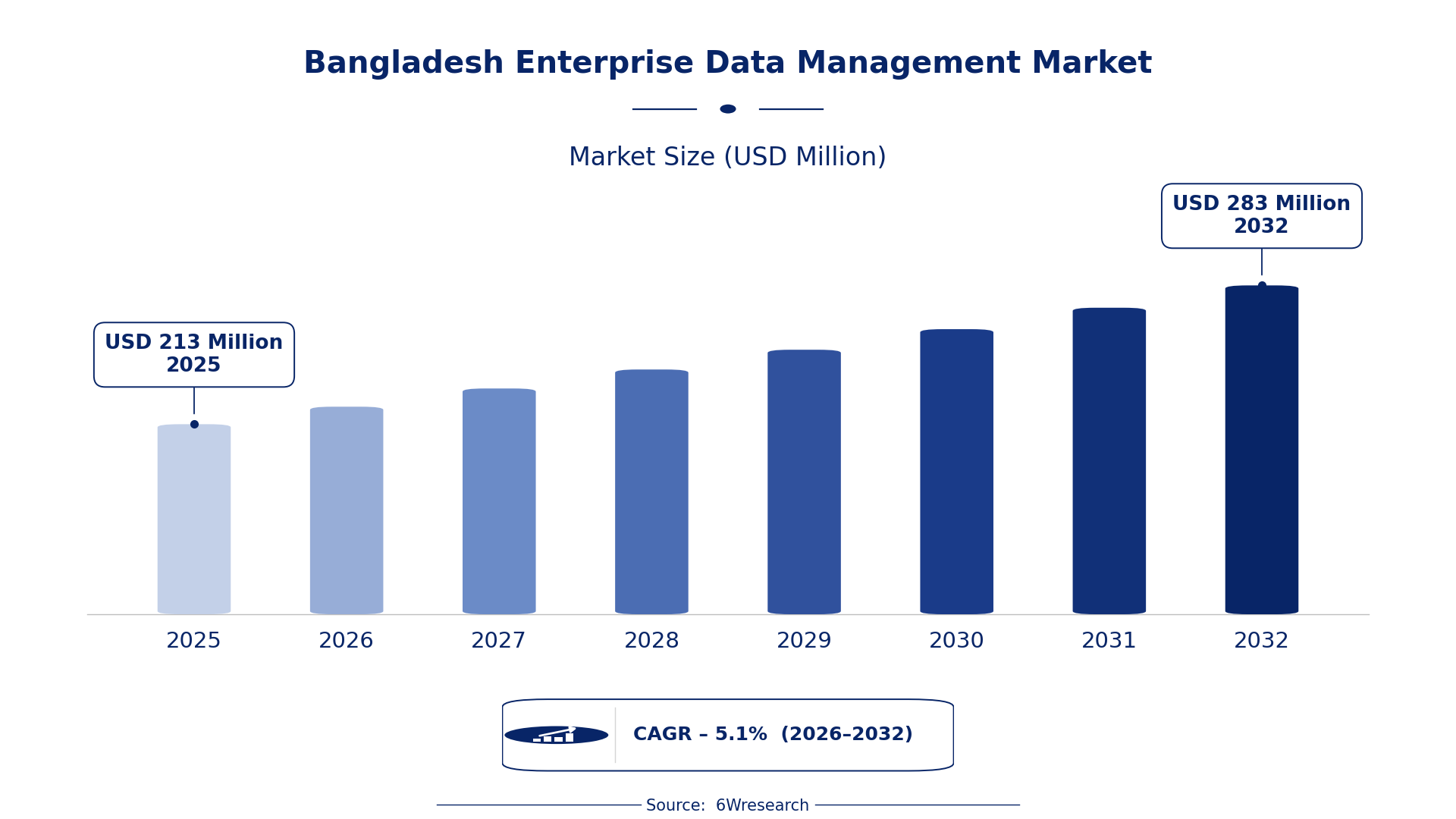
The Bangladesh Enterprise Data Management Market was estimated at USD 213 Million in 2025 and is projected to reach USD 283 Million by 2032, growing at a CAGR of 5.1% from 2026 to 2032.
Bangladesh Enterprise Data Management Market Synopsis
The growing emphasis on data-driven decision-making is pushing organizations in Bangladesh to prioritize effective data management. As digital transformation initiatives gain traction, businesses are increasingly adopting sophisticated solutions to streamline data integration and enhance operational efficiencies.
Amidst rising volumes of data from diverse sources such as IoT devices and social media, the demand for advanced data management tools is surging. Companies are not just looking for storage solutions; they require comprehensive systems that ensure data accuracy, security, and compliance with regulatory standards.
Bangladesh Enterprise Data Management Market Year-wise Growth Rate and Key Drivers
This graph illustrates the annual growth rates of the Bangladesh Enterprise Data Management Market from 2021 to 2032, highlighting a steady upward trajectory and projected expansion over the forecast period.
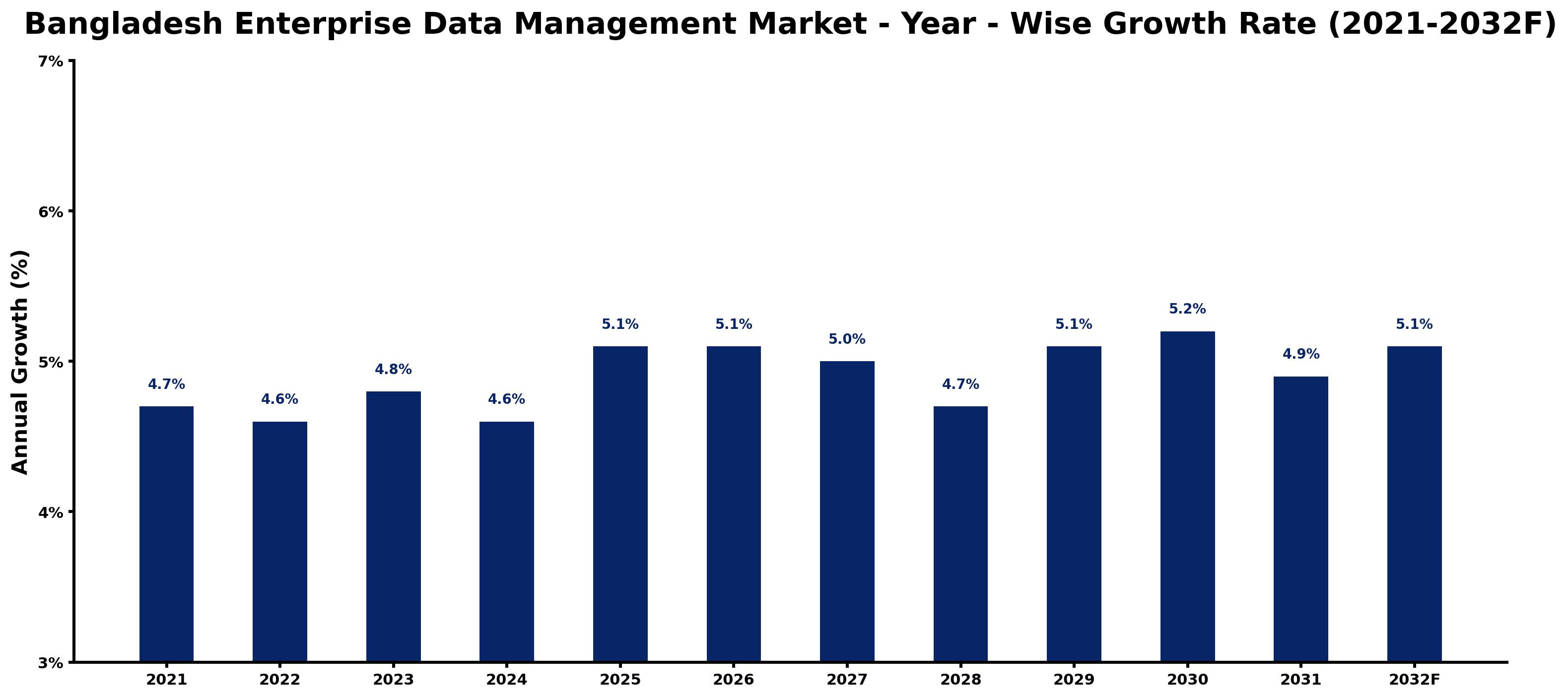
The table below presents the year‑wise growth rates along with the key drivers influencing the market
| Year | Growth Rate | Major Drivers |
| 2021 | 4.7% | Shift towards digital transformation in Bangladeshi SMEs |
| 2022 | 4.6% | Government's Digital Bangladesh initiative boosting data management focus |
| 2023 | 4.8% | Emergence of data compliance regulations by BTRC |
| 2024 | 4.6% | Growth in e-commerce driving enterprise data utilization |
| 2025 | 5.1% | Rising adoption of cloud services among local enterprises |
| 2026 | 5.1% | Increased investment in business intelligence tools by corporations |
| 2027 | 5.0% | Surge in remote work necessitating robust data strategies |
| 2028 | 4.7% | Implementation of GDPR-like regulations encouraging data governance |
| 2029 | 5.1% | Growth in mobile health apps increasing healthcare data needs |
| 2030 | 5.2% | Advent of AI technologies driving data insights demand |
| 2031 | 4.9% | Local tech hubs promoting agile enterprise data solutions |
| 2032 | 5.1% | Increase in digital payment platforms necessitating data security |
Note: Market size estimations and growth projections presented in this report are based on 6Wresearch's proprietary forecasting methodology, utilizing the latest available industry data, government publications, and primary research inputs.
Bangladesh Enterprise Data Management Market Key Takeaways
Below are some of the specific key takeaways from the market, including:
- Cloud-based data management solutions are becoming increasingly popular among businesses.
- Organizations are prioritizing data security and compliance to protect sensitive information.
- Real-time analytics capabilities are in high demand as companies seek immediate insights.
- Customizable data management solutions tailored to specific industries are gaining traction.
- The increasing complexity of data sources is necessitating advanced data governance practices.
Evaluation of Restraints in Bangladesh Enterprise Data Management Market
Despite the market's growth trajectory, several factors are restraining progress. A significant challenge lies in data security concerns, which often hinder organizations from fully embracing advanced data management solutions. Limited resources for implementing comprehensive systems also pose a barrier, particularly for smaller enterprises. The scarcity of skilled professionals capable of managing and analyzing complex data sets further complicates matters. Compliance with evolving data privacy regulations adds another layer of difficulty, as organizations must continuously adapt their practices to meet legal standards. Additionally, the rapid growth of data volumes and the increasing complexity of data sources create challenges in ensuring accuracy, consistency, and accessibility.
Bangladesh Enterprise Data Management Market Trends
The shift towards cloud-based data management solutions is a defining trend in the Bangladesh market. This movement is driven by the need for scalability, flexibility, and cost-effectiveness. Businesses are increasingly focused on implementing advanced analytics tools, allowing them to derive actionable insights from vast data pools. on top of that, there is a growing emphasis on data security and compliance, as organizations recognize the risks associated with data breaches and regulatory penalties. The integration of artificial intelligence and machine learning into data management practices is also on the rise, enabling companies to enhance their data processing capabilities significantly.
Bangladesh Enterprise Data Management Market Opportunities
As organizations in Bangladesh continue their digital transformation journeys, opportunities abound in the enterprise data management market. Vendors can tap into the demand for tailored solutions that address specific industry needs, especially in sectors like finance, healthcare, and retail. Offering advanced data governance and quality management services presents another avenue for growth, ensuring that businesses maintain data integrity and compliance. The increasing reliance on real-time data analytics creates a niche for solutions that enable immediate access to insights, driving efficiency and agility in decision-making processes.
Government Initiatives in the Bangladesh Enterprise Data Management Market
The government of Bangladesh is actively fostering a conducive environment for the growth of the Enterprise Data Management Market. By implementing policies focused on data protection, security, and privacy, authorities are laying the groundwork for businesses to manage their data more effectively. Recent initiatives aimed at enhancing data infrastructure and encouraging data sharing among organizations are crucial in promoting the adoption of modern data management technologies.
- A national data protection regulation was established in 2023 to enhance data privacy and security compliance among businesses.
- Currently underway is a nationwide program to upgrade digital infrastructure, facilitating better access to data management tools for organizations.
- A planned initiative for 2026 aims to promote public-private partnerships to develop advanced data management solutions tailored to local business needs.
- Recent collaborations between government agencies and technology providers have focused on improving data governance frameworks to align with international standards.
Future Insights of the Bangladesh Enterprise Data Management Market
Looking ahead to 2026-2032, the Bangladesh Enterprise Data Management Market is set for continued expansion. The increasing digitalization of businesses will drive the demand for sophisticated data management solutions capable of handling complex data environments. With cloud technologies and big data analytics at the forefront, companies will prioritize investments in systems that enhance decision-making and operational efficiency. Government support for a digital economy will further accelerate growth, presenting numerous opportunities for vendors to innovate and meet the evolving demands of the market.
Bangladesh Enterprise Data Management Market Latest Developments
In the past year, the Bangladesh Enterprise Data Management Market has witnessed dynamic activity, marked by advancements in technology adoption and strategic partnerships. Organizations are increasingly focusing on data management as a critical component of their digital strategies, leading to various initiatives aimed at enhancing their capabilities.
- A major technology vendor launched a new cloud-based data management platform in early 2025, aiming to cater to the growing needs of local businesses.
- In Q2 2025, a partnership was formed between a leading analytics firm and a local telecom operator to enhance data processing capabilities for SMEs.
- A pilot program focused on data security best practices was completed by mid-2025, showcasing successful outcomes in several industries.
- A rollout of a new data governance framework is expected to begin in late 2026, enhancing compliance measures across various sectors.
Bangladesh Enterprise Data Management Market - Key Attractiveness of the Report
- 10 Years of Market Numbers
- Historical Data Starting from 2022 to 2025
- Base Year: 2025
- Forecast Data until 2032
- Key Performance Indicators Impacting the Market
- Major Upcoming Developments and Projects
Key Highlights of the Report:
- Bangladesh Enterprise Data Management Market Outlook
- Market Size of Bangladesh Enterprise Data Management Market, 2025
- Forecast of Bangladesh Enterprise Data Management Market, 2032
- Historical Data and Forecast of Bangladesh Enterprise Data Management Revenues & Volume for the Period 2022-2032F
- Bangladesh Enterprise Data Management Market Trend Evolution
- Bangladesh Enterprise Data Management Market Drivers and Challenges
- Bangladesh Enterprise Data Management Price Trends
- Bangladesh Enterprise Data Management Porter's Five Forces
- Bangladesh Enterprise Data Management Industry Life Cycle
- Historical Data and Forecast of Bangladesh Enterprise Data Management Market Revenues & Volume By Component for the Period 2022-2032F
- Historical Data and Forecast of Bangladesh Enterprise Data Management Market Revenues & Volume By Software for the Period 2022-2032F
- Historical Data and Forecast of Bangladesh Enterprise Data Management Market Revenues & Volume By Services for the Period 2022-2032F
- Historical Data and Forecast of Bangladesh Enterprise Data Management Market Revenues & Volume By Professional Services for the Period 2022-2032F
- Historical Data and Forecast of Bangladesh Enterprise Data Management Market Revenues & Volume By Consulting for the Period 2022-2032F
- Historical Data and Forecast of Bangladesh Enterprise Data Management Market Revenues & Volume By Deployment and Integration for the Period 2022-2032F
- Historical Data and Forecast of Bangladesh Enterprise Data Management Market Revenues & Volume By Support and Maintenance for the Period 2022-2032F
- Historical Data and Forecast of Bangladesh Enterprise Data Management Market Revenues & Volume By Industry Vertical for the Period 2022-2032F
- Historical Data and Forecast of Bangladesh Enterprise Data Management Market Revenues & Volume By Healthcare and Life science for the Period 2022-2032F
- Historical Data and Forecast of Bangladesh Enterprise Data Management Market Revenues & Volume By Banking, Financial Services and Insurance (BFSI) for the Period 2022-2032F
- Historical Data and Forecast of Bangladesh Enterprise Data Management Market Revenues & Volume By Telecom and Information Technology (IT) for the Period 2022-2032F
- Historical Data and Forecast of Bangladesh Enterprise Data Management Market Revenues & Volume By Retail and Consumer goods for the Period 2022-2032F
- Historical Data and Forecast of Bangladesh Enterprise Data Management Market Revenues & Volume By Media and Entertainment for the Period 2022-2032F
- Historical Data and Forecast of Bangladesh Enterprise Data Management Market Revenues & Volume By Manufacturing for the Period 2022-2032F
- Historical Data and Forecast of Bangladesh Enterprise Data Management Market Revenues & Volume By Energy and Utilities for the Period 2022-2032F
- Historical Data and Forecast of Bangladesh Enterprise Data Management Market Revenues & Volume By Transportation and Logistics for the Period 2022-2032F
- Historical Data and Forecast of Bangladesh Enterprise Data Management Market Revenues & Volume By Organization Size for the Period 2022-2032F
- Historical Data and Forecast of Bangladesh Enterprise Data Management Market Revenues & Volume By Small and Medium-sized Enterprises for the Period 2022-2032F
- Historical Data and Forecast of Bangladesh Enterprise Data Management Market Revenues & Volume By Large enterprises for the Period 2022-2032F
- Historical Data and Forecast of Bangladesh Enterprise Data Management Market Revenues & Volume By Deployment Mode for the Period 2022-2032F
- Historical Data and Forecast of Bangladesh Enterprise Data Management Market Revenues & Volume By Cloud for the Period 2022-2032F
- Historical Data and Forecast of Bangladesh Enterprise Data Management Market Revenues & Volume By On-premises for the Period 2022-2032F
- Bangladesh Enterprise Data Management Import Export Trade Statistics
- Market Opportunity Assessment By Component
- Market Opportunity Assessment By Industry Vertical
- Market Opportunity Assessment By Organization Size
- Market Opportunity Assessment By Deployment Mode
- Bangladesh Enterprise Data Management Top Companies Market Share
- Bangladesh Enterprise Data Management Competitive Benchmarking By Technical and Operational Parameters
- Bangladesh Enterprise Data Management Company Profiles
- Bangladesh Enterprise Data Management Key Strategic Recommendations






































