Bangladesh Men Personal Care Market Summary
The bangladesh men personal care market was estimated at USD 782 Million in 2025 and is projected to reach USD 1111 Million by 2032, growing at a CAGR of 5.7% from 2026 to 2032.
Bangladesh Men Personal Care Market Year-wise Growth Rate and Key Drivers
This graph highlights how the Bangladesh Men Personal Care Market has steadily grown over the past five years, supported by major growth factors.
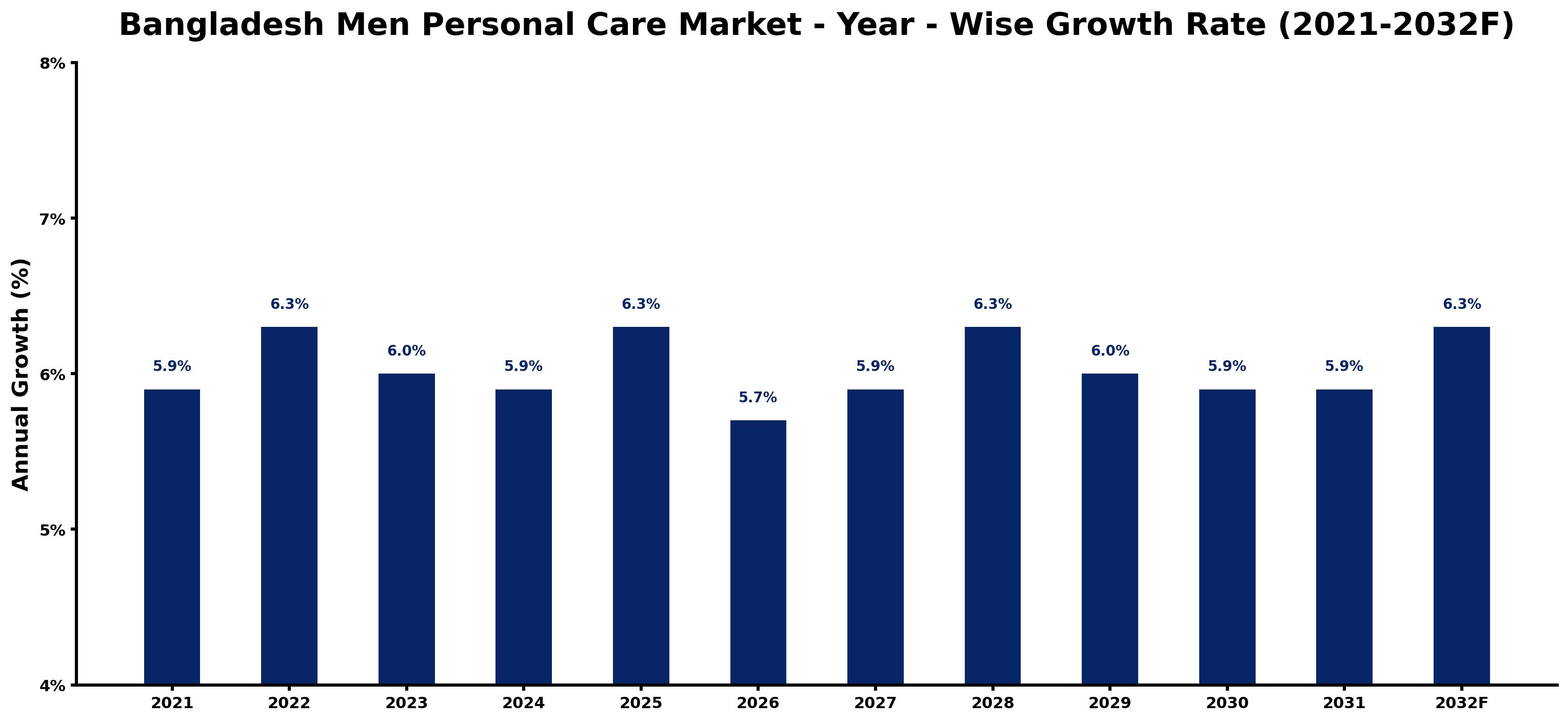
The table below presents the year wise growth rates along with the key drivers influencing the market
| Year | Growth Rate | Major Drivers |
| 2021 | 5.9% | The pandemic sparked interest in personal grooming as men stayed home more. |
| 2022 | 6.3% | Increased exposure to digital marketing transformed consumer awareness about personal care. |
| 2023 | 6.0% | Local brands began to dominate, emphasizing organic ingredients and cultural relevance. |
| 2024 | 5.9% | E-commerce platforms expanded, creating easier access for consumers across urban and rural areas. |
| 2025 | 6.3% | Social media influencers began promoting men's grooming routines, driving brand engagement. |
| 2026 | 5.7% | Investment in sustainable packaging became critical, aligning brands with eco-conscious consumers. |
| 2027 | 5.9% | Emerging trends in male skincare shifted focus towards anti-aging and hydration products. |
| 2028 | 6.3% | Salons and barbershops diversified services, contributing to the overall personal care market growth. |
| 2029 | 6.0% | The expansion of premium brands introduced higher-priced items to a growing middle class. |
| 2030 | 5.9% | Collaborations with international brands led to innovative product lines tailored for local needs. |
| 2031 | 5.9% | Increased awareness of personal hygiene propelled grooming products following health campaigns. |
| 2032 | 6.3% | Consumer demand for multifunctional products surged, favoring convenience in daily routines. |
Note - Market size estimations and growth projections presented in this report are based on 6Wresearch's advanced forecasting approach, validated with industry datasets as of June 2026.
Bangladesh Men Personal Care Market Synopsis
The Bangladesh Men Personal Care Market is projected to reach 5.7% and witness significant growth during the forecast period (2026-2032). This robust growth trajectory is driven by various factors, including an increasing awareness among men regarding personal grooming and hygiene, coupled with rising disposable incomes. As lifestyles evolve, there is a notable shift toward premium personal care products, alongside a growing demand for organic and natural alternatives. The influx of foreign brands into the local market is also contributing to this growth. Furthermore, advancements in product offerings, such as gender-specific packaging with appealing designs, are enhancing market dynamics and fueling consumer interest.
Bangladesh Men Personal Care Market Growth Drivers
The significant growth in the Bangladesh Men Personal Care Market can be attributed to several key drivers:
- Increased emphasis on personal grooming and hygiene among men, leading to higher consumption of personal care products.
- Rising disposable incomes that enable consumers to allocate more funds for premium and high-quality products.
- A shift in societal norms, where grooming and personal care are increasingly recognized as essential components of daily life.
- A growing preference for organic and natural ingredients, reflecting a broader global trend towards sustainability and health-consciousness.
- The ongoing diversification of products available, with numerous brands introducing innovative and trendy personal care items to attract male consumers.
Bangladesh Men Personal Care Market Trends and Opportunities
The evolving landscape of the Bangladesh Men Personal Care Market presents diverse trends and opportunities for growth. Firstly, there is a noticeable trend toward customization, with brands focusing on personalized offerings that cater to specific grooming needs. Secondly, the rise of eCommerce platforms is transforming the way products are marketed and sold, leading to enhanced accessibility for consumers across urban and rural areas. Additionally, the demand for premium and luxury grooming products is rising as consumers are increasingly willing to invest in high-quality solutions. The introduction of innovative packaging designs also plays a critical role in attracting consumers' attention.
Bangladesh Men Personal Care Market Challenges and Restraints
Despite its growth potential, the Bangladesh Men Personal Care Market faces several challenges:
- Limited distribution channels in certain regions, which restricts access to high-quality personal care products for a segment of the population.
- Price sensitivity among consumers can deter them from purchasing premium products, limiting market expansion.
- A lack of awareness and education regarding the benefits of specific personal care items may hinder potential sales.
- Competition from low-cost alternatives, which can impact the sales of premium brands.
- Regulatory challenges and compliance issues may pose obstacles for new entrants looking to penetrate the market.
Bangladesh Men Personal Care Market Government Investment and Initiatives
The government of Bangladesh is increasingly recognizing the importance of the personal care sector as a contributor to economic growth and job creation. Initiatives aimed at improving overall industry standards and product quality have been introduced, focusing on promoting local manufacturing capabilities. Public expenditure on infrastructure improvements facilitates better distribution pathways for personal care products throughout the country. Additionally, the government encourages foreign investments by providing various incentives, aiming to enhance the competitiveness of the local market on the international stage.
Bangladesh Men Personal Care Market Latest Developments (May 2025 - June 2026)
Recent developments in the Bangladesh Men Personal Care Market highlight a period of dynamic transformation. During this timeframe, there has been a notable increase in the number of startup brands emerging within the market, focusing on natural and organic products. Traditional retail outlets are also adapting to changing consumer behaviors by enhancing their product lines and online presence. Collaborations between local and international brands have gained momentum, resulting in expanded product availability and innovative offerings. Furthermore, eCommerce growth continues to shape the landscape, with consumers increasingly turning to online platforms for convenience and variety.
Bangladesh Men Personal Care Market - Key Attractiveness of the Report
- 10 Years of Market Numbers
- Historical Data Starting from 2022 to 2025
- Base Year: 2025
- Forecast Data until 2032
- Key Performance Indicators Impacting the Market
- Major Upcoming Developments and Projects
Key Highlights of the Report:
- Bangladesh Men Personal Care Market Outlook
- Market Size of Bangladesh Men Personal Care Market, 2025
- Forecast of Bangladesh Men Personal Care Market, 2032F
- Historical Data and Forecast of Bangladesh Men Personal Care Revenues & Volume for the Period 2022-2032F
- Bangladesh Men Personal Care Market Trend Evolution
- Bangladesh Men Personal Care Market Drivers and Challenges
- Bangladesh Men Personal Care Price Trends
- Bangladesh Men Personal Care Porter's Five Forces
- Bangladesh Men Personal Care Industry Life Cycle
- Historical Data and Forecast of Bangladesh Men Personal Care Market Revenues & Volume By Types for the Period 2022-2032F
- Historical Data and Forecast of Bangladesh Men Personal Care Market Revenues & Volume By Hair Care for the Period 2022-2032F
- Historical Data and Forecast of Bangladesh Men Personal Care Market Revenues & Volume By Shaving for the Period 2022-2032F
- Historical Data and Forecast of Bangladesh Men Personal Care Market Revenues & Volume By Oral Care for the Period 2022-2032F
- Historical Data and Forecast of Bangladesh Men Personal Care Market Revenues & Volume By Personal Cleanliness for the Period 2022-2032F
- Historical Data and Forecast of Bangladesh Men Personal Care Market Revenues & Volume By Skin Care for the Period 2022-2032F
- Historical Data and Forecast of Bangladesh Men Personal Care Market Revenues & Volume By Others for the Period 2022-2032F
- Historical Data and Forecast of Bangladesh Men Personal Care Market Revenues & Volume By Distribution Channel for the Period 2022-2032F
- Historical Data and Forecast of Bangladesh Men Personal Care Market Revenues & Volume By Online for the Period 2022-2032F
- Historical Data and Forecast of Bangladesh Men Personal Care Market Revenues & Volume By Offline for the Period 2022-2032F
- Bangladesh Men Personal Care Import Export Trade Statistics
- Market Opportunity Assessment By Types
- Market Opportunity Assessment By Distribution Channel
- Bangladesh Men Personal Care Top Companies Market Share
- Bangladesh Men Personal Care Competitive Benchmarking By Technical and Operational Parameters
- Bangladesh Men Personal Care Company Profiles
- Bangladesh Men Personal Care Key Strategic Recommendations






































