Bangladesh Whiskey Market Size, Share & Growth Rate
The Bangladesh Whiskey Market was estimated at USD 914 Million in 2025 and is projected to reach USD 1329 Million by 2032, growing at a CAGR of 5.5% from 2026 to 2032. This growth trajectory can largely be attributed to an expanding middle class that is increasingly drawn to premium and imported whiskey options. The interplay between evolving consumer tastes and a burgeoning nightlife culture in urban settings is further catalyzing demand, making this a dynamic segment within the broader alcoholic beverage market.
Bangladesh Whiskey Market Year-wise Growth Rate and Key Drivers
This graph highlights how the Bangladesh Whiskey Market has steadily grown over the years, supported by major growth factors.
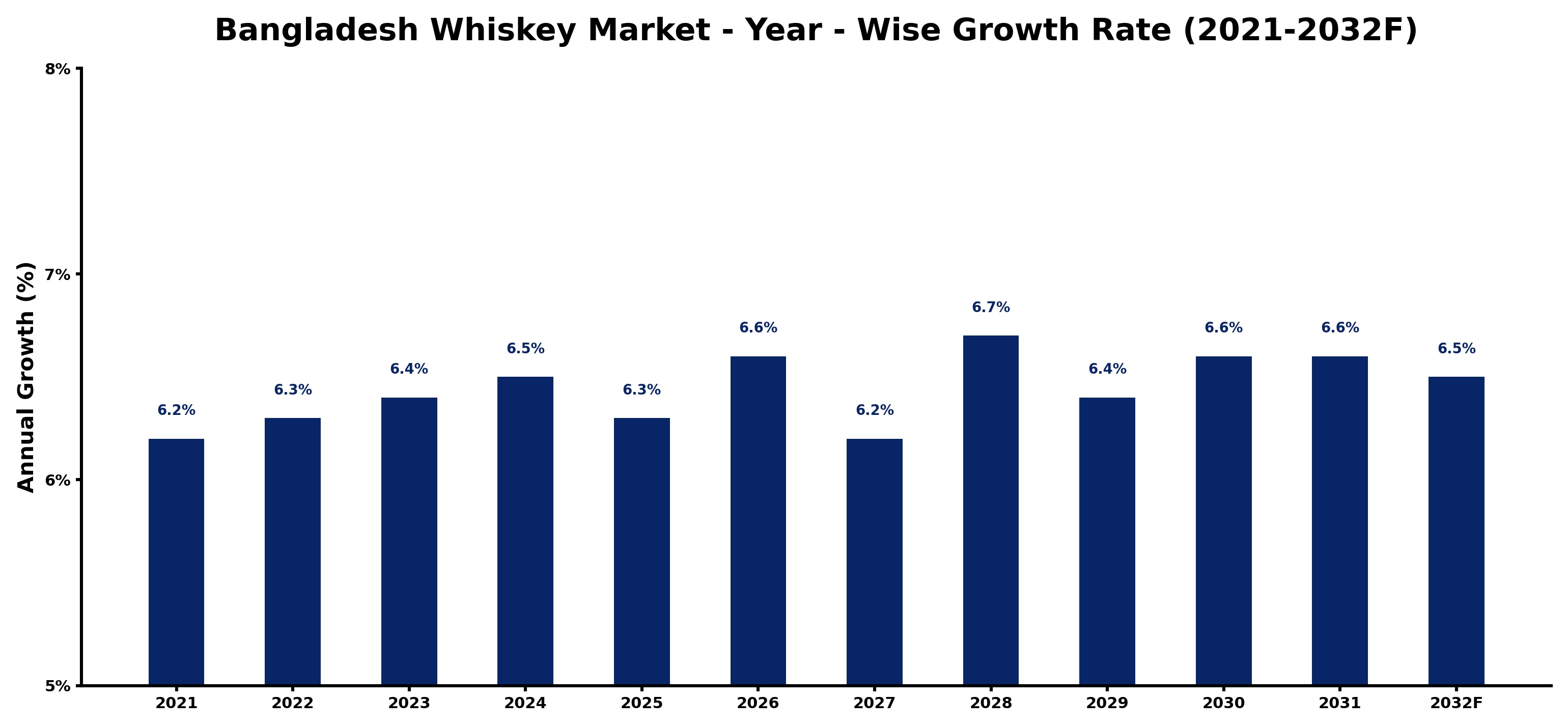
The table below presents the year‑wise growth rates along with the key drivers influencing the market
| Year | Growth Rate | Major Drivers |
| 2021 | 6.2% | Increased disposable income levels |
| 2022 | 6.3% | Growing urbanization enhanced demand |
| 2023 | 6.4% | Rising popularity of whiskey cocktails |
| 2024 | 6.5% | Expansion of local distilleries occurred |
| 2025 | 6.3% | Tourism growth boosted whiskey sales |
| 2026 | 6.6% | Social acceptance of whiskey increased |
| 2027 | 6.2% | Innovative marketing strategies engaged consumers |
| 2028 | 6.7% | Premium whiskey brands gained traction |
| 2029 | 6.4% | E-commerce platforms expanded reach |
| 2030 | 6.6% | Whiskey tasting events attracted enthusiasts |
| 2031 | 6.6% | Collaborations with local bars flourished |
| 2032 | 6.5% | Cultural events promoted whiskey consumption |
Note - Market size estimations and growth projections presented in this report are based on 6Wresearch’s advanced forecasting approach, validated with industry datasets as of June 2026.
Bangladesh Whiskey Market Synopsis
Consumer preferences are currently the most influential force in the Bangladesh Whiskey Market. As disposable incomes rise, consumers are gravitating towards higher-quality whiskey brands that offer more complex flavor profiles, leading to a significant uptick in premium segment sales.
The market is also being shaped by the dual influences of western culture and local social dynamics. Although faced with cultural challenges due to religious norms, a growing segment of urban youth is embracing whiskey consumption, contributing to a vibrant, evolving market landscape.
Bangladesh Whiskey Market Key Takeaways
- The Bangladesh Whiskey Market is experiencing substantial growth, driven by changing consumer preferences.
- Premium whiskey brands are increasingly favored, aligning with the rising aspirations of the middle class.
- A vibrant nightlife and social scene in urban areas are contributing to escalating demand for whiskey.
- Regulatory frameworks and societal attitudes remain critical factors influencing market dynamics.
- Opportunities abound for brands willing to innovate and engage effectively with target demographics.
Evaluation of Restraints in Bangladesh Whiskey Market
Despite the upward trajectory, the Bangladesh Whiskey Market is not without its challenges. Cultural and religious constraints surrounding alcohol consumption can create a societal stigma that dampens broader market acceptance. Moreover, stringent regulations and taxation related to alcohol sales impose significant barriers to entry and complicate distribution logistics. These factors, combined with competition from locally produced spirits and other alcoholic beverages, create a complex landscape that whiskey brands must navigate carefully.
Bangladesh Whiskey Market Trends
Emerging trends in the Bangladesh Whiskey Market indicate a shift towards artisanal and craft whiskey production, as consumers seek unique flavors and authentic experiences. Digital marketing and e-commerce are also becoming vital channels for reaching consumers, particularly the tech-savvy younger demographic. Additionally, whiskey-tasting events and educational campaigns are fostering a culture of appreciation, enhancing consumer engagement.
Bangladesh Whiskey Market Opportunities
The real opportunities for growth within the Bangladesh Whiskey Market lie in the premium segment, where brand differentiation and quality can drive loyalty. Collaborations with local hospitality sectors to create exclusive whiskey experiences and brand partnerships could expand market presence. Furthermore, as more expatriates and non-Muslims enter the market, tailored offerings that cater to diverse consumer preferences can spur demand.
Government Initiatives in the Bangladesh Whiskey Market
The Bangladeshi government actively regulates the whiskey market through strict licensing and taxation policies aimed at promoting responsible consumption. These regulations serve to maintain public health standards while also controlling the quality of imported products. Furthermore, various public awareness initiatives regarding responsible drinking are being implemented, ensuring that consumers are informed about the implications of alcohol consumption.
Future Insights of the Bangladesh Whiskey Market
Looking ahead to 2026-2032, the Bangladesh Whiskey Market is poised for transformative growth. The trend toward premiumization will likely accelerate, driven by younger consumers' quest for unique experiences. With continual urbanization and an evolving cultural landscape, brands that adapt to emerging consumer needs and preferences will find fertile ground for expansion. The interplay between regulatory environments and market demand will shape strategic decisions in the years to come.
Bangladesh Whiskey Market Latest Developments (May 2025 - June 2026)
Recent developments in the Bangladesh Whiskey Market have shown an increased focus on digital marketing strategies as brands aim to connect with a younger audience. Promotional events and whiskey tastings are becoming more commonplace in urban centers, enhancing consumer engagement and brand loyalty. As regulatory landscapes shift, opportunities for imported whiskey brands are expanding, allowing greater product diversity and accessibility for consumers.
Bangladesh Whiskey Market - Key Attractiveness of the Report
- 10 Years of Market Numbers
- Historical Data Starting from 2022 to 2025
- Base Year: 2025
- Forecast Data until 2032
- Key Performance Indicators Impacting the Market
- Major Upcoming Developments and Projects
Key Highlights of the Report:
- Bangladesh Whiskey Market Outlook
- Market Size of Bangladesh Whiskey Market, 2025
- Forecast of Bangladesh Whiskey Market, 2032
- Historical Data and Forecast of Bangladesh Whiskey Revenues & Volume for the Period 2022-2032F
- Bangladesh Whiskey Market Trend Evolution
- Bangladesh Whiskey Market Drivers and Challenges
- Bangladesh Whiskey Price Trends
- Bangladesh Whiskey Porter's Five Forces
- Bangladesh Whiskey Industry Life Cycle
- Historical Data and Forecast of Bangladesh Whiskey Market Revenues & Volume By Product Type for the Period 2022-2032F
- Historical Data and Forecast of Bangladesh Whiskey Market Revenues & Volume By American Whisky for the Period 2022-2032F
- Historical Data and Forecast of Bangladesh Whiskey Market Revenues & Volume By Irish Whisky for the Period 2022-2032F
- Historical Data and Forecast of Bangladesh Whiskey Market Revenues & Volume By Scotch Whisky for the Period 2022-2032F
- Historical Data and Forecast of Bangladesh Whiskey Market Revenues & Volume By Canadian Whisky for the Period 2022-2032F
- Historical Data and Forecast of Bangladesh Whiskey Market Revenues & Volume By Others for the Period 2022-2032F
- Historical Data and Forecast of Bangladesh Whiskey Market Revenues & Volume By Distribution Channel for the Period 2022-2032F
- Historical Data and Forecast of Bangladesh Whiskey Market Revenues & Volume By On-trade for the Period 2022-2032F
- Historical Data and Forecast of Bangladesh Whiskey Market Revenues & Volume By Off-trade for the Period 2022-2032F
- Bangladesh Whiskey Import Export Trade Statistics
- Market Opportunity Assessment By Product Type
- Market Opportunity Assessment By Distribution Channel
- Bangladesh Whiskey Top Companies Market Share
- Bangladesh Whiskey Competitive Benchmarking By Technical and Operational Parameters
- Bangladesh Whiskey Company Profiles
- Bangladesh Whiskey Key Strategic Recommendations






































