Benin Coal Market Size Growth Rate
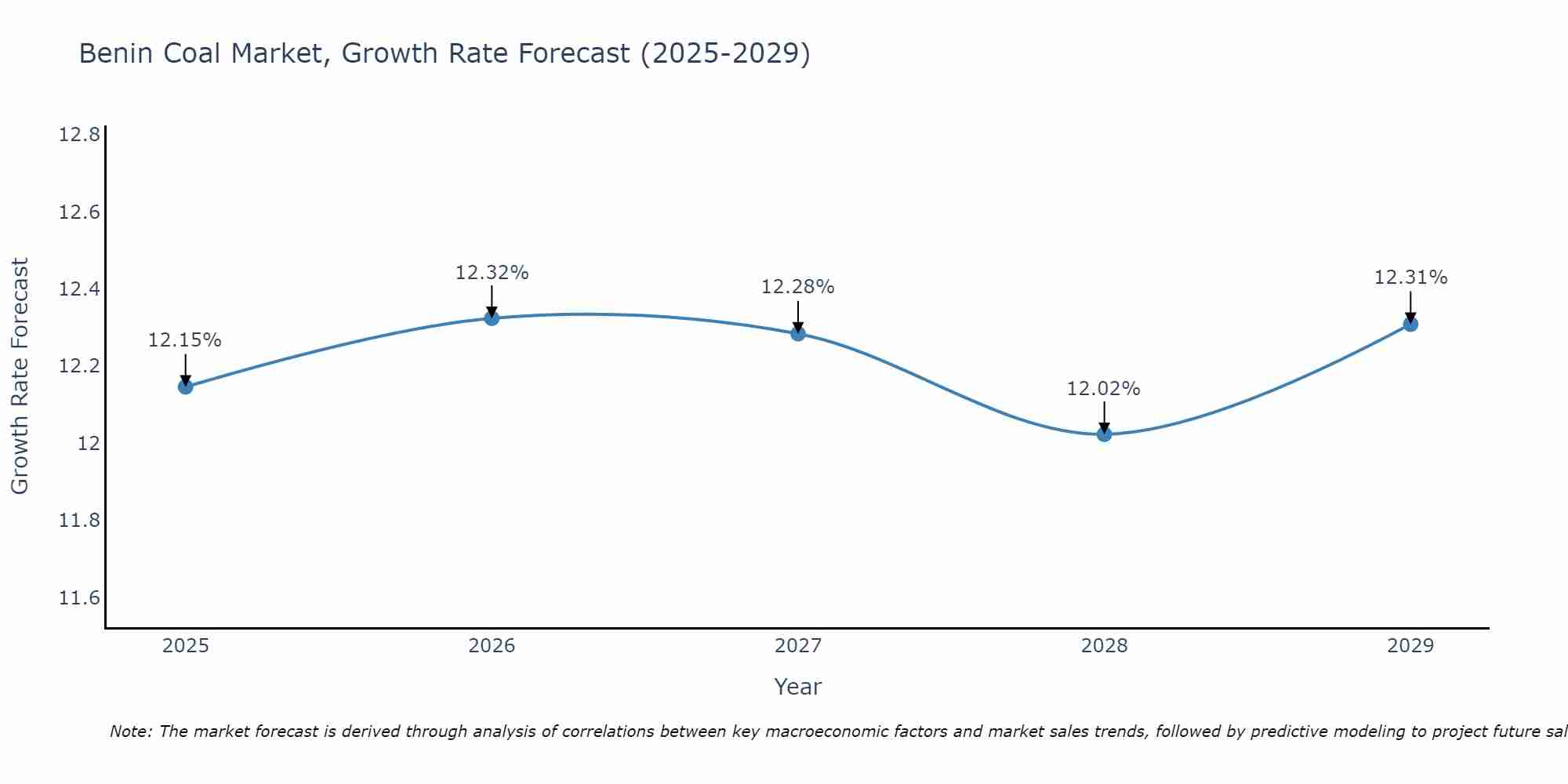
The Benin Coal Market is projected to witness mixed growth rate patterns during 2025 to 2029. Starting at 12.15% in 2025, the market peaks at 12.32% in 2026, and settles at 12.31% by 2029.
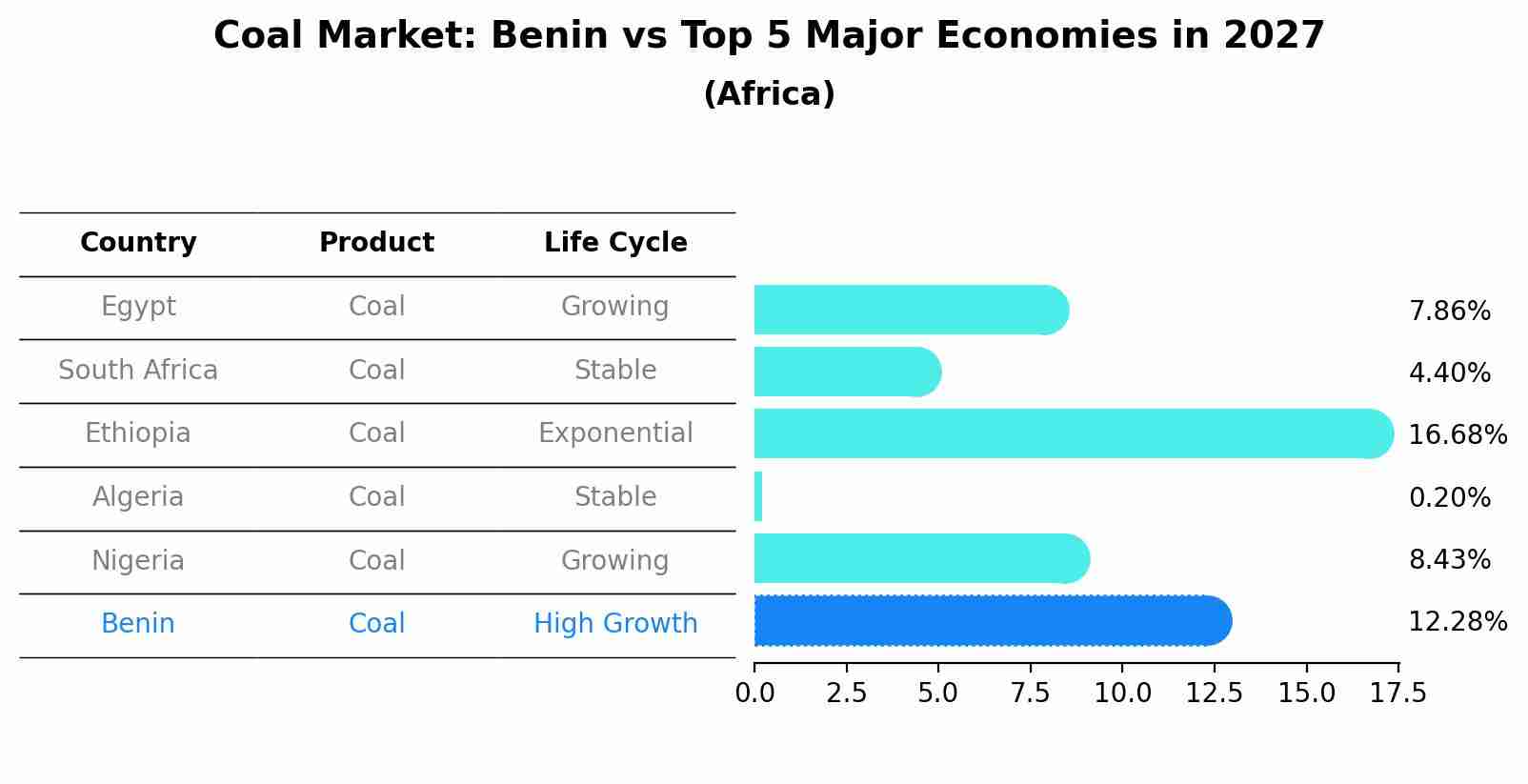
Coal Market: Benin vs Top 5 Major Economies in 2027 (Africa)
The Coal market in Benin is projected to grow at a high growth rate of 12.28% by 2027, within the Africa region led by Egypt, along with other countries like South Africa, Ethiopia, Algeria and Nigeria, collectively shaping a dynamic and evolving market environment driven by innovation and increasing adoption of emerging technologies.
Benin Coal Market Overview
The Coal market in Benin encompasses the extraction, distribution, and consumption of coal. This market is significant for energy production and various industrial applications, providing a critical source of fuel and raw material.
Drivers of the market
The Benin Coal market is influenced by the demand for energy and the reliance on coal as a primary fuel source. Coal remains a significant component of the energy mix, particularly in power generation and industrial processes. The growth of energy demand and the need for affordable and reliable energy sources drive the coal market. However, environmental concerns and regulatory pressures for cleaner energy alternatives are also shaping the market dynamics, influencing the adoption of cleaner technologies and practices.
Challenges of the market
The coal market in Benin is challenged by environmental concerns and the global shift towards cleaner energy sources. Coal mining and utilization can face regulatory scrutiny due to their impact on air and water quality. Moreover, the market is affected by fluctuating coal prices and competition from renewable energy sources. The lack of modern mining technology and infrastructure can also hinder the efficient extraction and use of coal.
Government Policy of the market
The government regulates the coal market to ensure sustainable and environmentally friendly practices. Policies aim to balance energy needs with environmental conservation.
Key Highlights of the Report:
- Benin Coal Market Outlook
- Market Size of Benin Coal Market, 2024
- Forecast of Benin Coal Market, 2031
- Historical Data and Forecast of Benin Coal Revenues & Volume for the Period 2021-2031
- Benin Coal Market Trend Evolution
- Benin Coal Market Drivers and Challenges
- Benin Coal Price Trends
- Benin Coal Porter`s Five Forces
- Benin Coal Industry Life Cycle
- Historical Data and Forecast of Benin Coal Market Revenues & Volume By Types for the Period 2021-2031
- Historical Data and Forecast of Benin Coal Market Revenues & Volume By Bituminous Coal for the Period 2021-2031
- Historical Data and Forecast of Benin Coal Market Revenues & Volume By Sub-Bituminous Coal for the Period 2021-2031
- Historical Data and Forecast of Benin Coal Market Revenues & Volume By Anthracite for the Period 2021-2031
- Historical Data and Forecast of Benin Coal Market Revenues & Volume By Lignite for the Period 2021-2031
- Historical Data and Forecast of Benin Coal Market Revenues & Volume By End-Users for the Period 2021-2031
- Historical Data and Forecast of Benin Coal Market Revenues & Volume By Electricity for the Period 2021-2031
- Historical Data and Forecast of Benin Coal Market Revenues & Volume By Steel for the Period 2021-2031
- Historical Data and Forecast of Benin Coal Market Revenues & Volume By Cement for the Period 2021-2031
- Historical Data and Forecast of Benin Coal Market Revenues & Volume By Others for the Period 2021-2031
- Benin Coal Import Export Trade Statistics
- Market Opportunity Assessment By Types
- Market Opportunity Assessment By End-Users
- Benin Coal Top Companies Market Share
- Benin Coal Competitive Benchmarking By Technical and Operational Parameters
- Benin Coal Company Profiles
- Benin Coal Key Strategic Recommendations






































